The green light turns on. The Federal Aviation Administration lifts the nationwide ground stop. Across the departure boards from Atlanta to Seattle, the angry red blocks of STOP flicker and vanish, replaced by the quiet, sterile promise of BOARDING and ON TIME.
You exhale. You zip your carry-on. You walk toward the gate, expecting the machine of modern aviation to hum back to life.
Instead, you walk into a wall of frozen humanity.
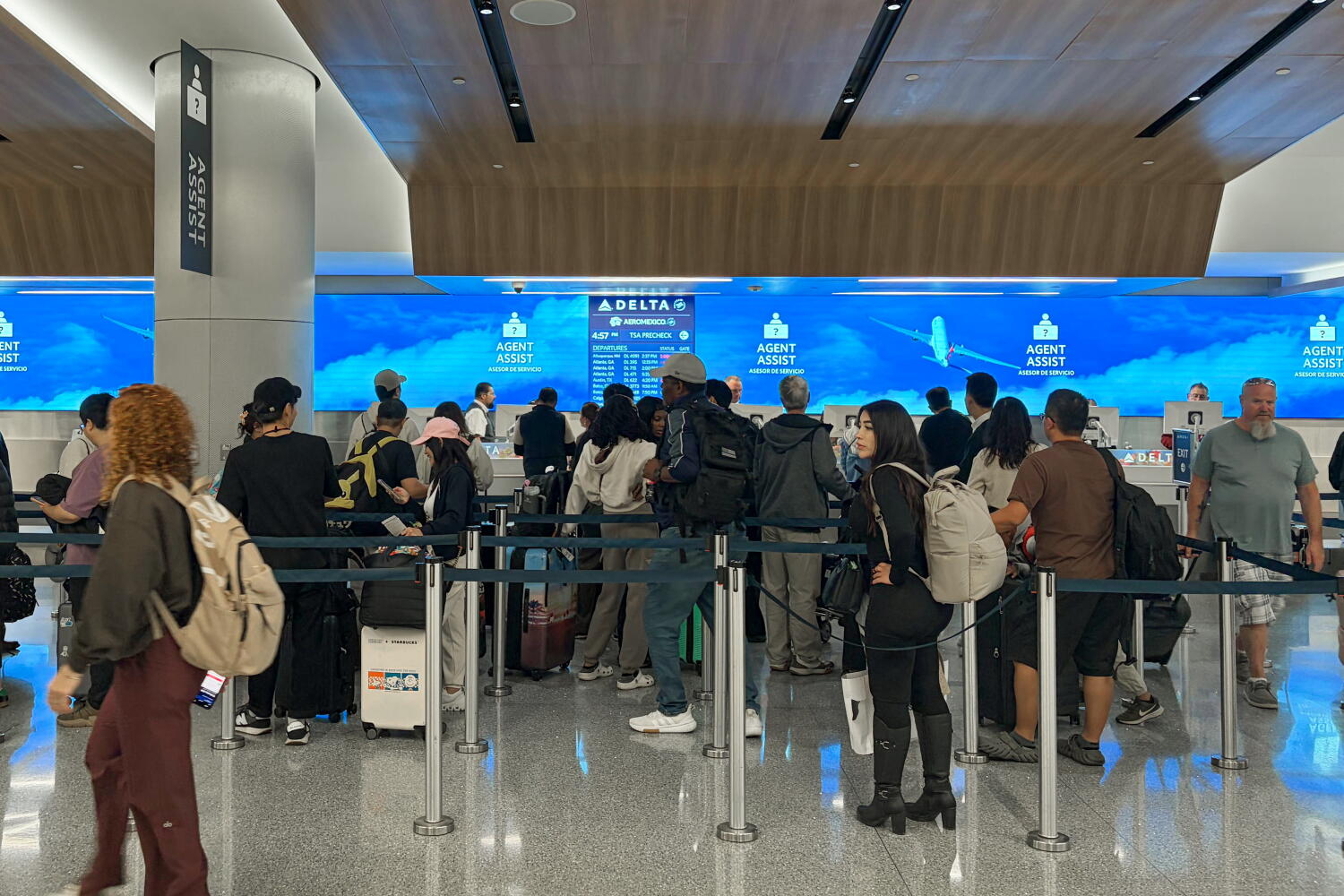
Gate B14 isn't boarding. The jet bridge door is locked. There is no plane at the window, no pilots striding down the concourse with rolling briefcases, and no gate agent behind the podium—only a three-hundred-person queue snaking past a darkened Auntie Anne’s pretzel stand. Thousands of travelers remain stranded hours, sometimes days, after the federal ban has been lifted. To understand why, you have to stop looking at the sky and start looking at the invisible dominoes falling inside an airline’s nervous system.
The Anatomy of a Frozen Sky
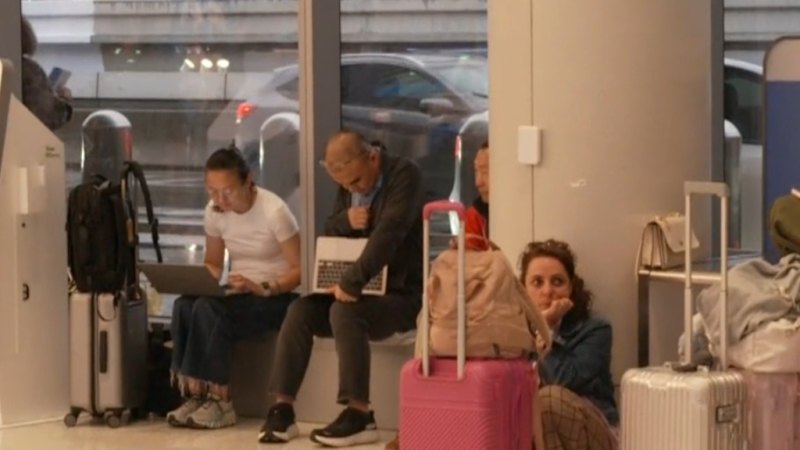
Picture a hypothetical traveler named Elena. She is sitting on the industrial carpet near Gate C22 at Chicago O’Hare, her back pressed against a concrete pillar, watching a toddler try to eat a boarding pass. Elena is a pediatric surgeon trying to get to Denver for a morning consultation. When the FAA lifted the nationwide ground stop at 9:00 AM, she thought her ordeal was over.
It had barely begun.
I have spent enough nights curled beneath the armrests of unyielding airport chairs—listening to the rhythmic, maddening squeak of floor polishers at 3:00 AM while stale coffee turns cold in a paper cup—to know that the official announcement of a recovery is often the cruelest part of a travel meltdown. The public treats an aviation ground stop like a red traffic light. When the light turns green, every car presses the accelerator at once, and traffic moves.
Aviation does not work like a highway. It works like a watchmaker’s bench where ten thousand microscopic gears must mesh at the exact same millisecond, or the entire mechanism strips its teeth.
When the FAA orders a nationwide ground stop—whether triggered by a corrupted database in the Notice to Air Missions system, an air traffic control radar outage, or a cascading severe weather event—every commercial aircraft still on the ground is instantly bolted to the tarmac. Meanwhile, the roughly five thousand planes already airborne must continue flying to their destinations, landing at hubs that suddenly have nowhere to put them.
Think of an airport hub like a high-end restaurant with fifty tables and a strict two-hour dining limit. If a sudden storm outside locks the front doors so nobody can leave, the diners already at the tables stay put. Meanwhile, fifty new reservations arrive in the lobby every twenty minutes. Within an hour, the lobby is crushed. Even after the storm passes and the front doors unlock, the kitchen is backed up by three hundred orders, the waiters are exhausted, and the tables are still occupied by people waiting for checks that haven't been printed yet.
By the time the FAA lifts the ground stop, every gate at major hubs like Dallas-Fort Worth, Atlanta, and Chicago is physically blocked by aircraft that arrived during the freeze and could not depart. Inbound planes sit on taxiways for three hours, burning fuel and waiting for a gate to open, while outbound passengers stare through terminal windows at empty tarmac wondering why their flight is still delayed.
The Invisible Clock That Governs Your Pilot
Walk closer to the podium at Elena’s gate, and you will witness the second, quieter crisis: the vanishing crew.
In the commercial airline industry, human beings are bound by federal physics far stricter than jet engines. Under FAA regulations—specifically Part 117, the rules governing flight and duty time limitations—pilots and flight attendants operate on a rigid, unforgiving legal stopwatch. Depending on the time of day a crew begins their shift and the number of flight segments they are scheduled to fly, a pilot’s legal workday maxes out between nine and fourteen hours.
The clock does not pause because the FAA issued a ground stop.
While Elena waited in the terminal and her flight crew sat strapped into the cockpit of a Boeing 737 on a remote taxiway in Newark, the seconds kept ticking away. At 10:14 AM, just seventy-four minutes after the nationwide ground stop was officially lifted, Captain Marcus Vance looked at his flight tablet and realized his crew had "timed out." Even if the taxiway cleared at 10:15 AM, it would be a federal crime for him to push the throttles forward.
Once a crew times out, they must legally stand down for a mandatory minimum rest period of ten consecutive hours, which must include an uninterrupted eight-hour sleep opportunity.
Suddenly, the airline doesn't just need a clear sky and an open gate. It needs a brand-new set of human beings.
And where are the reserve pilots? Because the ground stop froze the entire national network simultaneously, the backup pilots who were supposed to deadhead—fly as passengers—from Minneapolis to Newark to cover emergencies are stuck on a tarmac in Minnesota. The flight attendants scheduled to work Elena’s connecting leg out of Denver are currently trapped in a hotel lobby in Phoenix because their morning shuttle couldn't get through airport perimeter traffic.
Airlines operate on what logistics engineers call "tightly coupled networks." To keep ticket prices competitive and maximize asset utilization, a single commercial airliner might fly five or six legs in a single day, carrying five hundred different passengers across four time zones, swapped between three different flight crews. It is a masterpiece of efficiency when the weather is clear and the computers behave. It is a house of cards soaked in gasoline the moment one central node goes dark.
Why Your Airline Can't Just Put You on Another Plane
Around noon, Elena finally reaches the front of the customer service line. Her eyes are gritty. Her phone battery is hovering at eleven percent. She asks the agent a question that thousands of stranded flyers ask every single day: "The ground stop is over. Why can't you just put me on the 2:00 PM flight?"
The agent types furiously, the clatter of the keyboard sounding like rapid-fire static, before delivering the verdict. The 2:00 PM flight is full. So is the 4:30 PM flight. So is every flight to Denver for the next forty-eight hours.
Here is the mathematical reality that catches travelers off guard: modern commercial airlines fly at an average load factor of roughly eighty-five to ninety percent. On popular hub-to-hub routes, flights routinely depart at ninety-eight percent capacity. There is no fleet of spare Boeing 737s sitting in a hangar waiting for a bad Tuesday, and there are no rows of empty seats waiting to absorb a sudden surge of displaced people.
When a nationwide ground stop halts three thousand flights for just three hours, it displaces roughly three hundred and fifty thousand passengers. Absorbing that many people into a system that already runs at ninety percent capacity is like trying to pour a five-gallon bucket of water into a drinking glass that is already filled to the brim. The excess doesn't compress. It spills across the floor for days.
If you are caught in that spillover, waiting in the physical terminal line is almost always the slowest way out. While three hundred people stand shoulder-to-shoulder at a single service desk, a handful of experienced travelers are already solving the puzzle through three parallel channels:
- The App Rebooking Engine: The moment a flight goes into irregular operations, the airline's mobile app unlocks self-service rebooking tools that draw from the exact same seat inventory the gate agent sees—without the ninety-minute wait.
- The International Call Center Trick: When domestic customer service phone lines report four-hour hold times, calling the airline’s international support desk (such as the UK, Canadian, or Australian line via Wi-Fi calling) connects you to agents with identical reservation system access and virtually zero queue.
- The Adjacent Airport Pivot: Searching for flights out of secondary airports within a sixty-mile radius—flying out of Midway instead of O’Hare, Oakland instead of SFO, or Burbank instead of LAX—bypasses the primary hub bottlenecks where crews and gates are most severely gridlocked.
The Human Ledger Behind the Delay Codes
To the Department of Transportation, a post-ground-stop meltdown is categorized neatly into spreadsheets. Delays are tagged as NAS (National Aviation System) or Carrier-Induced, depending on whether the FAA’s initial freeze or the airline’s subsequent crew-scheduling collapse is deemed the primary culprit. That distinction matters enormously to your wallet, even if nobody at the gate announces it over the intercom.
Under current U.S. Department of Transportation rules, if your flight is canceled or significantly delayed and you choose not to travel, the airline owes you a full cash refund—not a voucher, not travel credits, actual money returned to your original payment method—regardless of why the ground stop happened. However, if you choose to continue your trip, the airline’s obligation to pay for your hotel room, meal vouchers, and ground transportation hinges entirely on whether the ongoing delay is classified as within the airline's control.
When the FAA freezes the sky, the initial delay is outside the carrier's control. Once the FAA lifts the ground stop, the gray area begins. If your flight is delayed another twelve hours because the airline’s internal crew-tracking software crashed or because they failed to manage reserve staffing, consumer advocates argue the delay has shifted into carrier-controlled territory. Yet at 11:00 PM in a crowded concourse, exhausted travelers rarely have the energy to cite DOT dashboard commitments to an overworked supervisor who has been yelled at since dawn.
So people sleep on the floor.
They miss weddings, funerals, chemotherapy appointments, and first days at new jobs. A grandfather in Charlotte watches his grandson's graduation on a pixelated FaceTime screen propped against a trash can near Gate D4. A college student in Boston counts the dollars left in her checking account while staring at a nineteen-dollar airport sandwich. The tragedy of a modern aviation collapse isn't merely inconvenience; it is the sudden stripping away of human agency. You are trapped inside a climate-controlled tube of glass and steel, surrounded by thousands of strangers, entirely at the mercy of an algorithm trying to untangle ten thousand invisible knots.
The Long Tail of Recovery
By 6:00 PM, the departure boards at O'Hare finally look normal. The yellow DELAYED banners have largely disappeared. A television news crew packs up its tripod near security, satisfied that the story is over because planes are taking off again.
Yet down in the baggage claim basement, the ghosts of the morning's ground stop remain stacked four deep.
Ten thousand suitcases—separated from owners who were rerouted through Dallas, Charlotte, or Salt Lake City—sit in silent, canvas-and-polycarbonate rows waiting for manual scanning. Mechanics in high-visibility vests work overtime in hangars to perform mandatory safety checks on aircraft that landed in the wrong cities and now sit out of position for their scheduled maintenance cycles. Dispatchers stare at glowing wall-sized maps, quietly canceling tomorrow morning’s 6:00 AM regional flights to Indianapolis and Milwaukee so they can steal those aircraft and crews to patch the holes left in today's mainline schedule.
Elena finally boards a flight to Denver at 8:45 PM, nearly twelve hours after the FAA declared the skies open. She finds her middle seat, fastens her seatbelt, and rests her forehead against the cool plastic of the tray table in front of her. Outside the window, a ground crew member waves two glowing orange wands in the dark, guiding the nose wheel backward onto the taxiway.
The plane begins to roll. Behind it, glowing faintly through the terminal windows, hundreds of people are still standing in line at the podium, waiting for someone to explain why the green light didn't save them.