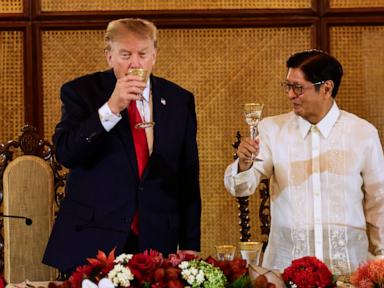
In late-night diplomatic circles, statecraft rarely looks like a polished white paper. During a high-stakes diplomatic visit, Philippine President Ferdinand Marcos Jr. arranged for boxes of Jollibee Chickenjoy—the flagship fried chicken of the Philippines' most dominant fast-food empire—to be delivered to Donald Trump as a late-night snack. On the surface, the move reads like a lighthearted viral anecdote tailored for social media feeds. Beneath the crispy batter, however, lies a calculated exercise in gastrodiplomacy, personal rapport-building, and corporate soft power aimed directly at a leader whose affinity for American fast food is a matter of public record.
To understand why a sitting head of state would bypass traditional diplomatic gifts in favor of takeout boxes from a Manila-born quick-service restaurant, you have to look at the intersection of personality-driven politics and Southeast Asian trade strategy. Traditional state gifts—engraved crystal, ceremonial blades, or bound historical volumes—usually end up cataloged in government archives. A hot meal delivered after hours bypasses protocol entirely. It speaks to appetite, familiarity, and shared cultural touchstones.
The Anatomy of Fast-Food Diplomacy
Diplomats have used food to soften negotiations for centuries, a practice scholars call gastrodiplomacy. Usually, this involves multi-course state banquets featuring indigenous delicacies meant to showcase national refinement. Sending Jollibee to Trump inverted that playbook. Instead of asking an American leader to adapt to unfamiliar Filipino flavors like dinuguan or balut, Marcos Jr. offered an Asian interpretation of an unmistakably American staple.
Trump’s dietary preferences have been documented extensively by journalists, former aides, and the president himself. He favors predictable, branded comfort food—specifically fried chicken, burgers, and well-done steaks—partially out of a well-known preference for the consistency and perceived hygiene of major commercial chains. By selecting Jollibee, the Philippine delegation matched the gesture to the recipient's exact tastes while still keeping the gift authentically Filipino.
The logistics of a late-night presidential food drop are never accidental. Even a seemingly spontaneous snack requires coordination between diplomatic aides, advance teams, and security details. Food intended for a U.S. president or former president undergoes strict vetting. That means the delivery was planned well ahead of the midnight craving, transforming an informal meal into a deliberate piece of political theater.
Why Chickenjoy Hits Differently
If you have never eaten at a Jollibee, it is easy to mistake it for just another regional imitator of KFC. That would be a misreading of both the menu and the market. Founded by Tony Tan Caktiong in 1978 as an ice cream parlor before pivoting to hot meals, Jollibee Foods Corporation (JFC) achieved something almost no other domestic chain in Asia managed to do. It beat McDonald's on its home turf.
The secret weapon is Chickenjoy, pressure-fried chicken paired with a signature savory brown gravy meant for dipping or pouring over steamed white rice. Unlike traditional Southern fried chicken, which leans heavily on black pepper, cayenne, or buttermilk tang, Jollibee's recipe skews slightly sweeter and relies on the umami punch of its gravy. Alongside sweet-style Jolly Spaghetti—topped with sliced hot dogs and shredded cheddar—the menu reflects the historical imprint of the American military presence in the Philippines, filtered through a distinctly Filipino palate.
When Marcos Jr. sent that specific meal to Trump, he was handing over a culinary artifact of the U.S.-Philippine alliance. The food itself tells a century-long story of colonial history, cultural adaptation, and economic interdependence without a single talking point being spoken aloud.
What Was Really at Stake Between Manila and Washington
A late-night snack does not materialize in a geopolitical vacuum. Relations between Manila and Washington carry immense strategic weight, particularly regarding security in the South China Sea, defense treaties, and bilateral trade tariffs.
Under the Mutual Defense Treaty of 1951, the United States is obligated to defend the Philippines if its armed forces, public vessels, or aircraft come under armed attack in the Pacific. Yet every shift in American political leadership brings fresh anxiety in Manila over the durability of Washington's commitments. Trump’s transactional approach to foreign alliances and his skepticism toward multilateral agreements forced foreign leaders worldwide to rethink how they engage with him.
Formal diplomatic channels often struggle to gain traction when dealing with a leader who prioritizes personal chemistry over institutional consensus. Foreign ministries across Asia and Europe learned quickly that direct, human-scale gestures carry disproportionate weight. Golf outings, personalized gifts, and shared meals became essential tools for keeping bilateral priorities on the radar.
Consider the economic pressures sitting on the table during high-level U.S.-Philippine talks:
- Defense Modernization: The Philippines relies heavily on U.S. military financing, joint exercises, and access agreements under the Enhanced Defense Cooperation Agreement (EDCA) to counter maritime pressure in the West Philippine Sea.
- Tariff Exposure: As an export-oriented economy sending semiconductors, electronics, coconut products, and garments to the American market, Manila remains vulnerable to broad-based U.S. import tariffs.
- Remittance Flows: Millions of Filipino Americans live and work in the United States, sending tens of billions of dollars back home annually—a vital lifeline for the Philippine economy that depends on stable immigration and banking policies.
Against that backdrop, a box of fried chicken is not a triviality. It is an icebreaker designed to open the door for conversations about trade exemptions, security guarantees, and investment flows.
Jollibee's Quiet Invasion of the American Market
While the political optics grabbed headlines, the corporate subtext deserves equal attention. Jollibee is no longer just a nostalgic pit stop for homesick overseas Filipino workers. It has evolved into a global restaurant conglomerate aggressively expanding across North America.
Jollibee Foods Corporation operates thousands of stores worldwide and has spent hundreds of millions of dollars acquiring American brands, including Smashburger and The Coffee Bean & Tea Leaf, alongside major stakes in Tim Ho Wan and Compose Coffee. At the same time, the flagship Jollibee brand has opened dozens of locations across the United States—from Daly City and Queens to Houston, Chicago, and Jacksonville.
For a brand fighting to break out of the ethnic-enclave niche and capture mainstream American diners, getting its signature product into the hands of Donald Trump via a sitting president is marketing gold that no Madison Avenue agency could buy.
The Economics of Brand Diplomacy
Corporate expansion and state diplomacy frequently reinforce one another, even when no formal partnership exists. South Korea turned K-pop, Samsung, and Korean barbecue into pillars of its national brand. Japan leveraged culinary exports and automotive manufacturing to cement its post-war alliance with the West. The Philippines has historically struggled to project similar commercial soft power, often remaining better known abroad for its labor exports than its consumer brands.
Jollibee represents the clearest exception to that rule. Look at how the company positions itself in the U.S. market compared to domestic fast-food giants:
| Market Dimension | Legacy U.S. Chicken Chains | Jollibee U.S. Strategy |
|---|---|---|
| Core Flavor Profile | Savory, peppery, spicy, or smoky | Crisp, mild-sweet batter paired with savory gravy |
| Primary Carbohydrate | Biscuits, fries, or mashed potatoes | Steamed white rice alongside fries and sweet spaghetti |
| Expansion Model | Saturated domestic footprint; focus on drive-thru speed | High-volume destination openings with long launch queues |
| Brand Narrative | Heritage American comfort or regional Southern identity | Joyful hospitality, family dining, and global Filipino pride |
When a head of state elevates a homegrown brand onto the international political stage, it validates that company's stature back home and raises curiosity among consumers abroad. Every news article mentioning the late-night delivery reinforces Jollibee’s name recognition among millions of American readers who may have never driven past one of its red-and-yellow storefronts.
The Risks of Informal Statecraft
Not everyone views fast-food diplomacy as an unqualified triumph. Veteran diplomats and political analysts point out real limitations—and potential pitfalls—when foreign policy leans too heavily on personal gestures.
First, personal rapport does not guarantee policy outcomes. History is littered with leaders who shared warm meals, exchanged nicknames, and praised each other in front of cameras, only to clash weeks later over tariffs, troop deployments, or trade deficits. In transactional politics, goodwill has a notoriously short shelf life. A late-night snack might buy fifteen minutes of undivided attention, but it will not override domestic economic pressures or protectionist trade agendas in Washington.
Second, informal gestures can play differently at home than they do abroad. In the Philippines, public reaction to presidential diplomacy is intensely polarized. Supporters of the administration view moments like the Jollibee delivery as clever, relatable, and effective ways to endear the Philippines to powerful allies. Critics, however, sometimes see them as performative distractions from structural domestic challenges—such as inflation, agricultural supply bottlenecks, or unresolved human rights debates.
There is also the question of optics. To detractors, a smaller nation catering to the late-night cravings of an American political titan can look less like equal partnership and more like supplication. Diplomacy requires a delicate balance between hospitality and stature; lean too far into accommodating a foreign leader's personal quirks, and you risk undermining the dignity of the office you represent.
Why Pop Culture Gestures Outlast Policy Memos
Still, dismissing the episode as mere fluff misses how modern political communication actually works. Attention is the scarcest commodity in global politics. A technical briefing on maritime exclusive economic zones or semiconductor supply chains rarely penetrates beyond specialized policy journals and foreign ministry desks.
A story about a president sending fried chicken to Donald Trump after midnight travels across wire services, cable news panels, TikTok feeds, and dinner tables in both countries within hours.
It humanizes both figures while embedding a subtle message about cultural proximity. The subtext is clear: the Philippines is not a distant, inscrutable strategic outpost. It is a vibrant, familiar ally whose culture, people, and even fast-food cravings overlap directly with American life.
In international relations, soft power rarely announces itself with trumpets. Sometimes it arrives in a cardboard takeout box, still hot, right around midnight.



