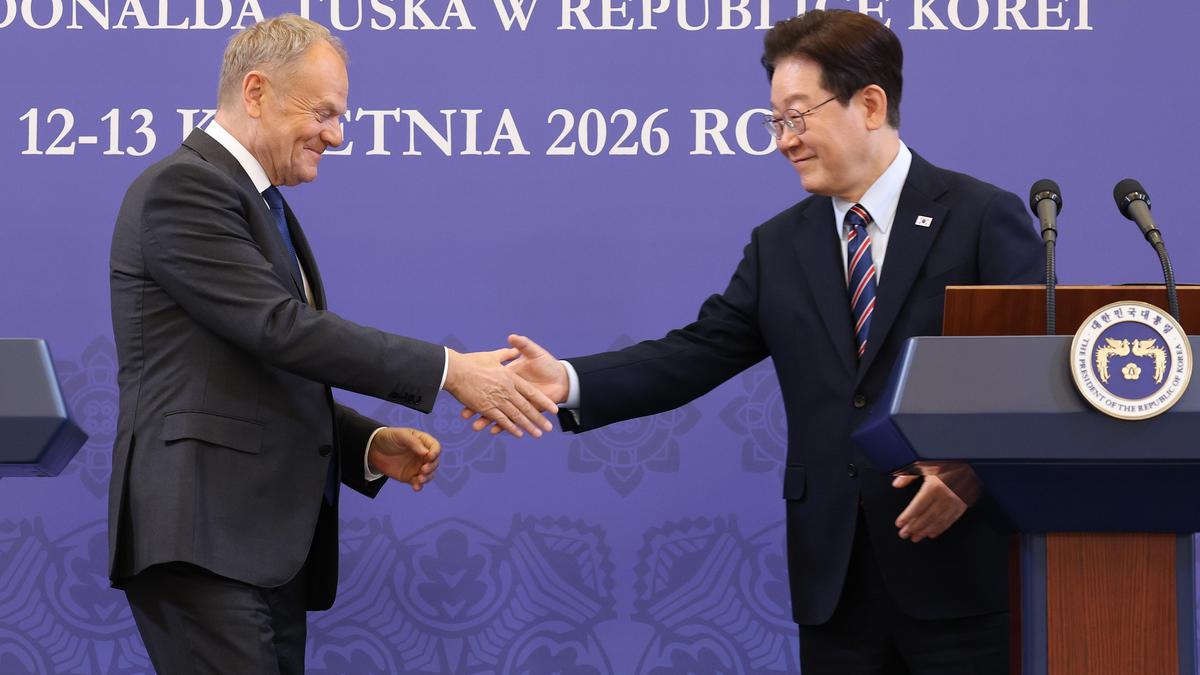
Poland just made it official. South Korea isn't just another trade partner—it's now the country's most vital ally after the United States. During a high-stakes visit to Seoul on April 13, 2026, Polish Prime Minister Donald Tusk didn't mince words. He characterized the relationship as a "comprehensive strategic partnership," a label that usually collects dust in diplomatic folders but, in this case, carries the weight of billions of dollars in hardware.
The shift is dramatic. For decades, Warsaw looked primarily to Washington and Berlin. But with Russia's shadow growing longer and the U.S. political landscape looking increasingly unpredictable, Poland is diversifying its "insurance policy." They aren't just buying tanks; they're buying a long-term security guarantee from a nation that knows exactly what it's like to live next to a hostile, nuclear-armed neighbor.
The defense powerhouse behind the deal
If you want to understand why Tusk is calling Seoul a "key ally," look at the sheer volume of metal moving across the ocean. While other NATO members are still debating production schedules, South Korea is actually delivering. This speed is exactly why Poland has leaned so hard into the K-defense ecosystem.
The numbers are staggering. South Korea now accounts for 47% of Poland's military imports, officially edging out the United States at 44%. We're talking about a massive procurement spree that includes 180 K2 Black Panther tanks, 672 K9 Thunder self-propelled howitzers, and 48 FA-50 light combat aircraft.
But the real kicker isn't just the purchase; it's the localization. Tusk and Korean President Lee Jae-myung aren't just shipping crates. They're building factories. A new 14 billion zloty (€3.3 billion) deal was recently inked to produce guided missiles for the Chunmoo rocket system right on Polish soil. This turns Poland into a European hub for South Korean tech, giving Warsaw the "production independence" it has craved for years.
More than just tanks and howitzers
It’s easy to get distracted by the hardware, but this partnership has quietly seeped into the civilian economy. You might've missed that Kumho Tire just confirmed a $587 million investment to build its first European plant in Poland. Or that Daesang Corporation opened its first European kimchi factory there. These aren't random choices.
South Korea is currently the largest Asian investor in Poland. The collaboration now stretches into sectors that will define the next decade:
- Energy: A floating LNG terminal for Gdańsk is already under construction in a Hyundai shipyard.
- Infrastructure: Korean firms are circling the "mega airport" project near Warsaw, a massive transport hub intended to rival Western Europe's biggest gates.
- Tech: The "strategic partnership" now specifically covers artificial intelligence, semiconductors, and space exploration.
Tusk’s goal is clear. He wants to "even out the trade balance." Right now, it’s a one-way street of Korean tech flowing into Poland. By moving production to Polish soil—whether it's tires or missiles—Warsaw isn't just a customer anymore. It's a partner.
Why this matters for the rest of Europe
Honestly, some of Poland’s neighbors are a bit rattled. By forming such a tight bond with Seoul, Warsaw is essentially bypassing the traditional European defense giants. While France and Germany push for "European sovereignty," Poland is voting with its wallet for South Korean reliability.
There's a pragmatic reason for this. South Korea maintains a "hot" production line because they're technically still at war with the North. They can deliver 50 tanks while European manufacturers are still filling out the environmental impact reports for a new factory. For a country bordering Ukraine, that speed isn't a luxury—it's a necessity.
What to watch next
The relationship isn't without its friction. Financing has been a sticking point, with Tusk previously raising concerns about the massive loans required to fund these deals. However, the April 2026 summit seems to have smoothed over those cracks.
If you're tracking this, keep your eyes on the following:
- The "HWB" Joint Venture: The success of the Hanwha-WB Advanced System facility will be the litmus test for whether Korea can successfully transfer its manufacturing DNA to Europe.
- Nuclear Energy: There's ongoing talk about South Korea's KHNP building nuclear reactors in Poland. If that deal moves forward, the "strategic partnership" becomes a decades-long marriage.
- The 2026 Delivery Window: This is the year many of the localized production lines are supposed to go live. If the K2PL tanks start rolling off Polish lines on schedule, it changes the defense map of Europe forever.
Poland is no longer just a "buffer state" or a junior partner in NATO. By hitching its wagon to South Korea's industrial engine, it's positioning itself as the military and logistical center of gravity for Eastern Europe. It's a bold, expensive bet—but in Warsaw's eyes, it's the only one worth making.