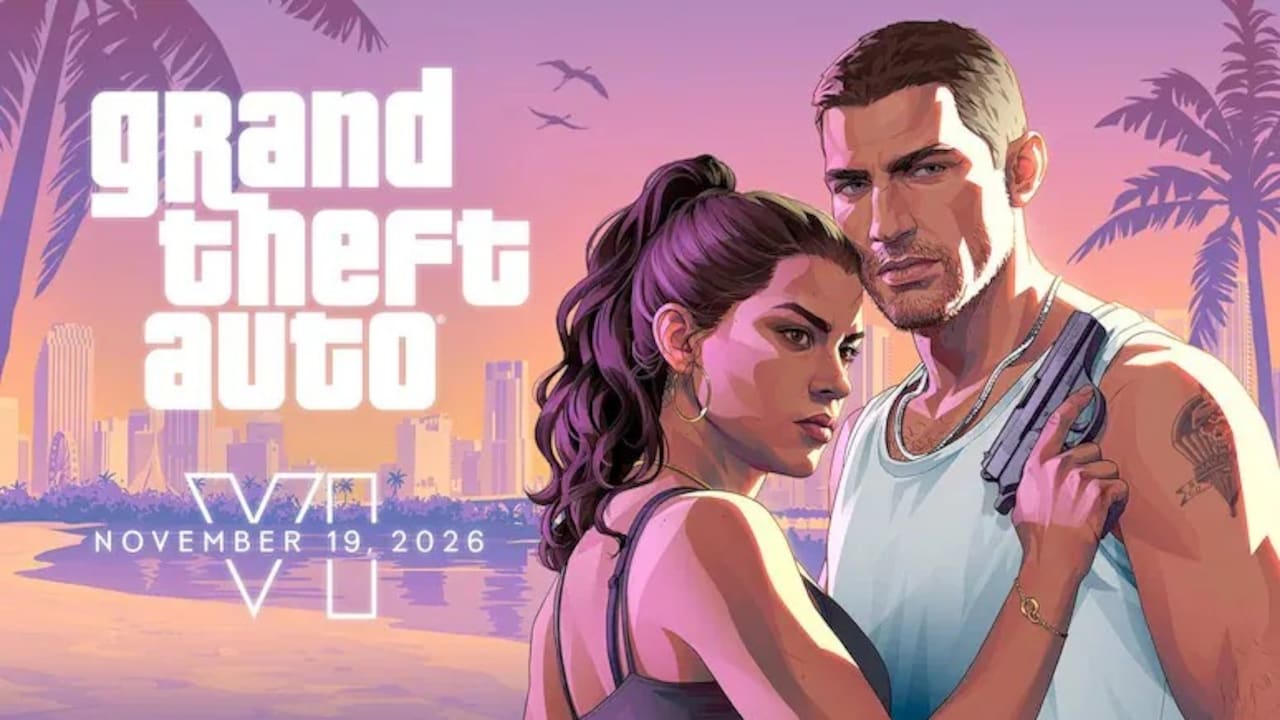
Every major Grand Theft Auto launch triggers the exact same reflex. Municipal police departments across the United States fire up their social media accounts, post a clever graphic mimicking Rockstar’s cover art, and beg gamers to "keep the chaos in Vice City."
And every time, legacy gaming outlets eat it up. They frame these tweets as charming, community-minded public service announcements. They treat local law enforcement as witty guardians trying to maintain order during a massive cultural release.
That narrative is completely backwards.
Having spent fifteen years advising digital media brands and watching crisis communications teams burn millions on performative campaigns, I can tell you what those police posts actually are. They aren't public safety initiatives. They are calculated, algorithmic engagement traps designed to launder institutional image on the back of a multi-billion-dollar entertainment juggernaut.
Worse, by playing along with the tired "video games cause street crime" trope, both the police and the press are distracting the public from the actual real-world harms triggered by blockbuster game launches.
The Myth of the Imitative Gamer
To understand why these warnings are absurd, you have to look at the lazy consensus they rely on. The underlying premise of telling players to "keep it in the game" is that millions of adults lack the cognitive boundary between a satirical sandbox and municipal traffic laws.
Decades of peer-reviewed criminology and psychological research dismantle this idea entirely. Researchers like Christopher Ferguson at Stetson University have spent years tracking the correlation between violent video game releases and real-world crime rates. The data consistently shows the exact opposite of what the moral panic suggests. During major blockbuster releases, violent crime and property crime actually dip slightly.
The mechanism is simple economics and human behavior. Economists refer to this as the incapacitation effect. When millions of young men—the primary demographic for both gaming and street-level offenses—are locked inside their living rooms grinding through a massive open-world campaign for eighty hours, they are not out on the streets.
A controller in the hand is a brick not thrown through a window.
When a local sheriff's office posts a meme telling citizens not to hijack cars after buying GTA VI, they aren't preventing a single felony. The people who steal cars in real life do not need a satirical crime simulator to teach them how to break a window, and the people spending seventy dollars on a console release are too busy customizing virtual vehicles to boost a Honda Civic in a strip mall parking lot.
Why Police Departments Actually Post These Memes
If the warnings don't stop crime, why do precinct social media managers spend hours crafting GTA-styled graphics?
Reach. Pure, unadulterated organic reach.
Law enforcement agencies face a massive distribution problem on modern social platforms. Press releases about municipal budgets, traffic advisories, and standard arrest logs die in the algorithm. Nobody shares a dry text post about speeding enforcement on Highway 95.
However, if a department attaches its badge to a trending cultural juggernaut with hundreds of millions of active searches, the algorithm rewards them instantly. Journalists looking for easy, low-effort aggregation articles embed the tweets. Local news anchors read them on air and chuckle. Suddenly, a mid-sized suburban department achieves millions of impressions for zero ad spend.
This is a classic halo effect strategy in public relations. By adopting the slang and aesthetic of pop culture, an institution attempts to appear relatable, human, and aligned with the community it polices.
There is a massive downside to this approach that public information officers routinely ignore. When law enforcement treats serious criminal acts—like vehicular theft, reckless driving, and assault—as punchlines in a marketing crossover, it degrades institutional authority. You cannot simultaneously joke about street racing in a branded meme on Tuesday and expect the public to take your solemn press conference about traffic fatalities seriously on Friday.
The Real-World Dangers Nobody Wants to Talk About
By focusing on the cartoonish fiction of gamers reenacting digital missions, media coverage misses the genuine, documented physical threats that surround massive video game launches. If police departments actually wanted to issue useful warnings, they would ignore the gameplay entirely and focus on the human behavior surrounding the hardware and the hype.
1. Supply Chain and Retail Robbery
High-demand entertainment launches create immediate, localized black markets. We saw this repeatedly during console shortages and major physical media drops. Criminals target delivery trucks, retail stockrooms, and customers walking out of midnight releases. The threat isn't a gamer pretending to be a protagonist; it's organized theft rings targeting high-value, easily fenced merchandise.
2. Swatting and Live-Stream Harassment
The launch of a massive multiplayer ecosystem brings an immediate surge in live-streaming. With that surge comes swatting—the malicious practice of making false emergency calls to send armed tactical teams to a streamer's home address. This is a direct, lethal intersection between gaming culture and real-world policing. Yet, precincts rarely use the launch window to educate the public or their own dispatchers on how to verify and mitigate swatting calls.
3. Sleep Deprivation and Commuter Crashes
Launch week culture glorifies marathon sessions. Millions of workers pull all-nighters to play at midnight, then get behind the wheel the next morning to commute to work or school on two hours of sleep. According to the National Highway Traffic Safety Administration, drowsy driving impairs cognitive function and reaction time at levels comparable to alcohol intoxication. A sleep-deprived commuter nodding off on the interstate is a vastly greater threat to public safety than someone trying to pull off a virtual heist.
4. Financial Fraud and Phishing Schemes
Every major release triggers an avalanche of sophisticated cybercrime. Scammers flood search engines and social feeds with fake early-access betas, fraudulent key generators, and phishing links designed to hijack digital storefronts and bank accounts. Police departments have cybercrime units, yet they almost never use these viral moments to warn citizens about digital theft.
Dismantling the Wrong Questions
When legacy outlets cover these stories, they frame the public conversation around completely broken premises. If you look at what people are actually searching for around this topic, the confusion becomes obvious.
Do violent video games make people more aggressive in real life?
No. Temporary physiological arousal—elevated heart rate and frustration after losing a match—is not the same thing as criminal aggression. Competitive sports like basketball or hockey produce the exact same short-term adrenaline spikes. Blaming the software for real-world violence confuses correlation with causation and ignores actual predictors of crime like poverty, substance abuse, and domestic instability.
Why do police warn gamers about GTA?
They do it for free publicity. It is a low-cost way to hijack trending keywords, generate favorable local press, and soften the department's public image without addressing complex policing reforms or actual community safety metrics.
Are people actually copying stunts from video games?
Occasionally, an isolated individual with severe pre-existing behavioral issues will reference a movie, a song, or a game after committing a crime. Media outlets amplify these rare outliers because they make sensational headlines. Statistically, however, millions of people consume the exact same media without ever committing a crime, proving the media itself is not the catalyst.
What Needs to Change
If you work in media, public relations, or community management, stop rewarding lazy cultural crossovers.
Journalists need to stop writing free press releases every time a government agency posts a meme. Treat law enforcement communications with the exact same skepticism you apply to corporate PR. Ask what the agency is trying to distract from, or what metric they are trying to juice, before embedding their content.
And if police departments genuinely want to protect the public during massive cultural events, they need to abandon the cute graphics. Issue clear, actionable advisories about midnight release safety, package theft prevention, drowsy driving, and online phishing scams.
Respect the intelligence of the audience. Gamers know the difference between a polygon and a pedestrian. It is time the people with the badges and the press passes figured it out, too.