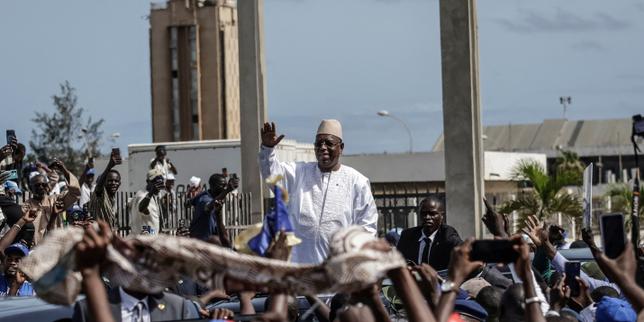
A candidate for United Nations Secretary-General cannot secure the 38th floor of the Secretariat while operating as a diplomatic orphan. The sudden return of former Senegalese President Macky Sall to Dakar on July 17, 2026, highlights the structural paradox of modern multilateral campaigns: global ambitions require local sovereign authorization. Backed formally by Burundi—which utilizes its rotating leadership of the African Union to advance the nomination—Sall faces a domestic bottleneck that compromises his international viability. Without the explicit endorsement of his successor, Bassirou Diomaye Faye, the candidacy faces a mathematical and structural veto long before it reaches the United Nations Security Council.
Understanding this campaign requires breaking down the strategic mechanics into three distinct structural pillars: domestic sovereignty validation, continental consensus aggregation, and the P5 veto matrix.
Domestic Sovereignty Validation and the Absence of National Sponsorship
The international architecture of the United Nations operates on a foundational unit: the sovereign state. Under General Assembly Resolution 79/327, while any member state can technically nominate a candidate, an unwritten rule dictates that a nominee without the backing of their home country operates under a severe credibility deficit.
Sall’s campaign relies on an asymmetric nomination vehicle. Burundi submitted his name on March 2, 2026. This dynamic creates an institutional friction point within Senegal's executive branch. The current administration, led by President Faye and Prime Minister Ousmane Sonko, has structural reasons to withhold endorsement:
- Domestic Judicial Pressure: The current administration is under intense pressure from civil society organizations to investigate the political violence and state repression that occurred between 2021 and 2024. Endorsing Sall at an international level would signal domestic immunity, contradicting the administration's sovereign anti-corruption and accountability platforms.
- The Amnesty Law Conflict: Sall's defense rests on an amnesty law passed during the twilight of his mandate. The Faye administration has repeatedly signaled an intent to review or circumvent this legislative shield to provide justice for victims of protests. Providing diplomatic machinery for Sall’s UN bid would neutralize this domestic objective.
The short meeting in Dakar between Sall and Faye represents an attempt to calculate a political compromise. For Sall, the objective is to secure a minimal statement of non-objection from Senegal. For Faye, the calculation involves weighing the international prestige of having a Senegalese UN Secretary-General against the domestic political cost of alienating a core political base that demands legal accountability.
Continental Consensus Aggregation: The African Union Friction Point
The African Union (AU) frequently attempts to present a unified continental candidate to maximize bargaining power against other regional blocs, specifically the Group of Latin America and the Caribbean (GRULAC), which is also positioning strong candidates like Michelle Bachelet and Rebeca Grynspan. Sall’s strategy to bypass standard AU mechanisms via Burundi has triggered institutional resistance.
During the AU review process on March 26, 2026, Burundi attempted to force an endorsement using a "silence procedure"—a legislative mechanism designed for non-controversial administrative matters where a motion passes if no member state objects within 24 hours. The strategy failed.
Twenty member states broke the silence. Among them, 14 filed explicit objections, while six demanded an extension of the window. The objecting coalition included major continental powers:
- Algeria and South Africa: Opposed the nomination based on procedural manipulation and broader geopolitical alignments within the UN framework.
- Nigeria: Maintained that West African representation must follow strict consensus models rather than unilateral state sponsorship.
- Senegal: The home country formally distanced itself from the silence procedure, stating it was never consulted on the initiative.
This institutional pushback invalidates the assumption that a former head of state carries automatic continental backing. The fragmentation within the AU eliminates the possibility of a unified African bloc vote, lowering the strategic value of Sall’s candidacy in the eyes of external superpowers who look for regional stability when selecting a UN chief.
The Security Council Veto Matrix
The ultimate hurdle for any Secretary-General candidate is Article 97 of the UN Charter. The selection requires a recommendation from the 15-member Security Council before moving to a general vote in the General Assembly. This means the candidate must secure at least nine affirmative votes, including the concurrence of all five permanent members (P5: United States, China, Russia, United Kingdom, and France).
Sall’s geopolitical profile presents a complex utility function for the P5:
- The Western Alignments: As President, Sall maintained deep economic and security ties with France and the United States. His role as a diplomatic envoy for Paris after his presidency strengthens his standing with Western members of the P5.
- The Neutrality Deficit: During his tenure as AU Chair in 2022, Sall engaged directly with Moscow regarding grain supplies amid the Ukraine conflict. While this demonstrates multilateral reach, it introduces volatility into how both Russia and the Western powers evaluate his long-term alignment.
- The Gender Variable: There is an escalating global campaign demanding the appointment of the first female UN Secretary-General. With prominent Latin American women in the race, P5 members looking to align with modern institutional norms may view a male former African president as a sub-optimal choice, irrespective of his qualifications.
Strategic Recommendation
Sall’s flash visit to Dakar indicates that his campaign team recognizes the mathematical impossibility of winning without resolving the domestic variable. The campaign cannot survive on bilateral lobbying alone if the home state remains a vocal detractor.
The optimal play for the Sall campaign is to negotiate a formal detachment of the UN bid from Senegalese domestic politics. This requires offering the Faye administration a clear concession: absolute non-interference in Senegal's upcoming legislative and domestic policy maneuvers in exchange for a passive diplomatic stance—neutrality rather than opposition. If the Senegalese state moves from active opposition to silent indifference, Sall can re-engage the P5 by framing his candidacy not as a disputed domestic flight, but as an independent, technically driven reform bid backed by select sub-Saharan states. Failure to secure this neutrality during the Dakar meeting effectively caps the candidacy's ceiling, rendering it a symbolic exercise rather than a viable path to the Secretariat.