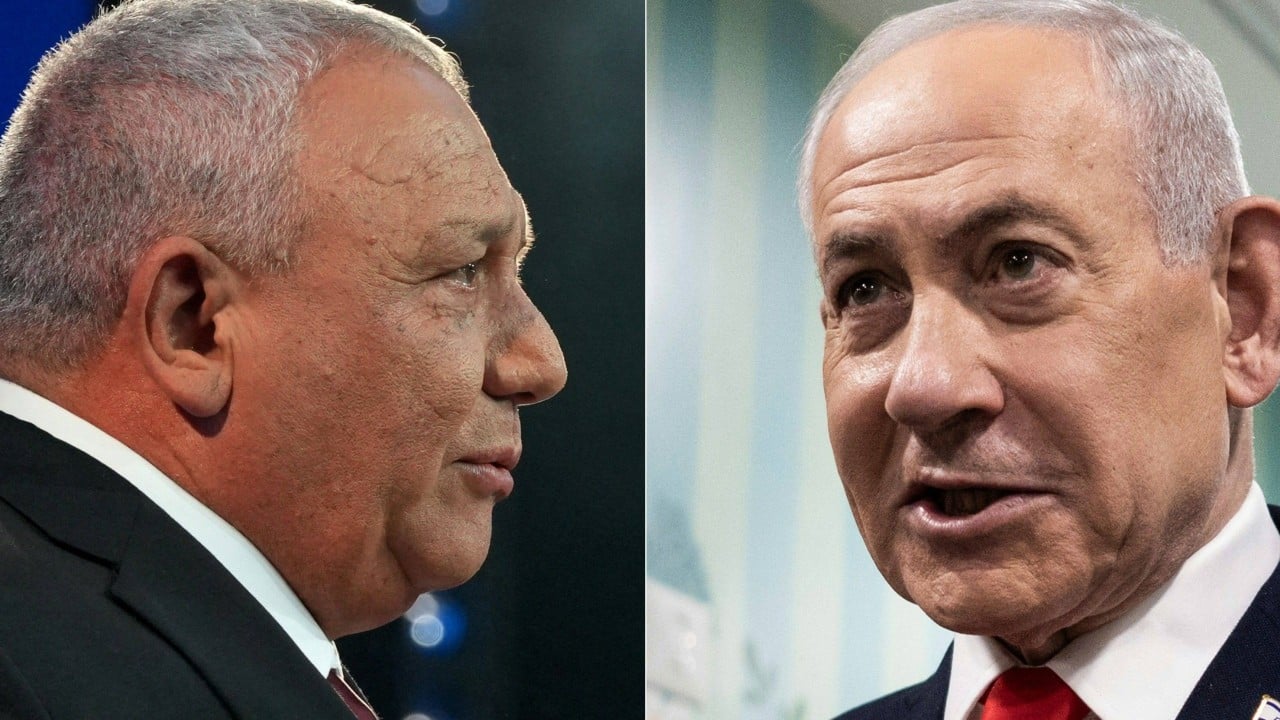
Political commentators in Tel Aviv and Washington love a clean arithmetic equation. They look at the Knesset's 120 seats, count the opposition bloc, add the mandates held by Arab-majority parties, and declare a viable path to unseating Benjamin Netanyahu. Recent speculation tipping former IDF Chief of Staff Gadi Eisenkot to pursue a government backed by Arab lists is the latest iteration of this recurring fantasy.
According to political analysts and observers tracking Israeli coalition dynamics, the narrative assumes that because a similar arrangement worked briefly in 2021 under Naftali Bennett and Yair Lapid, it can simply be dusted off and scaled up. That assumption ignores the structural reality of Israeli parliamentary politics after October 7, the deep ideological fractures within the Arab-majority parties themselves, and the fundamental instability of external confidence-and-supply agreements.
To understand why this strategy is far more precarious than the headlines suggest, we have to look past the raw seat counts and examine the mechanics of coalition survival in Jerusalem.
The Myth of the Monolithic "Arab Bloc"
When pundits discuss "the backing of Arab lists," they frequently treat Arab-Israeli political parties as a single, unified voting machine. This is a severe misreading of the Knesset's actual composition.
In reality, the parties representing Arab citizens of Israel operate on fundamentally different ideological tracks, particularly regarding their willingness to engage with Zionist institutions and government budgets.
- Ra'am (United Arab List): Led by Mansour Abbas, this Islamist party broke a decades-long taboo in 2021 by formally joining the Bennett-Lapid coalition. Abbas adopted a pragmatic, civil-integration approach focused on securing municipal budgets, combating crime in Arab towns, and improving infrastructure. Even then, Ra'am's participation required delicate theological and political balancing acts, and the party temporarily froze its membership in the coalition in 2022 over tensions at the Al-Aqsa Mosque/Temple Mount.
- Hadash-Ta'al: Led by Ayman Odeh and Ahmad Tibi, this alliance represents secular left-wing socialists and Arab nationalists. Historically, Hadash and Ta'al have refused to sit in any Israeli government, viewing themselves as a permanent opposition dedicated to ending the occupation and challenging the state's Zionist framework. While they have occasionally provided an external "safety net" to prevent right-wing governments from taking power—most notably during Yitzhak Rabin's tenure in the 1990s—they have consistently rejected formal coalition membership.
- Balad: Running separately in recent cycles, Balad advocates for transforming Israel from a Jewish state into a "state of all its citizens." It maintains a strict ideological stance against cooperating with Zionist parties on government formation.
Grouping these distinct factions together as a reliable bloc for Gadi Eisenkot ignores their competing red lines. A security-focused former military chief like Eisenkot—whose political brand is built on defense credibility, statecraft, and centrist pragmatism—faces massive friction when trying to align with parties like Hadash-Ta'al on core national security policies, military operations, and the future of the Palestinian territories.
Why "Outside Support" Rarely Survives Contact with Reality
Proponents of an Eisenkot-led coalition argue that Arab parties do not need to sit inside the cabinet; they can simply abstain or vote from the outside to allow a minority government to pass its investiture vote.
In theory, external support solves the political optics problem for both sides. Centrist and center-right Jewish voters do not have to see Arab nationalists holding ministerial portfolios, and Arab lawmakers do not have to take direct collective responsibility for military decisions made by the security cabinet.
In practice, minority governments reliant on external backing are extraordinarily fragile in the Israeli system.
Under Israel's Basic Law, a government must pass an annual state budget by a strict statutory deadline. Failure to pass the budget triggers the automatic dissolution of the Knesset and new elections. While a party might abstain during a confidence vote to oust a rival prime minister, passing a national budget requires active, affirmative votes—or a carefully calibrated number of absences—every single year. Every budget cycle becomes an existential crisis where any small faction holding the balance of power can demand sweeping policy concessions or threaten to bring down the entire administration.
Furthermore, the security environment since late 2023 has drastically narrowed the room for ambiguity. During periods of active military conflict or heightened regional tension, a prime minister cannot govern effectively if the parliamentary majority keeping the government alive is actively condemning the IDF's operations from the Knesset podium. The 2021–2022 Bennett-Lapid government collapsed after barely a year precisely because its razor-thin 61-seat majority could not withstand the constant ideological friction between its right-wing members and Ra'am, combined with relentless pressure from Netanyahu's opposition.
The Right-Wing Flank Problem
Even if Eisenkot were to secure the tacit backing of Mansour Abbas or Ayman Odeh, the arithmetic still fails unless he retains the support of right-leaning opposition figures.
Any realistic alternative to a Netanyahu-led coalition relies on a broad tent spanning from the center-left to the ideological right—including figures like Avigdor Liberman (Yisrael Beiteinu), Gideon Sa'ar, or Naftali Bennett. These politicians are staunchly opposed to Netanyahu's leadership, yet their voter bases are largely hawkish on security and deeply skeptical of relying on non-Zionist parties for political survival.
Likud and its allies have spent years framing any reliance on Arab parties as a fundamental question of national legitimacy. While critics argue this framing is a cynical political weapon designed to disqualify rival coalitions, its electoral potency is undeniable. Right-leaning opposition leaders know that entering a government dependent on Hadash-Ta'al risks alienating their core constituencies and handing Netanyahu a powerful campaign narrative for the next election cycle.
If Eisenkot moves aggressively toward securing Arab list backing, he risks losing the very center-right mandates he needs to reach 61 seats in the first place. Gain four seats on the flank; lose six in the center. The math cancels itself out.
The Real Question Voters Are Asking
The conventional media framing treats coalition building as a game of Tetris—fitting differently shaped blocks together until a horizontal line disappears. Voters, however, do not view politics as an abstract geometry puzzle.
After years of political deadlock, five election cycles in under four years, judicial overhaul protests, and prolonged multi-front war, the primary demand among the Israeli electorate is not merely replacing one prime minister with another. It is governance stability and broad national consensus.
A government cobbled together with 61 seats, reliant on the external abstention of parties that fundamentally oppose the state's security establishment, does not project stability. It projects paralysis. Every legislative initiative—from ultra-Orthodox military conscription reform to economic recovery plans—would be held hostage by the narrowest common denominator.
What Actually Shifts the Balance of Power
If relying on Arab lists is a high-risk gambit with a short shelf life, what actually determines whether a figure like Gadi Eisenkot can form a durable government?
- Consolidating the Center-Right: A viable post-Netanyahu coalition requires winning over soft-right and traditional Likud voters, not just assembling every non-Likud faction into an anti-Netanyahu conglomerate. That means building a clear majority among Zionist parties first, so that any cooperation with Ra'am—such as the pragmatic partnership seen in 2021—acts as a stabilizing bonus rather than a brittle lifeline.
- Addressing the Haredi Conscription Fault Line: The structural glue of Netanyahu's coalition has long been his alliance with the ultra-Orthodox parties, Shas and United Torah Judaism. The ongoing national debate over military service exemptions for yeshiva students has strained that alliance to its breaking point. A centrist leader's path to power depends heavily on whether those fault lines fracture the existing coalition from within, rather than attempting to outflank it from the outside.
- Defining a Coherent Diplomatic and Security Vision: Voters looking at Eisenkot—a former chief of staff who has experienced profound personal loss in the Gaza conflict and has been vocal about strategic decision-making—are evaluating him on his ability to articulate a clear exit strategy and regional framework. Ambiguity works during an election campaign; it destroys coalitions once in office.
The Bottom Line on Coalition Arithmetic
Tipping Gadi Eisenkot to pursue a government backed by Arab lists makes for an intriguing headline, because it pits a respected military commander against the entrenched political establishment using an unconventional alliance.
Yet in the Knesset, unconventional alliances without a shared strategic core do not break the status quo—they simply trigger the next election. Until the opposition solves its internal contradictions between its hawkish right wing and its center-left base, counting hypothetical seats from Arab lists is an exercise in wishful thinking, not a blueprint for governing.