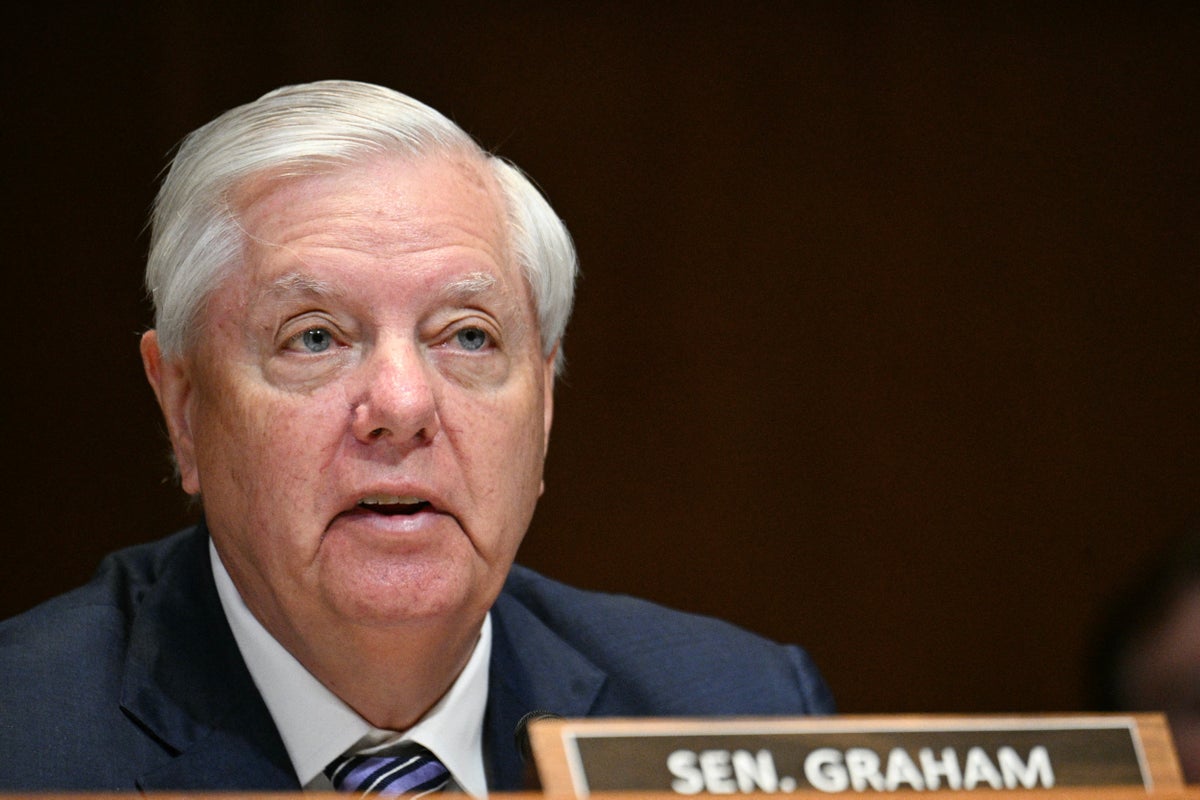
Long-term survival in the United States Senate requires mastering a specific institutional calculus: balancing polarized national electorates with functional cross-party bargaining. For more than two decades, Senator Lindsey Graham operated at the absolute center of this friction. His sudden death from an aortic dissection at age 71 closed a chapter on an archetype of legislative behavior that is rapidly disappearing from modern American politics. Rather than viewing his career through conventional biographical narratives, a rigorous examination of his trajectory reveals specific operational models for coalition-building, ideological adaptation, and the mechanics of political influence in a hyper-polarized environment.
The Economics of Legislative Positioning
Graham’s political longevity can be modeled through the lens of transactional utility. Early in his tenure representing South Carolina, first in the House and later succeeding Strom Thurmond in the Senate in 2003, he positioned himself as an indispensable node in legislative networks.
The core mechanics of this positioning relied on three distinct variables:
- The Foreign Policy Anchor: As an Air Force veteran and JAG lawyer, Graham maintained a hawkish consensus posture. Alongside John McCain and Joe Lieberman—collectively dubbed the Three Amigos—he provided a reliable bridge between interventionist defense policy and institutional Republican orthodoxy. This gave him outsized leverage on the Senate Armed Services and Judiciary committees, allowing him to shape military procurement and judicial confirmations independent of shifting electoral winds at home.
- The Dealmaking Premium: In an institutional structure where gridlock is the default state, centrist leadership relies on members who can cross party lines without alienating their base. Graham’s early career was defined by this capacity, collaborating with Democrats on immigration reform and judicial nominations. The economic value of this role was simple: he acted as a clearinghouse for bipartisan compromises, reducing transaction costs for Senate leadership.
- The Adaptation Cost Function: When the Republican voter base shifted decisively toward populist nationalism under Donald Trump, political actors faced a steep adaptation cost. Many traditional conservatives chose ideological purity and early retirement. Graham recalculated his utility function. The transition from vocal Trump critic during the 2016 primary to one of the executive branch's most reliable legislative champions demonstrated a ruthless tactical pivot. By aligning his personal brand with the party’s new center of gravity while maintaining institutional relationships, he preserved his legislative throughput.
The Mechanics of the Trump-Graham Axis
The alliance between Graham and Trump is frequently mischaracterized in mainstream commentary as mere personal opportunism. From a strategic perspective, it represented a symbiotic exchange of capital. Trump required institutional validation and a surrogate capable of translating executive priorities into legislative wins on Capitol Hill. Graham required executive backing to insulate himself from primary challenges within a deeply conservative South Carolina electorate.
This relationship altered the internal dynamics of the Senate budget and appropriations processes. Graham shifted from an establishment check on executive overreach to an aggressive proponent of executive initiatives, particularly regarding foreign interventions in the Middle East and continuous alignment with allied leadership abroad. Behind-the-scenes documentation released late in his life captured an unyielding enthusiasm for military escalation, demonstrating how deeply his worldview remained wedded to traditional projection of American power even as the broader Republican party drifted toward isolationism.
The structural consequence of this alignment was the elimination of intra-party friction. By securing presidential endorsements and neutralizing local opposition—culminating in the appointment of his sister, Darline Graham, to temporarily fill his Senate vacancy and the swift consolidation of political machinery in South Carolina—Graham insulated his seat from competitive threat.
The Succession Vacuum and Institutional Fallout
The abrupt termination of a high-tenure legislative career creates an immediate power vacuum within key committees, specifically the Senate Budget Committee where Graham served as chairman. In the legislative branch, institutional memory and personal relationships dictate committee outcomes far more than formal rules.
When a central node is removed instantly, two systemic effects occur:
- Negotiation Friction Spikes: Without a recognized broker capable of cutting across ideological lines, bipartisan compromises on defense spending, foreign aid packages, and federal budgeting become exponentially more difficult to execute.
- Decentralization of Factional Power: The authority previously concentrated in senior hawks disperses among competing factions within the party caucus, increasing volatility in floor votes and leading to higher probabilities of government funding standoffs.
Furthermore, Graham’s international footprint—exemplified by his continuous diplomatic engagement with leadership in Kyiv and Jerusalem—highlights the degree to which individual senators can act as parallel foreign policy executioners. His sudden death leaves foreign leaders scrambling to recalibrate direct channels to the American legislative branch, exposing the fragility of personal diplomacy versus institutionalized statecraft.
Strategic Forecast
The removal of Lindsey Graham from the Senate alters the internal calculus for executive-legislative relations. Without his specific blend of hawkish internationalism and populist loyalty, the executive branch loses its most effective legislative translator. Future budget negotiations and foreign policy authorizations will lack the lubrication that his cross-factional utility provided.
The strategic play for Senate leadership moving forward is not to find a direct replacement for Graham—such hybrid profiles are structurally rare in a bifurcated political market—but to institutionalize the bridge-building functions he previously executed through informal networks. Until a new equilibrium is established, legislative throughput on national security and federal spending will face chronic structural drag.