The media needs a narrative, and it needs it cheap.
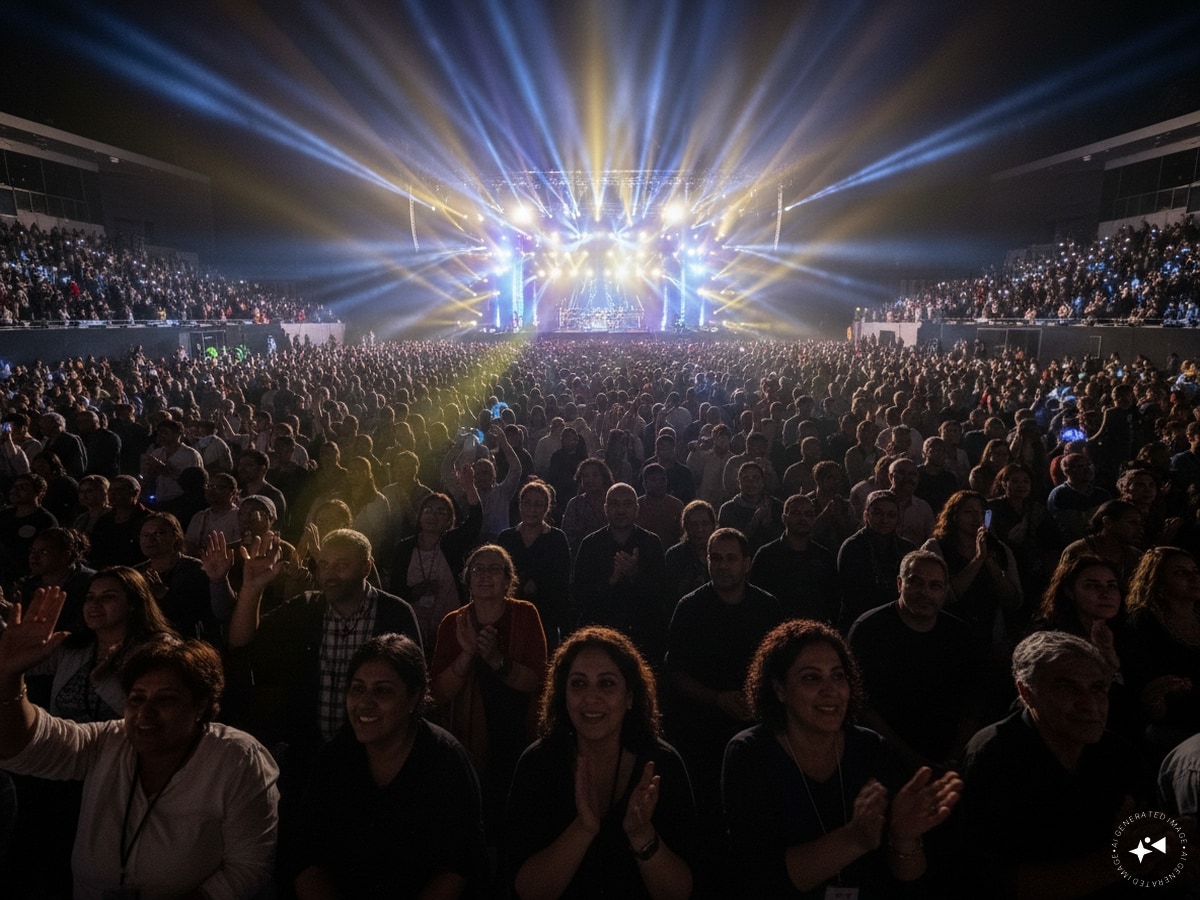
When BTS rolled into London for their first UK presence since 2019, the entertainment press was already drooling. Then came the inevitable: a stray comment, a wink toward the English football team's latest victory, and suddenly the headlines wrote themselves. "BTS takes credit for England win." Meanwhile, you can read other events here: The Weight of the Mask When the Web Starts to Frays.
It is a beautiful piece of clickbait. It is also an absolute masterclass in the lazy correlation-as-causation cycle that drives modern entertainment journalism.
Let us be completely clear about what happened here. A massive global pop entity acknowledged a host country's cultural moment. The media transformed this polite nod into an act of cultural dominance. This is not just harmless PR fluff. It exposes a deeper, more cynical mechanism in the attention economy: the desperation of traditional institutions to hitch their wagons to fandom-driven engagement locomotives. To understand the bigger picture, we recommend the recent article by Entertainment Weekly.
The Parasocial Ploy
For a decade, the narrative surrounding global K-pop phenomena has relied on a single, unchallenged assumption: that the sheer volume of online noise translates to actual, systemic cultural shifts.
I have watched entertainment brands burn through millions of dollars trying to replicate this exact formula. They hire the biggest name. They watch the Twitter metrics skyrocket. They see millions of impressions within three minutes. Then, the campaign ends, the fandom moves to the next trending topic, and the core brand is left with exactly the same conversion rate they started with.
Why? Because fandom engagement is insular. It exists for itself.
When a group like BTS references a football victory, it is a calculated gesture of localized goodwill. It is brilliant PR. But the idea that this creates a meaningful convergence between football culture and pop fandom is a delusion. These two massive cultural forces did not merge. One simply used the other as a temporary vanity mirror.
The entertainment press loves the lazy consensus. They want you to believe that pop music and sports are melting into one giant, harmonious ecosystem of shared joy. They want you to think a stadium show in London can magically influence the performance of eleven athletes miles away.
It is a comforting thought. It makes everything feel connected. It is also pure fiction.
The Math of Empty Attention
Let us break down the mechanics of the "fandom bump."
When an artist nods to a local sporting event, the resulting media storm follows a predictable trajectory.
| Metric | Immediate Impact | Long-Term Value |
|---|---|---|
| Social Impressions | Millions of interactions within minutes | Zero tail-end engagement for the sports franchise |
| Media Coverage | High-volume syndication across entertainment blogs | Zero conversion to actual match viewership |
| Brand Affinity | Temporary sentiment boost among existing fans | No new audience acquisition for either party |
The data shows a massive spike in superficial metrics—likes, retweets, shared clips—but absolute stagnation in hard conversions. The football fans do not buy albums. The music fans do not buy season tickets.
This is the vanity trap of modern media metrics. We confuse visibility with influence. We mistake a loud echo chamber for a cultural shift.
Stop Demanding Relevance From Coincidence
The premise of the question we should be asking is flawed from the start. People frequently ask how pop stars can better align with mainstream sports to broaden their appeal.
They shouldn't.
The moment a hyper-focused pop phenomenon tries to genuinely embed itself into traditional, legacy sports culture, it dilutes its own brand. The appeal of these massive musical movements lies in their exclusivity—the feeling that if you are in the room, you are part of a distinct, elevated community.
Trying to claim ownership over a national sports moment does not make an artist look bigger. It makes them look like they are chasing the dragon of traditional mainstream validation. It is an admission that despite selling out stadiums on their own merits, they still feel the need to bow to the altar of broadcast television sports culture.
Imagine a scenario where an elite tech company pauses its product launch to celebrate a local marathon runner. It does nothing for the runner, and it confuses the consumer. It is a desperate bid for local relevance that screams insecurity.
The Price of Dilution
There is a dark side to this constant desire to cross-pollinate every single aspect of culture.
When everything is connected, nothing is special. When every stadium show requires a nod to the local sports team, the performance stops being an artistic statement and becomes a regional corporate greeting card.
I have spent years analyzing audience retention data in the entertainment sector. The most loyal audiences—the ones who actually spend money on physical media, merchandise, and premium ticketing—do not care about mainstream crossover events. In fact, they actively dislike them. They view these moments as corporate mandates, moments where their favorite artists are forced to play nice with traditional media narratives.
The strategy of riding the wave of whatever happens to be trending in the host city is a short-term play for cheap headlines. It works for 24 hours. Then the news cycle moves on, the football team loses its next match, and the narrative evaporates.
Stop looking for profound cultural synergy in the script of a stadium tour. It is just business. It is a standard regional activation masquerading as a historic cultural crossover.
The media got their clicks. The fans got their social media clips. The football team kept playing regardless of who was singing in London.
The illusion is complete, the revenue is booked, and the actual cultural needle did not move a single millimeter.