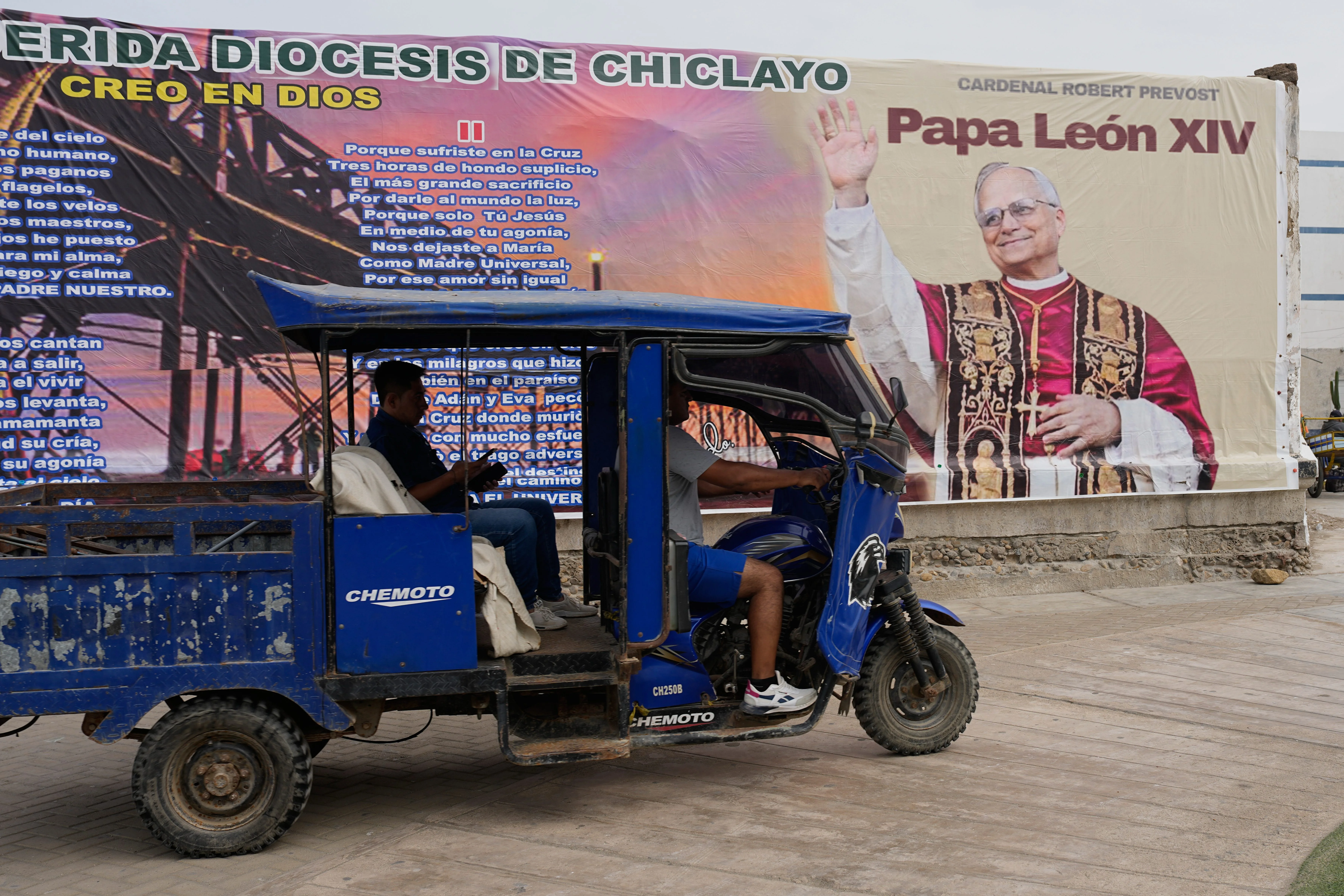
Pope Leo’s decision to board a transatlantic flight for a demanding tour of Latin America shortly after undergoing cancer surgery is a calculated geopolitical gamble designed to project institutional stability and halt the steady erosion of Catholic influence across the Global South. While standard medical wisdom dictates extended rest following oncological procedures, the Vatican operates on a different clock. Delaying the trip would have handed momentum to rival evangelical movements in the region and triggered fresh, destabilizing speculation inside Rome about the pontiff’s physical capacity to govern.
The stakes are unusually high. For decades, Latin America served as the demographic bedrock of the Roman Catholic Church, supplying the vast majority of its faithful and anchoring its global cultural weight. That dominance is no longer guaranteed. Across Brazil, Central America, and the Andean nations, Pentecostal and charismatic evangelical churches have spent the last thirty years systematically absorbing working-class congregations, reshaping local politics, and shifting social norms. A postponed papal visit is not merely a scheduling hiccup in that environment; it reads as a retreat.
The Medical Reality Behind Papal Travel
Modern papal travel is an endurance sport disguised as a diplomatic mission. A typical multi-nation itinerary in the Americas involves rapid changes in altitude, extreme humidity, relentless motorcade schedules, and hours of standing under stadium lights or harsh midday sun. Even for a healthy executive, the physiological toll of crossing multiple time zones while maintaining a minute-by-minute public schedule is severe.
Doing it during post-operative recovery introduces tangible clinical risks. Following cancer surgery, the primary threats to a patient are not always the disease itself, but the secondary complications triggered by physical stress and environmental exposure.
- Immunosuppression and Infection: Surgical trauma temporarily depresses immune function. Moving through massive crowds, shaking hundreds of hands, and breathing recycled cabin air dramatically increases exposure to respiratory and gastrointestinal pathogens.
- Thromboembolic Risk: Long-haul flights are notorious for elevating the risk of deep vein thrombosis and pulmonary embolism. Post-surgical patients already carry heightened clotting risks due to tissue inflammation and reduced baseline mobility.
- Fatigue and Cardiovascular Strain: Recovery consumes immense metabolic energy. Pushing a recovering body through high-altitude stops—such as cities in the Andes where oxygen levels drop noticeably—places acute strain on the heart and lungs.
To mitigate these hazards, the Vatican’s medical corps—traditionally led by the pontiff's personal physician alongside specialists from Rome’s Gemelli Hospital—transforms the papal entourage into a mobile intensive care unit. Standard protocol for high-risk apostolic journeys includes traveling with a dedicated surgical team, a supply of the pope's specific blood type, portable diagnostic equipment, and pre-vetted trauma centers mapped out along every kilometer of the motorcade route.
Yet no amount of logistical bubble-wrapping eliminates the core vulnerability. A pope cannot govern from behind a glass wall without undermining the very purpose of the trip. The power of the papacy relies on physical presence, tactile connection, and the visual proof that the institution is alive and engaged.
Why Latin America Could Not Wait
If the medical math argues for staying in Rome, the geopolitical math demands the opposite. Understanding why Leo is making this trip now requires looking at the structural pressures squeezing the Vatican from both inside and outside the Church.
The Evangelical Surge and Demographic Drift
The numbers tell a stark story. In the mid-twentieth century, roughly 90 percent of Latin Americans identified as Catholic. Today, in major nations like Brazil, Honduras, and Guatemala, that figure has dropped closer to half, with evangelical Protestants accounting for a rapidly growing share of the population.
This shift is driven by local, hyper-accessible religious networks. Evangelical storefronts operate directly inside underserved neighborhoods, offering immediate community support, vibrant worship, and direct pastoral access. By contrast, the Catholic Church has struggled with a chronic shortage of local priests, leaving vast rural areas and urban peripheries underserved. When the pope arrives in person, he temporarily bridges that gap, generating a wave of media attention and emotional solidarity that local bishops simply cannot replicate on their own.
Securing the Legacy of Reform
A papacy is only as strong as its ability to execute its agenda. When a pontiff falls ill, the Roman Curia—the Church’s central administrative bureaucracy—naturally slows down. Cardinals begin looking toward the next conclave, reluctant to enforce controversial reforms or back risky personnel appointments from a leader they perceive as a lame duck.
By stepping onto the world stage immediately after surgery, Leo is sending an unmistakable signal to the Vatican apparatus. He is demonstrating that his recovery is not a slow fade into retirement, but a brief interruption. Historically, popes have used strenuous foreign travel specifically to silence whispers about their health. John Paul II famously maintained a grueling international travel schedule well into the advanced stages of Parkinson’s disease, using sheer physical willpower to project spiritual authority and keep internal critics on the defensive. Leo is drawing directly from that playbook.
The High Cost of Optics
There is a sharp counter-argument to this strategy, and it is whispered quietly among seasoned Vatican observers and veteran diplomats. Performing strength when one is physically fragile carries a severe reputational hazard.
If a pontiff stumbles on airplane stairs, slurs words due to exhaustion, or requires an emergency hospitalization mid-tour, the visual impact overrides every speech, diplomatic meeting, and homily delivered on the trip. In the modern media ecosystem, a ten-second clip of physical distress travels infinitely faster than a nuanced theological address on economic justice or ecological preservation.
Consider what happens when a high-profile state visit turns into a medical vigil. Local organizers, who spend tens of millions of dollars on security, infrastructure, and crowd management, suddenly find their national spotlight dominated by ambulance sirens and press briefings from hospital steps. Instead of projecting vitality, the trip inadvertently confirms the very doubts it was meant to erase.
Navigating Regional Political Minefields
Beyond the physical strain, Latin America presents an ideological obstacle course. The region is deeply polarized, split between populist left-wing governments, hardline conservative movements, and fragile democracies grappling with cartel violence and economic stagnation.
Every stop on a papal itinerary forces the Vatican into delicate diplomatic balancing acts.
- Human Rights vs. State Relations: Speaking out forcefully against state corruption, indigenous land displacement, or authoritarian crackdowns earns moral credibility on the street, but it risks alienating host governments whose cooperation the local Church needs for schools, hospitals, and tax exemptions.
- Economic Inequality: Latin America remains one of the most unequal regions on earth. Addressing poverty without sounding like a partisan political actor requires precise rhetorical calibration, especially in countries where conservative Catholic elites hold significant financial sway over diocesan budgets.
- Internal Church Divisions: The Latin American hierarchy is itself split between progressive clergy focused on social liberation and traditionalists focused on doctrinal orthodoxy. Leo’s choice of venues, the bishops he elevates during the trip, and the specific communities he visits will be dissected relentlessly by both factions for clues about the future direction of the Church.
How the Vatican Stages a Recovery Tour
To pull off a high-stakes journey under medical scrutiny, Vatican planners adjust the mechanics of the trip behind the scenes without altering its public grandeur. If you watch the coverage closely, the adaptations become clear.
First, the rhythm of the schedule changes. Rather than packing four or five major public events into a single day, planners build longer midday breaks into the itinerary, often disguised as "private time" or "lunch with local clergy" at the apostolic nunciature. These windows allow doctors to monitor vital signs, administer fluids or medication, and let the pontiff rest away from cameras.
Second, staging is engineered to minimize physical exertion. Long processions on foot are replaced by modified popemobiles with built-in seating and hydraulic lifts that eliminate the need to climb steep aircraft steps. Speeches are frequently shortened, with the full, lengthy texts handed out to journalists as "delivered" while the pope reads only the opening and closing paragraphs aloud.
Third, the diplomatic workload is distributed. The Vatican Secretary of State and senior curial officials take on heavier lifting in bilateral meetings with heads of state, freeing the pontiff to focus his limited energy on large, high-visibility liturgical events where his presence matters most.
The Precedent of Governing Through Vulnerability
There is a deeper philosophical calculation at work here that secular political analysts often miss. In corporate boardrooms or secular politics, physical weakness is almost universally treated as a liability to be hidden until it can no longer be concealed. In Catholic theology, however, suffering and physical frailty carry a different symbolic weight.
By refusing to hide his post-surgical recovery behind the walls of the Vatican, Leo is leaning into a distinctly religious model of leadership. A leader who shows up visibly diminished, carrying the marks of medical intervention, can forge a powerful emotional bond with millions of ordinary people who deal with chronic illness, inadequate healthcare, and physical hardship every day.
That dynamic only works if the pontiff remains mentally sharp and visibly in command. The line between inspiring resilience and alarming the public is razor-thin. As the papal plane touches down in Latin America, every step down the tarmac, every unscripted remark to reporters, and every afternoon appearance in the heat will serve as a real-time stress test of both the man and the institution he leads.