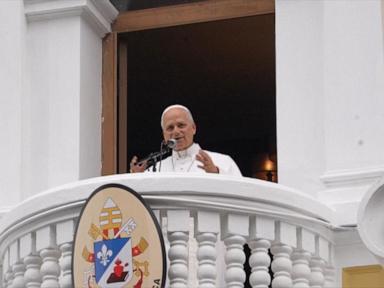
Pope Leo has officially departed Peru, bringing a close to a sprawling 12-day diplomatic and pastoral journey across South America that tested the physical limits of the modern papacy and exposed deep fault lines within the global Catholic Church. While television cameras captured the expected sea of waving flags, weeping faithful, and carefully choreographed airport farewells, the real story of this trip unfolded behind closed doors in presidential palaces and episcopal conferences. For nearly two weeks, the pontiff navigated a region caught between acute economic instability, rising secularization, and fierce internal ideological battles over the future of Catholicism.
The departure from Lima marks the end of an exhausting itinerary that required high-altitude travel, marathon public Masses, and delicate political balancing acts. Yet, stripping away the pageantry reveals a calculated Vatican strategy. Rome is fighting to maintain its institutional grip on a continent that holds roughly forty percent of the world's Catholics, even as evangelical Protestantism and outright religious disaffiliation erode its historic monopoly. You might also find this connected article insightful: Why Christine Lagarde Is Leaving the ECB Early to Fight Fake News.
The Geopolitical Reality Behind the Apostolic Itinerary
Papal trips are never purely religious exercises. Every stop on a 12-day route is negotiated months, sometimes years, in advance by the Vatican Secretariat of State, functioning as a high-stakes exercise in soft power. When a pope steps onto the tarmac in South America, he is simultaneously acting as a head of state, a moral arbiter, and the chief executive of a massive, sprawling global institution facing severe demographic headwinds.
In Peru, as in the preceding stops on this 12-day tour, the local political establishment eagerly sought the optics of papal proximity. South American governments routinely suffer from chronic approval deficits, institutional gridlock, and public distrust fueled by persistent corruption scandals. Standing beside the leader of the Catholic Church offers embattled politicians a fleeting halo of legitimacy. As extensively documented in recent coverage by TIME, the implications are worth noting.
The Vatican knows this game intimately. Experienced Vatican diplomats trade these photo opportunities for specific concessions—protections for Church-run educational and healthcare networks, favorable tax statuses, or commitments on social and environmental policies. However, the risk of this transactional diplomacy is always visible on the ground. When the Church appears too cozy with unpopular administrations, it alienates the very grassroots populations it claims to champion, particularly indigenous communities and working-class urbanites who view the state with deep suspicion.
The High Cost of Pastoral Pageantry
Staging a 12-day multi-nation papal visit demands staggering logistical and financial commitments from host countries that are often struggling with inflation, public debt, and inadequate infrastructure. Security perimeters, temporary altars, crowd control, and media centers run into the tens of millions of dollars.
Critics within these host nations consistently raise a blunt question. Does the immediate spiritual morale boost justify diverting scarce public funds into temporary infrastructure for a three-day stopover? Supporters counter that international tourism, global media exposure, and local economic stimulus offset the public expenditure. In reality, the financial burden usually falls squarely on municipal budgets, while the long-term institutional benefits accrue to the local diocese and the Holy See.
A Continent Slipping Away from Rome
To understand why Pope Leo committed nearly two weeks of his calendar—and significant physical stamina—to South America, one must look at the demographic data coming out of Latin America over the past three decades. For centuries, South America was treated by Rome as a guaranteed Catholic stronghold, a demographic counterbalance to the rapidly secularizing nations of Western Europe. That assumption is dead.
Across the region, the Catholic Church has experienced a steady, measurable hemorrhage of active members. The primary beneficiary has been the explosive growth of Pentecostal and neo-Pentecostal evangelical movements, alongside a rapidly expanding demographic of religiously unaffiliated citizens, particularly among urban youth.
Evangelical churches succeeded in South America by offering what the traditional Catholic parish structure often failed to provide: decentralized leadership, immediate community support networks in neglected urban peripheries, and an emotional, participatory worship style that requires no seminary-trained priest to officiate. In contrast, the Catholic Church in South America suffers from a chronic, debilitating shortage of clergy. Vast rural parishes and sprawling city slums frequently go weeks or months without a resident priest to celebrate Mass or administer the sacraments.
Pope Leo's 12-day presence was an attempt to stanch this bleeding through sheer visibility. By physically occupying the public square, the papacy projects vitality and permanence. But a papal visit is an adrenaline shot, not a cure. Once the motorcade heads to the airport and the temporary stages are dismantled, local bishops are left with the exact same structural deficits—empty seminaries, aging clergy, and underfunded parishes—that existed before the papal plane touched down.
The Internal Ideological Tug of War
Beyond external competition from evangelical movements, Pope Leo spent these 12 days walking a tightrope between deeply divided factions within the South American Church itself. The region is the birthplace of liberation theology, a movement that emphasizes social justice, structural reform, and a preferential option for the poor. For decades, that ideological current clashed violently with more conservative, doctrinal currents backed by traditionalist bishops and lay movements.
Today, that divide has morphed into a complex struggle over governance, synodality, and institutional accountability. During his meetings with regional bishops' conferences, the pope faced competing pressures:
- Progressive Clergy and Social Activists pushed for stronger papal condemnation of extractive mining and logging industries, greater autonomy for local parishes, and expanded roles for women and lay leaders to offset the priest shortage.
- Doctrinal Conservatives urged the pontiff to reinforce traditional moral teachings, halt liturgical experimentation, and resist adapting Church structures to modern secular norms.
- Indigenous Advocates demanded concrete restitution and institutional recognition, moving beyond ceremonial apologies for historical colonial abuses toward genuine decision-making power within local dioceses.
Navigating these competing demands requires calibrated rhetoric. A single unscripted remark during an in-flight press conference or a homily can ignite months of theological warfare in Catholic media. Throughout the 12 days, the messaging remained carefully balanced—emphasizing care for the marginalized and environmental stewardship while avoiding radical structural changes to clerical celibacy or sacramental theology.
The Unresolved Shadow of Institutional Accountability
No modern papal journey is complete without confronting the crisis that has defined the Catholic Church for over a generation: clerical sexual abuse and the systemic cover-ups by church hierarchy. In South America, the reckoning arrived later than in North America or Europe, but its impact has been equally devastating to the Church's moral authority.
Peru, the final stop on Pope Leo's itinerary, has been a particularly painful epicenter of these scandals, involving both individual diocesan clergy and high-profile lay-consecrated societies that wielded immense wealth and political influence. For years, survivors in the region fought an uphill battle against dismissive local bishops, opaque Vatican legal procedures, and civil statutes of limitations.
Whenever a pope visits a country scarred by these scandals, the handling of survivor meetings becomes a litmus test for the entire trip. Private, unannounced meetings with victims offer personal consolation, yet survivors and watchdog groups increasingly view private empathy as insufficient without transparent, public structural reform.
The core tension remains unresolved. The Vatican operates as an absolute monarchy where bishops are accountable primarily to the pope, not to the local laity or civil authorities. Until canonical accountability translates into consistent, public removal of negligent bishops and full cooperation with secular prosecutors, papal departures from places like Lima will always carry an undertone of unfinished business.
Environmental Rhetoric Versus Economic Survival
A recurring theme across the 12-day tour was the protection of the Amazon basin and the broader South American ecosystem. The Vatican has positioned itself as a premier global voice on environmental ethics, framing ecological destruction as a direct moral failing that disproportionately harms indigenous and impoverished populations.
On the ground, however, this moral framework collides head-on with brutal economic realities. Countries like Peru rely heavily on extractive industries—copper, gold, natural gas, and timber—to fund basic state operations and lift millions out of extreme poverty. When the Church condemns large-scale mining projects or pushes for strict environmental moratoriums, it wins praise from international NGOs and indigenous federations, but it frequently alienates working-class communities whose livelihoods depend on those exact industries.
Consider a hypothetical example of a mid-sized mining town in the Peruvian Andes. A multinational corporation proposes expanding an open-pit copper mine that threatens local watershed purity. The local bishop, echoing papal encyclicals, publicly opposes the expansion on environmental and human rights grounds. Immediately, the community fractures. Downstream agricultural workers back the bishop to save their crops, while local miners and small business owners accuse the Church of trying to keep their families trapped in generational poverty.
This is the daily reality for the South American clergy. Papal speeches deliver sweeping moral principles from elevated platforms, while local priests are left to mediate explosive, zero-sum economic conflicts in the trenches.
The Media Illusion of the Papal Bounce
In the immediate aftermath of a 12-day trip, international headlines inevitably focus on crowd sizes. Hundreds of thousands of people lining avenues, filling sprawling parks, and braving inclement weather create powerful visual proof of institutional relevance. Media outlets broadcast these images globally, reinforcing the narrative of a triumphant tour.
Veteran Vatican observers, however, view these metrics with heavy skepticism. Large crowds at a papal Mass are a cultural phenomenon in Latin America, comparable to a major national holiday or a historic sporting event. People travel from across the region out of cultural curiosity, family tradition, and a desire to witness a historic figure, regardless of whether they attend Sunday Mass in their home parish.
Historical precedent confirms that the "papal bounce" is notoriously short-lived. Following previous papal visits to Brazil, Chile, and Colombia over the past fifteen years, statistical tracking of Mass attendance, religious vocations, and self-identified Catholic affiliation showed virtually no long-term upward trajectory. In some cases, the decline accelerated within two years of the visit as unresolved local scandals or political missteps wiped out the temporary goodwill.
The Logistics of an Exhausting Pace
Twelve days is a punishing duration for any international diplomatic mission, let alone one centered on an elderly religious leader. Modern popes operate under relentless public scrutiny, where every stumble on a staircase, every moment of visible fatigue, and every minor schedule adjustment triggers immediate speculation about their health and capacity to govern.
The physical toll of moving rapidly across varying climates and extreme altitudes—from coastal humidity to the thin air of the Andes—cannot be overstated. Vatican planners attempt to build rest periods into the schedule, yet the sheer volume of mandatory audiences, motorcades, liturgical ceremonies, and diplomatic protocols leaves minimal margin for recovery.
This grueling pace highlights a fundamental vulnerability in the centralized governance model of the Catholic Church. Everything depends on the physical stamina of a single man. When the pope travels, the central administrative machinery of the Vatican effectively slows down, waiting for the sovereign to return to Rome.
What Remains After the Plane Takes Off
As the papal aircraft climbs out of Lima airspace, the immediate media cycle moves on to the next global crisis. For the local churches across South America, however, the real test begins the morning after.
The success or failure of Pope Leo's 12-day journey will not be measured by the decibel level of the crowds in Lima or the eloquence of his diplomatic addresses. It will be measured in quiet, unglamorous administrative metrics over the next five years. Will local bishops implement transparent financial and abuse-reporting mechanisms without waiting for direct orders from Rome? Will seminaries find ways to train leaders capable of serving remote communities without relying on imported clergy? Can the Church articulate a social doctrine that defends the environment without ignoring the desperate economic needs of the working poor?
The crowds have gone home, the barricades are coming down, and the Catholic Church in South America is once again alone with its numbers.


