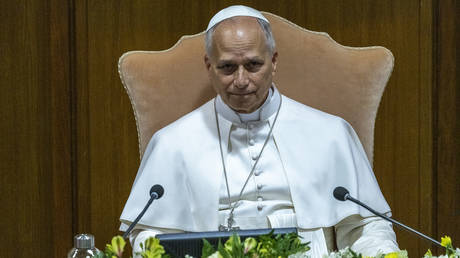
The Vatican wants to disarm the algorithms.
In a series of high-profile declarations, Pope Francis has called for a global ban on autonomous weapons systems, framing killer robots as the ultimate moral failure of the modern era. The narrative is comforting, clean, and entirely predictable. It suggests that if we just unplug the machines, we preserve our collective humanity.
It is also a profound misunderstanding of modern warfare that will cost human lives.
The mainstream consensus on military artificial intelligence is built on Hollywood nightmares and lazy ethics. Activists, tech executives looking for good PR, and religious leaders have coalesced around a simple thesis: human judgment in warfare is inherently moral, and algorithmic judgment is inherently evil.
This premise is demonstrably false. Humans are tribal, terrified, sleep-deprived, and prone to malice. Algorithms are none of those things. By demanding a blanket ban on automated defense, the critics are not protecting humanity. They are sentencing future battlefields to the messy, emotional, and catastrophic errors of human-only decision-making.
The Myth of the Moral Human Soldier
The core argument against autonomous weapons relies on a romanticized view of human combatants. We are told that soldiers possess empathy, a conscience, and the ability to understand the value of human life.
Let us look at the data instead of the poetry.
Human history is an unbroken chain of war crimes driven by panic, fatigue, revenge, and systemic cognitive failure. In the heat of conflict, the human brain suffers from severe tunnel vision. Cortisol floods the system. Identification of friend or foe becomes a coin flip.
Consider the tragedy of civilian casualties caused by misidentification. According to historical military data, a shocking percentage of battlefield errors occur simply because a human operator was tired, scared, or reacting to incomplete data with confirmation bias.
An algorithm does not experience a spike in adrenaline. It does not seek revenge because its comrade was killed five minutes ago. It does not suffer from sleep deprivation after a 72-hour shift.
[Human Operator] ----> Stress/Fatigue ----> Cognitive Bias ----> High Error Rate
[Algorithmic Unit] --> Fixed Parameters --> Data Verification -> Low Error Rate
When we talk about software calculating a target, we are talking about sensor fusion. An autonomous system can process millions of data points across the electromagnetic spectrum in milliseconds. It can verify whether an individual is holding a shovel or an RPG with a level of statistical certainty that a terrified 19-year-old soldier peering through dusty night-vision goggles cannot match.
By banning this technology, we choose to retain human error as a virtue. That is not morality; it is stubborn Luddism.
Precision is the Only True Humanitarian Value
The Geneva Conventions require two fundamental principles in warfare: distinction and proportionality. You must distinguish between combatants and civilians, and your response must not be excessive relative to the military advantage gained.
Western militaries have spent decades trying to achieve this through precision-guided munitions. Yet, the targeting chain still relies heavily on human interpretation, which is notoriously slow and flawed.
Imagine a scenario where an urban insurgent group operates out of a densely populated apartment complex. A human commander, operating under a ticking clock and limited visibility, often relies on carpet bombing or heavy artillery to neutralize the threat, accepting high collateral damage as an inevitable cost of war.
An autonomous micro-drone swarm, utilizing real-time computer vision and edge computing, could theoretically enter the structure, identify the specific targets based on biometrics or weapon signatures, and neutralize them with micro-payloads.
- Collateral damage: Zero.
- Structural destruction: Minimal.
- Human cost: Isolated to the hostile actors.
The Vatican's position would outlaw the development of the very systems capable of executing this level of precision. They are choosing the blanket destruction of a 500-pound dumb bomb dropped by a human pilot over a surgical strike executed by a machine.
I have watched defense tech firms spend billions trying to navigate the arbitrary regulatory hurdles imposed by policymakers who cannot tell the difference between a machine learning model and a Terminator. The result is a stalled pipeline of defensive technologies that could be saving lives right now.
The West Disarms, the Autocrats Code
The most glaring flaw in the anti-AI weapons movement is its staggering geopolitical naivety.
International treaties only bind the nations that sign them. While Western democracies flagellate themselves over the ethics of algorithmic targeting, adversarial regimes face no such moral dilemmas. Moscow and Beijing are not waiting for a papal blessing to integrate automation into their military doctrines.
If Western nations agree to a moratorium on autonomous weapons, we do not stop the proliferation of those weapons. We merely ensure that when the conflict occurs, our adversaries will possess fast, optimized, machine-speed command loops while our forces are bogged down by human bureaucracy.
In military strategy, this is known as the OODA loop (Observe, Orient, Decide, Act). The side that cycles through the OODA loop fastest wins.
Traditional Loop:  Observe -> Orient -> Human Debate -> Decide -> Act (Slow)
Algorithmic Loop:   Observe -> Orient -> Machine Verification -> Act (Instant)
When an adversary’s hypersonic missile is traveling at Mach 5 toward an aircraft carrier, the human brain is physically incapable of processing the telemetry fast enough to deploy countermeasures. The defense must be autonomous. To demand that a human remain "in the loop" for interception decisions is to demand the destruction of the ship and everyone on board.
Unilateral disarmament in the digital age is an invitation to subjugation.
Dismantling the Common Counterarguments
Let us address the questions that inevitably arise when you challenge the anti-AI consensus. These are the points found in every op-ed and think-tank report, and they collapse under basic scrutiny.
What happens when an algorithm glitches and kills innocent people?
This is the ultimate double standard. When a human soldier commits a war crime or makes a fatal mistake, we call it a tragedy, court-martial the individual, and accept it as the cost of friction in war. When a machine makes a mistake, we call it an existential crisis and demand the technology be banned.
No system is perfect. Software will have bugs. Edge cases will cause failures. But the benchmark should not be absolute perfection; the benchmark must be whether the machine performs better than the human it replaces. If an autonomous system reduces civilian casualties by 30% compared to human operators, it is a moral imperative to use it, despite the remaining 70% of risk.
Who is accountable when an autonomous weapon fires?
The accountability argument is a legal fiction designed to slow down deployment. The chain of accountability does not vanish because code is executing the final command.
Accountability rests with the commanders who deployed the system, the engineers who built the parameters, and the state that authorized its use. If a weapon system fails to adhere to its programmed constraints, it is a product liability or command failure issue, both of which are covered under existing international humanitarian law. We do not need a new moral framework; we need to apply the laws we already have to the tools we now possess.
The Real Danger: Hyper-War Without Human Friction
To be clear, there is a legitimate critique of autonomous warfare, but it is not the one the Pope is making.
The real danger of automated defense is not that machines will become evil, but that they will make war too easy to start. When you remove the risk of body bags coming home, the political cost of entering a conflict drops significantly. A war fought entirely with machines against machines could escalate at speeds that outpace human diplomacy.
That is a systemic stability problem, not a localized ethical one. The solution is to govern the escalation dynamics and the deployment criteria, not to ban the technology itself.
By focusing on the phantom menace of the "heartless robot," the current discourse misses the actual structural risks of algorithmic conflict. We are wasting time debating whether a machine has the right to pull the trigger, rather than ensuring that our strategic systems do not accidentally trigger a war through automated economic or cyber feedback loops.
Stop Looking for Comfort in the Past
The demand to disarm AI weapons is rooted in a nostalgic longing for a time when warfare felt comprehensible. It is an emotional reaction to a technological shift that feels cold and alienating.
But sentimentality has no place in national defense or genuine humanitarian ethics.
The integration of automation into warfare is inevitable. It is also, paradoxically, our best shot at reducing the sheer brutality of combat. Machines do not hate. Machines do not rape. Machines do not panic and spray fire into a crowd out of sheer terror.
If we genuinely care about minimizing human suffering in a world where conflict remains a permanent feature of the human condition, we must stop trying to cripple our most precise tools. We need more intelligent systems on the battlefield, not fewer.
Take the moral high ground all you want. It won't stop a supersonic missile.