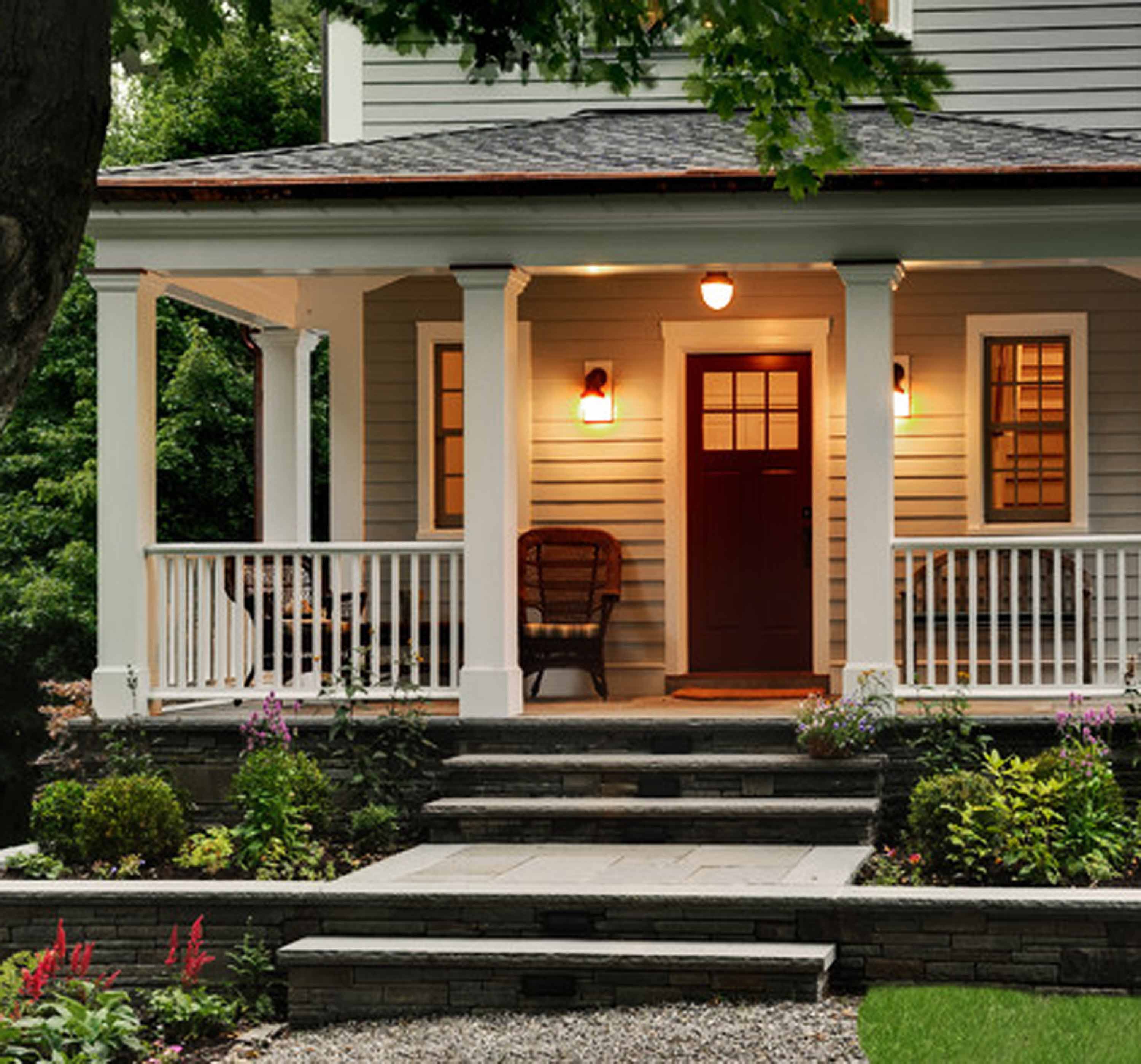
The screen door on a Macomb County bungalow does not merely open; it announces visitors with a familiar, metallic slap against weathered white wood. Outside, the autumn air smells of decaying maples and distant woodsmoke, that sharp Michigan bite that tells you winter is coming whether you voted for it or not.
A clipboard-toting volunteer stands on the doormat. He wears a heavy fleece, his breath pluming in the crisp October morning. He has walked twenty miles this week, his calves burning beneath thermal layers, carrying a singular, heavy gospel: the person across the aisle is not just wrong. They are dangerous.
When the door swings open, it reveals a woman in her late fifties holding a mug of dark coffee. She looks past the volunteer, her eyes scanning the driveway where her husband’s rusted Ford truck sits idling in memory, waiting for a brake line repair they have put off until next payday. She does not smile. She does not slam the door. She just waits, exhaustion carved into the corners of her mouth.
The pitch delivered on that porch—and thousands like it across the rust-belt suburbs and rural townships of Michigan—is an exercise in high-stakes political taxonomy. It is the strategy of the caricature. In Republican messaging, the opposing party is no longer an assemblage of well-meaning neighbors with different ideas about tax brackets; they are painted as radical ideologues marching in lockstep toward cultural and economic ruin.
It is a message designed to terrify. But Michigan voters are notoriously difficult to frighten with broad strokes. They have seen industries rise and rust into the earth. They have watched unions break and reform. They possess a stubborn, earned skepticism toward anyone who claims to hold a simple monopoly on virtue.
Consider what happens next on that porch. The volunteer hits his stride, dropping national talking points about socialism, border security, and institutional decay. He is reading from a script honed by focus groups in Washington, polished to a high sheen to trigger an immediate adrenaline spike.
The woman takes a slow sip of her coffee.
"Mister," she says quietly, her voice gravelly from decades of morning dampness, "you talking about Lansing, or you talking about my property taxes?"
Therein lies the friction point of modern political persuasion. The architects of polarization operate under the assumption that voters are ideological zealots waiting for a spark. They treat elections like a tribal football match where loyalty is absolute and enemy colors must be repelled at all costs. Yet, on the ground, the reality is far messier, stubbornly human, and resistant to easy branding.
To understand why the Republicans' Democrats-as-extremists narrative works in some zip codes while flatlining in others, you have to look at the anatomy of local trust.
In Kent County, where suburban growth collides with traditional conservative strongholds, the messaging finds purchase among voters who feel culturally untmoored. Here, the fear of shifting institutional norms is real. These are parents staring at school board agendas with furrowed brows, small business owners calculating the cost of compliance, and retirees watching their fixed incomes stretch thinner than a dry autumn leaf. To them, the national Democratic platform can feel distant, academic, and culturally aggressive. When a campaign ad warns that the opposition wants to dismantle traditional values, it connects with a pre-existing anxiety about a world changing too fast to track.
Drive an hour north into the Thumb, or west toward the agricultural expanse of the lakeshore, and the dynamic shifts again. Here, the economy is tethered to the weather and the global commodity market. Crop prices, fertilizer costs, and equipment repairs dictate whether a family farm survives another generation. In these communities, political labels matter less than competence and shared survival. A stump speech about cultural extremism rings hollow when the combine harvester’s transmission just seized and a new part costs more than a used car.
Conversely, step into the dense neighborhoods of Grand Rapids or the working-class wards of Wayne County, and the strategy meets a wall of active resistance.
In these spaces, the face of the "extremist" neighbor is often a niece who works as a public school teacher, a nephew who is an apprentice electrician, or the local pharmacist who sponsored the little league team. When a political flyer arrives in the mailbox depicting local Democrats as radical out-of-touch agents of chaos, voters cross-reference it with their lived reality. They know the people being demonized. They go to the same grocery stores, shovel the same snow off their sidewalks, and sit three pews over at Sunday service.
This cognitive dissonance creates a strange political weather pattern across the state. It is a choppy sea where statewide races swing on razor-thin margins while local elections turn on personality, responsiveness, and mundane competence.
The modern campaign playbook relies heavily on what behavioral economists call affective polarization—the tendency of people holding political views to view those with opposing views not merely as incorrect, but as malicious. It is an emotional wedge designed to bypass the cerebral cortex and lodge directly in the amygdala.
When you convince a voter that the opposition poses an existential threat to their way of life, compromise becomes a moral failure. Moderation looks like surrender. Every policy debate transforms into a zero-sum battle for the soul of the republic.
Yet, Michigan has always possessed a pragmatic undercurrent that resists total ideological capture. This is a state shaped by the assembly line and the union hall, places where abstract philosophy matters very little if the machine jams. People here understand systems. They know that when something breaks, you do not curse the sky; you grab a wrench and figure out which gear stripped out.
The Republican push to brand Democrats as extremists has undeniably mobilized the base. It creates a hum of constant urgency, turning every yard sign into a small banner in a larger cultural war. It gives volunteers like the one on the porch a sense of mission, a belief that they are standing guard at the gates of civilization.
But it also alienates the independent voter, that elusive creature sitting at the kitchen table in a split-level ranch home, trying to figure out how to pay for community college tuition while health insurance premiums climb. For that voter, the apocalyptic rhetoric can feel like shouting in a quiet room. It is noise. And when the noise gets too loud, people simply close the door.
Back on the porch in Macomb County, the volunteer realizes he is losing his audience. He drops the script. The polished talking points about national decline fall away, replaced by the awkward silence of two strangers standing on a welcome mat.
"Look," the volunteer says, his shoulders dropping an inch inside the heavy fleece. "I'm just tired of feeling like we're losing control of things."
The woman looks at him for a long moment. The lines around her eyes soften just a fraction. She knows that feeling. It is the same knot in her stomach she feels every time she opens her electric bill or looks at her grandchildren's test scores.
"We're all losing control, son," she says, offering a wry, tired smile. "That ain't just one party's fault."
She doesn't invite him inside. She doesn't take his pamphlet. But she doesn't slam the door either. She wishes him luck with the rest of his walk, pulls the screen door shut with its familiar metallic slap, and turns back toward the warmth of her kitchen, leaving the great political debate waiting on the other side of the glass.


