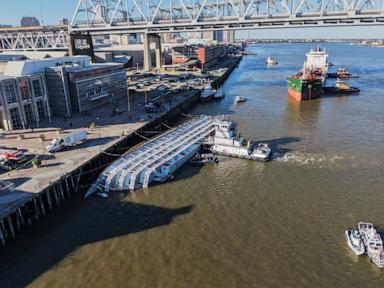
When a massive tanker slams into a docked cruise ship on the Mississippi River, the physical wreckage is only half the headache. The real battle happens in federal admiralty court.
Right now, the Board of Commissioners of the Port of New Orleans—commonly known as Port NOLA—is suing to take legal control of the tanker involved in a collision with a cruise ship along the riverfront. It sounds like a dramatic maritime power grab. Honestly, it's standard operating procedure when millions of dollars in wharf damage and stalled river commerce are sitting on the line.
If you've ever watched heavy commercial traffic navigate the tight bends of the lower Mississippi, you know how little room for error exists between Algiers Point and the downtown cruise terminals. Currents move fast. Visibility drops without warning. When a heavy vessel loses steering or misjudges a turn, concrete wharves and passenger ships take the hit.
Here is why Port NOLA filed suit, how maritime arrest actually works, and what happens next when a commercial vessel becomes the center of a federal lawsuit.
What Actually Happened When the Port Filed Suit
In maritime law, you don't just sue a shipping company in a local parish courthouse and wait two years for a jury trial. You sue the ship itself.
Port NOLA's legal filing asks a federal judge to issue a warrant for the arrest of the tanker responsible for striking the cruise ship and damaging port infrastructure. Under federal admiralty rules, a vessel is treated as a legal person capable of incurring debts and causing injuries. If a ship breaks a dock, scrapes a cruise liner, or blocks a berth, the port authority attaches a maritime lien directly to the hull.
Why rush to court? Because ships move.
Foreign-flagged tankers operate on tight global charter schedules. Once the U.S. Coast Guard finishes its initial safety inspection and clears a vessel's hull for seaworthiness, that tanker can weigh anchor, steam down to Southwest Pass, and vanish into the Gulf of Mexico within hours. If the ship leaves U.S. waters before a port authority secures jurisdiction, collecting millions of dollars in repair bills turns into an international nightmare involving shell companies in Panama, Liberia, or the Marshall Islands.
By suing to gain control of the vessel immediately, Port NOLA forces the tanker's owners and their protection and indemnity insurance clubs to put up cash or a surety bond before the ship goes anywhere.
How Maritime Arrest Works on the Mississippi River
People hear "seizing a tanker" and picture armed deputies storming the bridge like an action movie. The reality is much drier, though no less effective.
When a federal judge in the Eastern District of Louisiana signs off on a Rule C arrest warrant under the Supplemental Rules for Admiralty or Maritime Claims, the U.S. Marshals Service steps in. A deputy marshal boards the vessel, serves the paperwork on the master, and posts a physical notice of arrest on the bridge.
From that second forward, the tanker can't leave the anchorage or berth without court permission.
Who Pays to Keep the Ship Running While It's Arrested
Holding a commercial tanker hostage sounds great until you realize someone has to pay for fuel, generator power, harbor tug standby, and crew food. A 600-foot vessel doesn't just turn off like a parked car.
Usually, the court appoints a substitute custodian—often a specialized maritime security and management firm—to oversee the vessel so the U.S. Marshals don't burn through federal funds. Port NOLA or the arresting plaintiff fronts those custody costs initially. Those expenses then get tacked onto the final claim as priority administrative fees.
In practice, arrested tankers rarely stay under marshal guard for long. Shipping insurers hate paying daily demurrage penalties, which can easily run tens of thousands of dollars per day depending on the vessel's charter rate. Within days of an arrest, the shipowner's legal team typically negotiates a Letter of Undertaking (LOU) with the port's attorneys.
An LOU is basically an ironclad promise from the vessel's insurer to pay whatever judgment the court eventually hands down, up to a negotiated dollar cap. Once Port NOLA holds that signed guarantee, the court lifts the arrest, and the tanker sails away.
Why Mississippi River Collisions Happen So Frequently
If you spend any time around New Orleans maritime circles, a collision near the downtown wharves doesn't shock anyone. The Lower Mississippi River is one of the busiest and most unforgiving commercial waterways in North America.
Consider what crews are dealing with on that stretch of water:
- Sharp bends and brutal eddies. The river makes a near-90-degree turn at Algiers Point, right across from the French Quarter and the Erato Street and Julia Street cruise terminals. During high-water season in the spring, currents rip through that bend at five to six knots, pushing heavy deep-draft tankers sideways toward the left descending bank where cruise ships tie up.
- Zero margin for mechanical failure. A temporary loss of propulsion or a sluggish rudder response that would be a minor inconvenience in open ocean becomes an immediate emergency in a narrow river channel lined with moored vessels.
- Extreme traffic density. Ocean-going tankers, container ships, multi-barge river tows, harbor tugs, and passenger cruise ships all share the exact same corridor.
Because the navigation challenges are so severe, state-commissioned Crescent River Port Pilots or New Orleans-Baton Rouge Steamship Pilots board ocean-going vessels to guide them through the river. Even with local pilots on the bridge, physics wins when a loaded tanker loses power or gets caught in a cross-current.
The Hidden Financial Damage Beyond Bent Steel
When a tanker strikes a cruise ship in New Orleans, public attention focuses on scratched paint, dented hull plates, and delayed passenger embarkations. Port officials care about something else entirely: infrastructure downtime.
Cruise terminals and riverfront wharves operate on razor-thin scheduling windows. Carnival, Norwegian, Royal Caribbean, and river cruise operators book berths years in advance. If a collision damages fender pilings, crumples a concrete apron, or compromises mooring bollards, Port NOLA can't just slap caution tape over the spot and keep working.
Engineering inspections alone take days. Underwater dive teams have to check submerged pilings for structural fractures before another 100,000-ton cruise ship can safely tie up there.
Every day a berth sits out of service costs the port authority dockage fees, passenger wharfage revenue, and parking income. Meanwhile, the cruise line faces its own cascading costs—rerouting passengers, busing travelers to alternate ports like Mobile or Galveston, refunding shore excursions, and paying overtime to terminal staff.
That is why Port NOLA's lawsuit isn't just about fixing a dent. The claim almost certainly seeks recovery for:
- Direct structural repairs to port wharves, fenders, and gangway infrastructure.
- Lost port revenues while berths remain closed for safety inspections and reconstruction.
- Emergency response costs, including harbor tug assistance and pollution containment booms.
- Legal fees and custodial expenses incurred during the vessel arrest.
What Happens When Multiple Victims Sue the Same Tanker
Port NOLA isn't the only party looking at the tanker's insurance policy. Whenever a cargo vessel hits a cruise ship, a multiparty legal pileup follows almost automatically.
The cruise line has a massive claim for hull repairs, Coast Guard certification delays, and lost ticket revenue. Individual cruise passengers might file personal injury claims if the impact knocked them down or caused emotional distress. Crew members, tug operators, and third-party contractors working on the dock could also step forward with damages.
Under the Shipowner's Limitation of Liability Act—a 19th-century federal law passed in 1851 that still governs U.S. maritime disasters today—the tanker's owner will likely file a countersuit trying to cap their total financial payout at the post-accident value of the vessel plus any pending freight charges.
Let that sink in for a second. If a tanker causes $40 million in damage to a cruise ship and a port terminal, the owner can ask a federal judge to limit their total liability to whatever the damaged tanker is worth after the crash.
To defeat that limitation defense, Port NOLA and the cruise line have to prove that the crash happened because of negligence or unseaworthiness that the ship's owners knew about—or should have known about—before the voyage began. Things like deferred engine maintenance, broken steering gear, or undertrained bridge crews suddenly become the central focus of federal discovery.
How to Track the Case and Monitor River Safety Updates
If you follow maritime news, work in Gulf Coast logistics, or have an upcoming cruise departing from New Orleans, you don't need to rely on rumor mills to see how this plays out.
First, check the U.S. Coast Guard Sector New Orleans Marine Safety Information Bulletins (MSIB). Whenever a collision affects river traffic or terminal operations, the Coast Guard posts official channel restrictions, safety zones, and investigation updates publicly online.
Second, if you're scheduled to sail out of the Julia Street or Erato Street terminals in the coming weeks, monitor your cruise line's direct travel alerts rather than general news headlines. Cruise operators frequently shift embarkation times by a few hours or adjust boarding gangways without canceling sailings, even while adjacent wharf repairs are underway.
Third, anyone tracking the federal litigation itself can look up filings in the U.S. District Court for the Eastern District of Louisiana via PACER. Admiralty dockets move fast in the first two weeks after a river collision—watch for the filing of a stipulated Letter of Undertaking, which will tell you immediately how much financial security Port NOLA extracted before letting the tanker leave the Mississippi River.