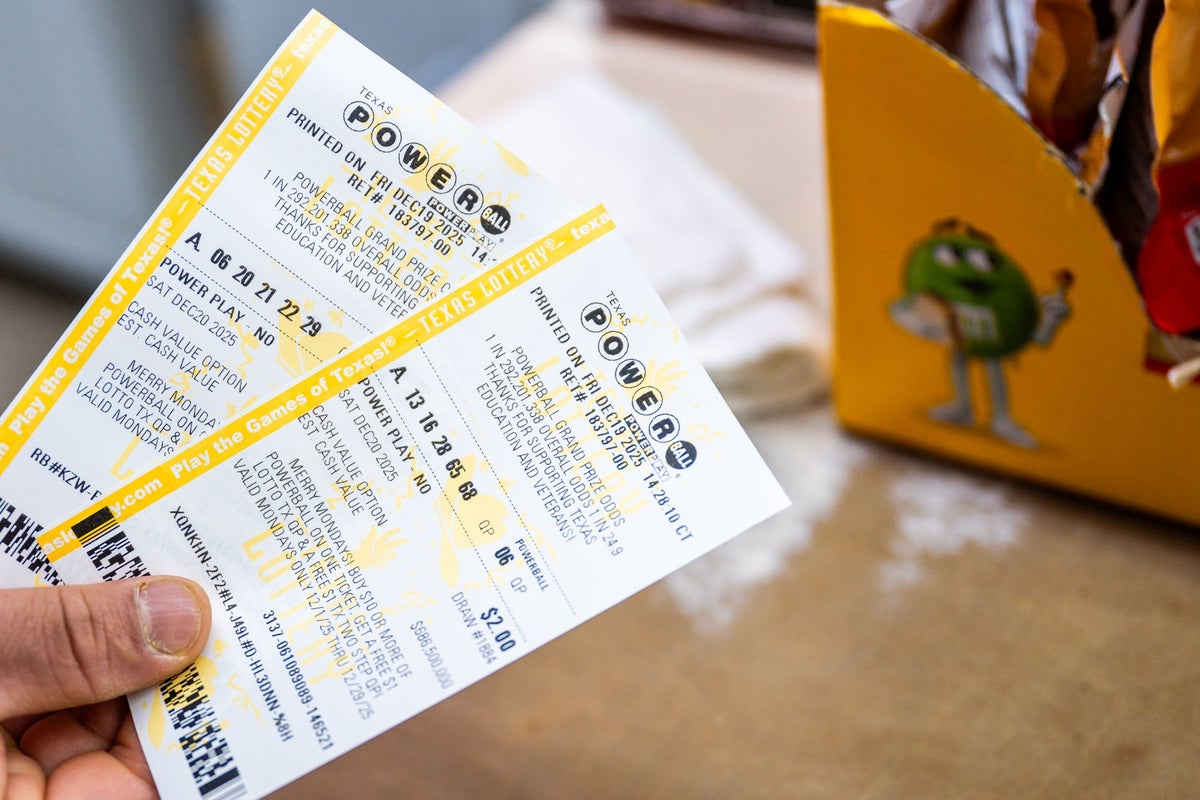
Powerball is coming for the world, and everyone is cheering like they just won the jackpot. They haven't. The logic pushed by state lottery directors is simple: bigger pools mean bigger prizes, and bigger prizes mean more excitement. It sounds like a win-win. In reality, it is a desperate move by a legacy gambling product to mask its own mathematical decay.
The "international jackpot" isn't a gift to players. It’s a tax on the mathematically illiterate, wrapped in a shiny global ribbon.
The Myth of the Better Jackpot
The mainstream media loves the narrative of the "Global Lottery." They frame it as a borderless dream where someone in London or Tokyo can chase a $2 billion USD prize. What they fail to mention is that the odds of winning aren't just bad; they are designed to be functionally impossible to sustain the very "excitement" they claim to provide.
When Powerball officials talk about "crossing the pond," they aren't trying to make you rich. They are trying to solve a liquidity problem. As jackpots get larger, players become desensitized. A $100 million prize used to drive massive ticket lines. Now? It’s a slow Tuesday. To move the needle, the jackpot has to hit $500 million, then $1 billion.
To reach those numbers, you need two things:
- Lower odds of winning.
- More players to keep the pot growing when nobody wins.
By expanding internationally, Powerball isn't increasing your chances of winning. It is increasing the number of people who will lose alongside you, just to ensure the headline number looks good on a billboard. You aren't playing a game; you’re funding a marketing budget for a multi-national conglomerate of state governments.
The Mathematical Ghost in the Machine
Let’s talk about the actual mechanics. Most people understand that the odds of winning Powerball are roughly 1 in 292.2 million. But they don't understand Expected Value (EV).
In a fair game, if you bet $2 on a 1-in-100 chance to win $200, your EV is neutral. In the lottery, the EV is almost always negative because the "house" (the state) takes a massive cut off the top—usually around 40% to 50%—before a single cent hits the prize pool.
$$EV = (P \times W) - C$$
Where:
- $P$ is the probability of winning.
- $W$ is the jackpot amount (after taxes and lump-sum deductions).
- $C$ is the cost of the ticket.
When Powerball goes global, the headline jackpot grows, but the Effective EV cratering. Why? Because the more people play, the higher the probability of a "split pot." If you finally hit that 1-in-292 million shot, but three other people in Berlin and Sydney hit it too, your life-changing billion-dollar win just got chopped into a quarter. You took all the risk for a fraction of the advertised reward.
The Currency and Tax Nightmare Nobody Mentions
The "lazy consensus" says that more players mean more money. But have you looked at the logistics?
If a player in the UK buys a ticket for a US-based Powerball draw, they are stepping into a bureaucratic minefield that would make a corporate lawyer weep. The US government wants its 30% federal withholding tax on non-resident aliens. Then there’s the state tax. Then there’s the potential tax liability in the winner's home country.
Imagine a scenario where a global player wins a $1 billion jackpot.
- Advertised: $1,000,000,000
- Lump Sum (Actual cash): ~$480,000,000
- Federal Tax (30%): -$144,000,000
- State Tax (approx 8%): -$38,400,000
- Currency Conversion Fees: -Variable millions.
You’re left with less than a third of the "global jackpot." The expansion isn't about making billionaires; it's about the US Treasury finding a way to tax foreign citizens who will never drive on a US road or use a US school. It is an export of a failed fiscal policy.
The Desperation of the Multi-State Lottery Association (MUSL)
I’ve seen how these organizations operate. They are terrified of the "Jackpot Fatigue" phenomenon. Gen Z and Millennials aren't buying tickets at the same rate as Boomers. They prefer crypto, sports betting, or day-trading—options where they at least feel like they have some agency, however illusory.
Powerball’s expansion is a "hail mary." It’s an attempt to find fresh "fish" in international waters because the domestic market is saturated and bored. They aren't innovating the product; they are just widening the net.
If they actually cared about the player experience, they would increase the lower-tier prize payouts to make the game "stickier." Instead, they keep making the top prize harder to hit. They are selling a dream that is increasingly a statistical hallucination.
The Ethical Erosion of the "Global Good"
Lottery proponents always hide behind the "funding for education" shield. It’s the ultimate moral get-out-of-jail-free card. "Sure, we're selling a product with a 99.99999% failure rate, but it's for the kids!"
When you take this global, that argument falls apart. If a person in Spain buys a Powerball ticket through an official international partner, where does that "education funding" go? Does it stay in Spain? Does it go to Georgia? The jurisdictional nightmare of social responsibility is a convenient fog that allows lottery operators to pocket massive administrative fees while doing zero localized good.
Stop Chasing the "Mega"
People ask: "Is it ever worth playing?"
The brutally honest answer is only when the jackpot reaches a point where the mathematical EV turns positive—and even then, only if you account for the "split pot" risk. That happens far less often than the commercials suggest.
The smarter move isn't to join the global herd. It’s to recognize that the lottery is a regressive tool. If you want to gamble, go to a sportsbook where the house edge is 5%, not 50%. If you want to build wealth, buy the underlying index funds that the lottery winners eventually put their money into anyway.
The Powerball expansion isn't a milestone in gaming history. It is the final stage of a predatory business model trying to survive in a digital age. They want your dollars, your euros, and your yen to feed a machine that hasn't changed its core logic since the 1980s.
Don't be the liquidity for someone else's headline.
The world doesn't need a global lottery. It needs a global lesson in basic probability. Powerball is crossing the pond because it ran out of suckers on this side of the Atlantic.