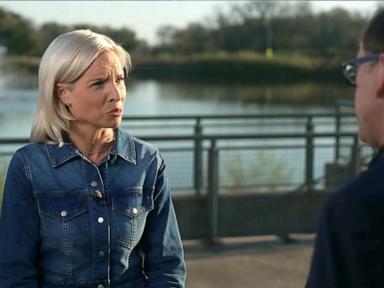
Iowa was supposed to be a lock for Republicans in 2026, yet Democrat Josh Turek defeated Republican Ashley Hinson by over four percentage points on November 3 to claim the state's open U.S. Senate seat. That victory ended an 18-year Democratic drought in Iowa Senate races and shattered the assumption that a state Donald Trump carried by 13 points in 2024 was permanently out of reach for blue candidates. For months leading up to Election Day, both major campaigns saturated the airwaves with competing pledges of bipartisanship and economic populism. Voters ultimately rejected the party-line orthodoxy that had defined Iowa politics for a decade, proving that pocketbook pain and foreign entanglement carry far more weight than partisan branding in the rural Midwest.
When incumbent Republican Senator Joni Ernst announced in September 2025 that she would not seek a third term, national strategists initially treated the vacancy as an automatic hold for the GOP. Republicans held every single seat in Iowa's congressional delegation and controlled the statehouse. Yet beneath the surface of those impressive majorities, structural fractures were widening across the state's agricultural and manufacturing counties. The race between state Representative Josh Turek and U.S. Representative Ashley Hinson quickly evolved from a sleepy formality into a brutal referendum on Washington's economic priorities.
The Anatomy of an Upset in the Hawkeye State
Conventional political wisdom held that Iowa had undergone a permanent realignment. Between 2014 and 2024, the state drifted steadily rightward, trading its historic reputation as a split-ticket bellwether for solid red reliability. For three decades prior to Ernst's initial victory, Iowans famously sent a bipartisan duo to Washington in Republican Chuck Grassley and Democrat Tom Harkin. By the mid-2020s, commentators routinely dismissed that era as an obsolete relic of a bygone political age.
The numbers from the 2026 general election tell a very different story. Turek secured 688,746 votes, or 50.56 percent of the total ballots cast, outpacing Hinson's 631,482 votes and 46.35 percent share. Libertarian candidate Thomas Laehn pulled 3.1 percent, roughly 42,100 votes, capturing disillusioned conservatives who refused to back either major party. Even if every single Libertarian voter had broken for Hinson, she still would have fallen short.
| Candidate | Party | General Election Votes | Vote Share | Primary Margin |
|---|---|---|---|---|
| Josh Turek | Democratic | 688,746 | 50.56% | 62.7% vs. Zach Wahls |
| Ashley Hinson | Republican | 631,482 | 46.35% | 74.0% vs. Jim Carlin |
| Thomas Laehn | Libertarian | 42,109 | 3.09% | Convention Nominee |
That margin was not an isolated fluke. Across the state, voters delivered a sweeping rebuke to the ruling party, flipping 17 legislative seats and three statewide offices. Democrats unseated Republican Attorney General Brenna Bird and captured the open offices of Lieutenant Governor and State Auditor. At the same time, Iowa stared down a state budget deficit exceeding $1 billion, a fiscal squeeze that eroded Republican claims of superior economic stewardship.
Why Bipartisanship Became the Ultimate Campaign Currency
In hyper-polarized elections, candidates usually run to the ideological edges to juice base turnout. In Iowa, both Turek and Hinson ran toward the center with striking urgency. Hinson, a former television anchor representing Iowa's 2nd Congressional District, leaned heavily on her reputation as a pragmatic appropriator. Throughout the autumn campaign, she repeated a disciplined message that Iowans disliked empty rhetoric and wanted tangible results. She promised to work with anyone from any party to deliver federal dollars back to the state.
Turek countered with an equally aggressive pitch aimed squarely at independent voters and disaffected Republicans. Representing Council Bluffs—a working-class district that Donald Trump won by over eight points in 2024—Turek already knew how to survive in hostile territory. A two-time Paralympic gold medalist in wheelchair basketball who was born with spina bifida linked to his father's Agent Orange exposure in Vietnam, he possessed a personal biography that cut through standard partisan suspicion.
"One thing I do believe is that we're not a red state. We're a common-sense state that's masqueraded more red than what we actually are." — Josh Turek, October 2026
💡 You might also like: Anatomy of a Mass Casualty Bus Collision Why High Occupancy Transit Failures Escalate
Instead of running away from Donald Trump's enduring popularity in rural counties, Turek did something few national Democrats dared to attempt. He selectively embraced elements of Trump's economic platform while attacking congressional Republicans for failing to deliver on them. Turek publicly credited Trump for tighter border enforcement compared to the Biden administration. He endorsed proposals to eliminate taxes on tips, overtime pay, and Social Security benefits. When former President Barack Obama endorsed him in July, reminding voters that he knew a thing or two about winning Iowa, Turek politely brushed aside the impact of high-profile national surrogates. He understood that an endorsement from Washington or Chicago meant almost nothing to a hog farmer in Carroll County worrying about input costs.
The Economic Squeeze Behind Prairie Populism
To understand why Turek's self-described prairie populism resonated so deeply, you have to look past campaign slogans and examine the balance sheets of ordinary Iowa households. By the autumn of 2026, the agricultural economy was absorbing heavy shocks. Escalating military conflict with Iran had driven up global energy prices, sending diesel, fertilizer, and freight costs soaring right during harvest season. For row-crop farmers already operating on razor-thin margins, higher fuel and input bills functioned as a direct tax on every acre planted.
Turek weaponized that economic anxiety against Hinson. He hammered the three-term congresswoman for voting to authorize and fund continued military operations against Iran, tying foreign intervention directly to the price of gas at the local pump and the cost of groceries in Des Moines. In town halls from Sioux City to Davenport, voters voiced a consistent set of grievances. Families were struggling to keep food on the table, pay electric bills, and afford basic housing.
Turek's policy prescription targeted corporate consolidation with surgical precision. While Trump had floated restrictions on institutional investors buying up single-family homes, Turek expanded the critique. He campaigned on driving private equity not just out of residential housing, but out of rural healthcare facilities and nursing homes. In small Iowa towns where the local hospital or assisted living center is often the largest employer and the sole safety net for an aging population, private equity buyouts have frequently meant staff cuts, higher fees, and facility closures. Framing corporate consolidation as an existential threat to rural survival allowed Turek to speak the language of economic populism without sounding like an urban progressive.
The Limits of Red-State Blitzes and National Endorsements
Republicans saw the danger signs early enough to mount a massive defensive effort. By mid-October, Hinson held a formidable financial advantage, having raised over $7.2 million earlier in the cycle and backed by the full weight of the GOP establishment, including Senators Chuck Grassley, Joni Ernst, Tom Cotton, and Katie Britt. In the final stretch before Election Day, Donald Trump reshuffled his travel schedule to headline multiple rallies in Iowa, attempting to nationalize the race and drag Hinson across the finish line on the strength of his personal brand.
The strategy backfired because it misread the electorate's mood. Trump's rallies energized loyalists, yet they also reminded swing voters of the very Washington dysfunction they wanted to escape. When voters are angry about inflation, utility spikes, and overseas wars, the party holding power in Washington bears the brunt of the frustration. Hinson found herself trapped in a classic incumbent's dilemma even though she was running for an open seat. As a sitting member of the House Republican majority, she could not convincingly run as an outsider demanding change.
Meanwhile, Turek's primary victory over state Senator Zach Wahls in June had already proven his crossover appeal. Wahls represented a progressive university district in Iowa City, whereas Turek hailed from western Iowa's Missouri River valley. By defeating Wahls with nearly 63 percent of the primary vote, Turek signaled to moderate and independent voters that he was not beholden to his party's activist wing.
What the Iowa Shift Means for Political Strategy
The lesson from Iowa is neither a permanent blue wave nor the death of rural conservatism. Voters in the heartland have not suddenly adopted coastal social liberalism. Instead, the 2026 Senate race exposed the fragility of partisan loyalty when economic conditions deteriorate.
Consider the structural vulnerabilities that broke open in this cycle:
- Foreign policy has immediate domestic consequences. Voters in landlocked agricultural states quickly connect overseas military conflicts to diesel prices, fertilizer costs, and grain export markets. Candidates who vote for open-ended intervention must answer for the resulting inflation at home.
- Anti-corporate populism cuts across party lines. Attacking private equity ownership of healthcare, nursing homes, and housing resonates just as strongly with conservative retirees in small towns as it does with union workers in urban centers.
- Local credibility beats national surrogates. Parachuting presidents and party leaders into a state cannot override a candidate's organic connection to local communities or insulate a party from kitchen-table dissatisfaction.
- Third-party bleed signals deep dissatisfaction. When a Libertarian candidate captures more than three percent of the vote in a statewide race, it reflects a substantial bloc of right-leaning voters willing to walk away from the GOP over spending, property rights, and foreign wars.
There are clear limits to how easily other Democrats can replicate Turek's blueprint. His personal story as a Paralympian and working-class state legislator from a Trump-won district cannot be manufactured by political consultants. Attempting to copy his rhetorical style without his authentic background or willingness to break with national party orthodoxy on border security and tax policy would ring hollow.
At the same time, Republicans cannot afford to dismiss 2026 as a mere midterm fluke. Iowa voters demonstrated that their partisan allegiance is conditional, rented rather than owned by either political party. When politicians treat a state as safely locked in the win column, they stop listening to the people paying the bills—and in Iowa, the voters eventually send the bill back.
To see how Turek framed his bipartisan pitch to voters on the campaign trail, watch Turek paints himself as bipartisan for direct footage of his messaging strategy.


