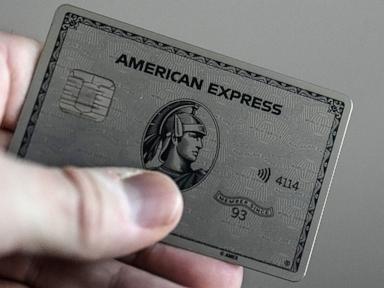
American Express beat Wall Street expectations in its second-quarter earnings report, delivering a record $4.53 per share profit on an 8 percent year-over-year jump. On paper, the financial firm looks completely unbothered by high interest rates, sticky inflation, and growing consumer anxiety. Beneath that shiny headline figure lies a deliberate strategy that shifts the risk of default onto retail partners while squeezing extra fees out of affluent spenders.
Wall Street predictably cheered the beat. Analysts pointed to double-digit growth in card member spending and strong international expansion as proof that high-income consumers remain completely insulated from broader macroeconomic troubles. That narrative is overly simplistic.
To understand why American Express continues to print profits while conventional retail banks brace for loan losses, you have to look at how the company structures its business model. Unlike traditional lenders that make the bulk of their revenue on net interest income—charging borrowers interest on revolving balances—Amex functions primarily as a closed-loop transaction processor and premium fee generator.
The Mirage of the Unstoppable High-End Consumer
For decades, the standard narrative around American Express was simple. They cater to wealthy cardholders who pay their balances in full every month, generating massive revenue from merchant discount fees every time a card is swiped at high-end retailers, restaurants, and hotels.
That narrative is changing.
While affluent customers still form the core of the portfolio, recent quarters show a distinct shift toward millennial and Gen Z acquisitions. These younger spenders are driving the headline transaction numbers, lured in by heavily marketed reward programs and status-driven perks. They are also far more likely to carry a balance than older generations of Amex loyalty members.
+-----------------------------------------------------------------------+
|                 AMERICAN EXPRESS DUAL REVENUE ENGINE                  |
+-----------------------------------------------------------------------+
|  TRANSACTION SIDE (Closed Loop)    |   LENDING SIDE (Revolving Debt)  |
|  - Merchant Discount Fees          |   - Interest on Carried Balances |
|  - Annual Cardholder Fees          |   - Late Payment Penalties       |
|  - High Velocity, Low Default Risk |   - Elevated Credit Risk Profile |
+-----------------------------------------------------------------------+
To capture this market without blowing up their risk profile, Amex relies on aggressive fee increases on its flagship products. The company regularly hikes annual fees on its Platinum and Gold cards, compensating for higher potential credit risk by locking in guaranteed, non-interest revenue before a customer even makes a single transaction.
If a cardholder decides to carry a balance, the company collects interest rates that often top 20 to 29 percent. If that same cardholder runs into financial trouble and defaults, the guaranteed revenue from annual fees has already cushioned the blow. It is a carefully engineered net that protects company margins regardless of whether the broader economy experiences a soft landing or a sharp recession.
Merchant Pushback and Hidden Transaction Costs
The true friction point in this financial model is not the consumer. It is the merchant.
Every time a buyer uses an Amex card, the business owner pays a swipe fee that historically averages higher than competing networks like Visa or Mastercard. Amex defends these premium rates by arguing that their cardholders spend significantly more per transaction than users on other networks.
That argument is growing stale among mid-sized and smaller merchants. As operating margins narrow due to labor and inventory costs, paying high merchant fees becomes a major pain point.
The Merchant Margin Squeeze
- Small and mid-sized businesses absorb fees ranging between 2.3% to 3.5% per swipe.
- High-reward cards shift the funding of consumer perks directly onto the seller.
- Merchants who opt out risk losing affluent spenders, creating a coercive dynamic.
Rather than lowering processing rates to keep merchants happy, American Express relies on merchant acceptance agreements that restrict businesses from steering customers toward cheaper payment methods. While legal challenges and international regulatory pressure have slowly chipped away at these rules in foreign markets, the system remains largely intact in the United States.
Credit Provisioning and the Reality of Defaults
Look closely at the provision for credit losses in recent financial filings. While top-line revenue and net income beat estimates, the money set aside for bad loans has risen steadily over past quarters.
The company is not immune to the economic pressures hitting the rest of the financial sector. Write-offs and delinquencies, while still lower than peers like Discover or Capital One, have crept back toward pre-pandemic levels.
[Industry Credit Risk Spectrum]

LOW RISK  ===============================================> HIGH RISK
Traditional Amex       Newer Gen Z/Millennial      Subprime Lenders
Charge Cards           Revolving Products          & Payday Services
(Pay-in-Full)          (High Balance Exposure)     (High Default Rates)
To keep earnings moving upward, the firm has turned up the dial on international corporate accounts and cross-border payments. These lines of business yield high-margin transaction fees with virtually zero credit risk, offsetting the slow erosion happening in domestic consumer credit lines.
The Sustainability Problem
Relying on annual fee increases and high merchant swipe rates is a strategy with a ceiling.
At some point, consumers evaluate their annual fee against actual usage and cancel their accounts. At the same time, regulatory bodies in Europe and North America continue to scrutinize credit card interchange fees, threatening the fundamental revenue engine that powers premium rewards.
If lawmakers capped swipe fees tomorrow, the funding mechanism for elite travel perks, airport lounge access, and dining credits would vanish overnight. Without those perks, justifying a $695 or higher annual fee becomes nearly impossible for the average consumer.
American Express delivered a strong second quarter, but attributing that success solely to the unyielding strength of the American consumer misses the bigger picture. It is the result of a masterclass in risk engineering, continuous fee hikes, and a payment infrastructure that forces merchants to fund the consumer rewards that keep the cycle spinning.
Whether that cycle can continue unbroken as credit defaults rise and merchants fight back against high processing costs is a question Wall Street prefers to ignore until the next earnings call.