The fluorescent lights of a Silicon Valley office do not hum; they buzz with a quiet, anxious energy that can keep you awake for days. For Aris Thorne, a twenty-six-year-old software engineer who graduated at the top of his class from MIT, that buzz had become the soundtrack to his insomnia. Aris is not a statistic. He is a flesh-and-blood human being who spent the last six months staring at a ticking clock. His student visa was expiring. His entire future hung on a lottery system known as the H-1B visa, a golden ticket that allows highly skilled foreign workers to remain in the United States.
But for Aris, and thousands like him, the American Dream recently felt less like a meritocracy and more like an extortion racket.
A controversial federal proposal sought to introduce a staggering $100,000 fee for companies sponsoring H-1B visas. For a massive tech conglomerate, a hundred grand is a rounding error. For the mid-sized startups and boutique tech firms where real innovation often sparks, that number is a death sentence for talent acquisition. It meant that brilliant minds would be packed onto airplanes and sent away, not because they lacked skill, but because their employers lacked the massive capital of Big Tech.
Then, a federal judge stepped into the arena. With a single ruling, the six-figure fee was struck down, sending shockwaves from the tech hubs of California to the upper echelons of American politics.
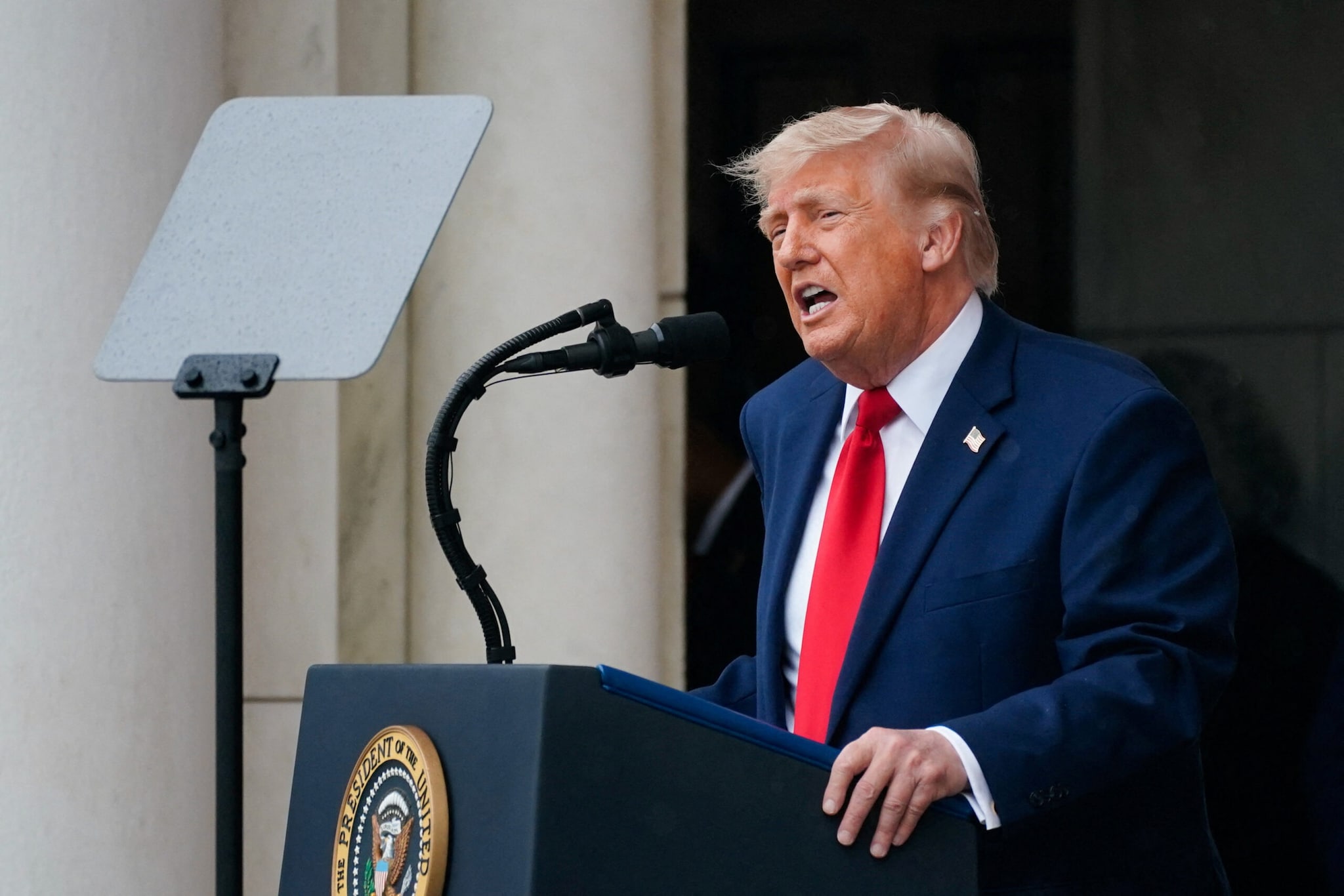
Donald Trump did not mince words when the news broke. Reacting with his trademark bluntness, the former president called the attempted $100,000 fee "really crazy." For once, an issue that usually divides Washington along strict ideological lines found a moment of raw, unvarnished consensus. The fee was a blunt instrument. It was a sledgehammer applied to a problem that required a scalpel.
To understand why this matters, you have to look past the policy memos and into the actual rooms where these decisions land.
Imagine a small biomedical startup in Boston trying to engineer a new way to detect early-stage cancers. The team consists of five people. One of them is a brilliant immunologist from India who holds the key to the entire project's algorithm. If the company has to pay $100,000 just for the right to employ her, the project dies. The money simply isn't there. The immunologist goes back to Delhi, taking her breakthrough with her.
This is the invisible tax that almost happened.
The rationale behind the massive fee was ostensibly to protect American workers and ensure that foreign labor wasn't being used to undercut domestic wages. It is a valid concern on paper. No one wants American graduates to be squeezed out of their own job market by cheaper labor from abroad. But the execution of this specific policy completely missed the mark. By setting the barrier to entry so high, it didn’t protect Americans; it threatened to starve American companies of the hyper-specialized talent they need to scale up and create more jobs for everyone.
The courtroom battle that neutralized this fee wasn’t just about numbers on a ledger. It was a fight over the identity of the American tech landscape.
Lawyers argued passionately that the executive branch had overstepped its bounds, bypassing the necessary legislative scrutiny to impose what amounted to a punitive tax on innovation. When the judge agreed, a collective sigh of relief echoed through the tech community. It wasn't just corporate executives celebrating. It was the engineers, the scientists, the researchers, and the founders who could finally breathe again.
But the political fallout was only just beginning.
Donald Trump’s public reaction caught many by surprise. Known for his hardline stance on immigration and his "America First" economic platform, his denunciation of the fee as "really crazy" signaled a nuanced realization. Even the most ardent economic nationalists recognize that you cannot win the global race for technological supremacy if you lock the door against the world's brightest minds. You cannot build the future if you export the architects.
Consider what happens next in this high-stakes game of global talent poaching.
Countries like Canada, the United Kingdom, and Germany have spent the last few years rolling out the red carpet for tech talent. They watch American policy squabbles with hungry eyes. Every time the United States makes it harder, more expensive, or more bureaucratic for an elite engineer to stay, foreign recruiters pounce. They offer fast-tracked residency, healthcare, and a welcoming environment. The $100,000 fee would have been the greatest gift the American government ever handed to its economic competitors.
The ruling to strike down the fee acts as a temporary stabilizer, a moment of sanity in a turbulent political climate.
Yet, the anxiety remains. The H-1B visa program is constantly under the microscope, perpetually vulnerable to the shifting winds of Washington. For the people whose lives are tethered to these legal documents, existence is lived in two-year increments. They buy houses, they start families, they invest in their communities, all while knowing that a single policy shift or a signature on an executive order could unravel everything they have built.
The system is broken. Everyone agrees on that.
But fixing it requires an understanding that human capital is not a commodity to be tariffed into submission. The true worth of an immigrant engineer cannot be measured by a punitive upfront fee designed to deter rather than regulate. It is measured in the patents they file, the teams they lead, and the industries they help create from scratch.
Late that evening, after the news of the judge's ruling flashed across his smartphone, Aris Thorne looked out his office window at the sprawling grid of Silicon Valley. The lights seemed a little brighter, the buzz of the office a little less deafening. He wasn't going to be packed into an airplane. Not yet. He turned back to his monitor, logged into his terminal, and went back to work building the future, one line of code at a time.