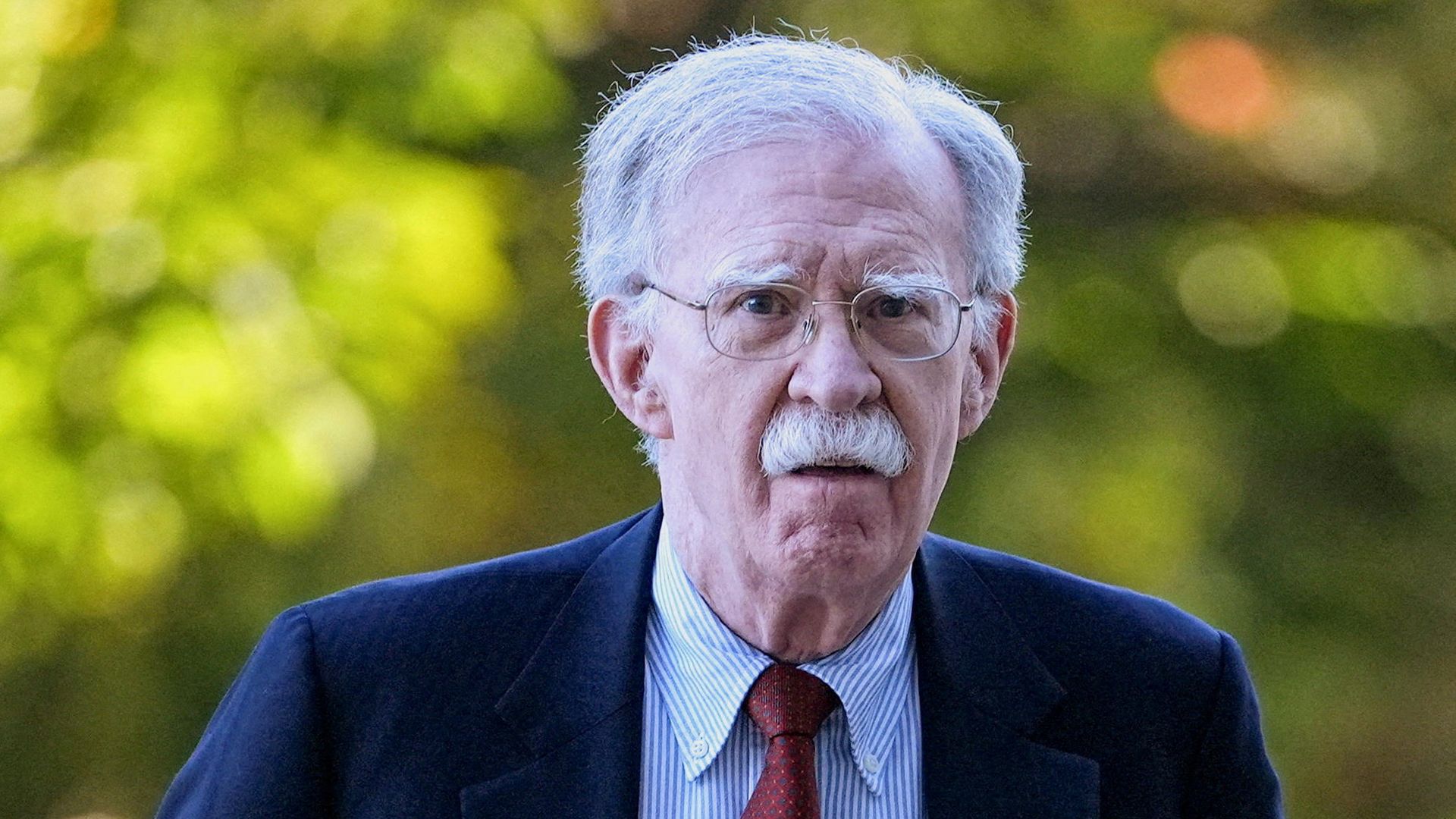
The heavy glass doors of a federal courthouse have a specific weight to them. They do not swing freely. They resist. When you push them open, you leave behind the casual noise of the street and step into a silence curated over centuries. It is a place where words are measured by the ounce, and where ordinary items—sheets of paper, manila folders, digital thumb drives—suddenly take on the density of lead.
For decades, the public has viewed the handling of national secrets through the lens of Hollywood. We expect the flashing red lights. We expect the sleek, titanium briefcases handcuffed to the wrists of agents in dark suits. We think of espionage as a midnight run across a rain-slicked bridge in Berlin.
But the real breakdown of national security rarely looks like a movie. It looks like a messy desk. It looks like a cardboard box tucked under a folding table in an uninsulated garage. It looks like a tired man, operating at the highest levels of government, deciding that the rules created to protect the realm of statecraft are simply too inconvenient for his Tuesday afternoon.
When a former high-ranking national security adviser stands before a federal judge to plead guilty to the mishandling of classified documents, the immediate reaction from the public is political. The headlines flash. The pundits retreat to their familiar corners to trade blows. Yet if we look past the partisan theater, a much quieter, far more troubling human story emerges. It is a story about the slow erosion of discipline, the intoxicating illusion of personal ownership over public secrets, and the fragile nature of the trust that keeps a modern nation from fracturing from the inside out.
The Anatomy of a Secret
To understand how a public servant ends up facing a prison sentence over a stack of paper, you have to understand what a classified document actually is. It is not just information. It is a contract written in blood.
Imagine a hypothetical intelligence officer working undercover in a hostile capital. Let us call her Sarah. For three years, Sarah has built a life out of a lie. She eats at the same cafes, befriends the same mid-level bureaucrats, and goes to sleep every night with a knot of pure ice in her stomach. One afternoon, she uncovers a single, critical piece of data: a foreign adversary has successfully mapped the vulnerabilities of a major Western power grid.
Sarah transmits this data back to Washington. It is typed up, analyzed, verified, and stamped with a bright red warning label. It becomes a classified document.
The primary purpose of that stamp is not to keep the information from the public forever. The purpose is to keep Sarah alive. If that piece of paper is left on a kitchen counter, if it is tossed into a briefcase alongside a half-eaten sandwich and a pair of gym shorts, the unique phrasing of the report can be traced back to its source. The moment that document is mishandled, Sarah’s life expectancy shrinks to zero.
This is the invisible reality that gets lost in the dry language of legal indictments. When the government prosecutes someone for retaining defense information, it is not an act of bureaucratic pettiness. It is a desperate attempt to maintain the integrity of a shield. The rules governing classified material are deliberately rigid. They are designed to strip away human whim. You do not read them in an open room. You do not take them home to finish over dinner. You do not keep them as souvenirs of the time you sat in the room where it happened.
But power does strange things to the human ego.
The Illusion of Ownership
There is a psychological trap that waits for anyone who spends enough time in the inner circles of governance. When you are the person reading the morning briefings, when your signature can alter the course of foreign policy, the line between the office and the self begins to blur. The secrets start to feel like your secrets.
Consider the trajectory of an adviser who rises to the top of the political apparatus. You spend years navigating the brutal, hyper-competitive waters of Washington. You survive the leaks, the knife-fights in committee rooms, and the shifting whims of volatile leaders. Finally, you arrive. You are granted access to the ultimate currency of the capital: the unvarnished truth of world events.
For a time, the responsibility is heavy. You handle the folders with care. You respect the secure rooms—the SCIFs, or Sensitive Compartmented Information Facilities—where electronic devices are banned and the air smells faintly of static and recycled ozone.
Then, familiarity breeds a dangerous comfort.
The daily routine becomes a grind. You are rushing to catch a flight. A document needs to be reviewed before a breakfast meeting the next morning. You slip it into your leather bag, telling yourself that you will keep it safe, that you are different, that your intellect and your loyalty place you above the granular restrictions meant for low-level clerks.
This is where the tragedy begins. The transition from a defender of the state to a federal defendant is rarely marked by a sudden, malicious decision to betray the country. Instead, it is a series of small, lazy compromises. It is the decision to store highly sensitive materials in an unsecure residential office because the drive back to the Pentagon is too long. It is the pride that refuses to return a briefing book because it serves as a physical trophy of a career's peak.
When the FBI finally arrives with a search warrant, the shock is genuine. The individual often feels persecuted, unable to comprehend that the system they served for decades has turned its cold, mechanical eyes upon them. They forget that the law does not care about your intentions. It cares about the location of the paper.
The Ripple in the Pond
The damage caused by the mishandling of classified data is rarely immediate, which makes it incredibly difficult for the public to gauge. If a bank is robbed, we can count the missing money. If a bridge collapses, we can see the twisted steel.
When a secret is exposed to the open air, the consequences are silent. They unfold over years, across continents, in ways that the average citizen will never see on the evening news.
Foreign intelligence agencies do not always launch dramatic raids to steal secrets. Often, they simply wait for the target to become sloppy. They monitor the trash. They hack the unsecure home networks of former officials. They piece together fragments of casual conversations and poorly guarded documents like a mosaic. A single page detailing a military exercise might seem harmless to a retired adviser looking through their garage, but to a hostile analyst, that page reveals the exact communication frequencies, response times, and command structures of an entire battle group.
The trust required to run a global alliance is incredibly fragile. When international partners see that a nation’s highest officials treat classified intelligence as personal property, they stop sharing their own data. They pull back. They withhold the critical warning that could prevent the next crisis because they can no longer trust that the information won't end up sitting in a cardboard box next to a lawnmower.
The real cost of this carelessness is borne by the people who have no say in the matter. It is paid by the young analysts who have to work with incomplete data, the diplomats whose leverage is quietly eroded, and the covert operatives who suddenly find themselves compromised in distant cities.
The Final Reckoning
The courtroom is a great leveler. In that space, the titles that used to command room-wide silence—"General," "Director," "Adviser"—lose their magic. The individual is reduced to a name on a docket, sitting at a wooden table while a prosecutor reads a list of dates and file numbers into the record.
The act of pleading guilty is a profound moment of human capitulation. It is the formal admission that the narrative you constructed for yourself—the story where you were the indispensable patriot who was too important for the rules—was a lie.
The law is indifferent to the political storms that rage outside the courthouse windows. It does not care which administration appointed you or which cable news network is defending your legacy. It leaves you alone with the consequences of your choices, watching the career you spent a lifetime building dissolve into a cautionary tale about the limits of personal privilege.
Long after the news cycle has moved on to the next scandal, the image that remains is not one of political intrigue or international malice. It is the image of an aging man walking down a marble staircase into the gray afternoon light, stripped of his security clearance, his reputation, and his authority, carrying nothing but the heavy, permanent knowledge of how easily a lifetime of service can be undone by the simple failure to respect a lock.


