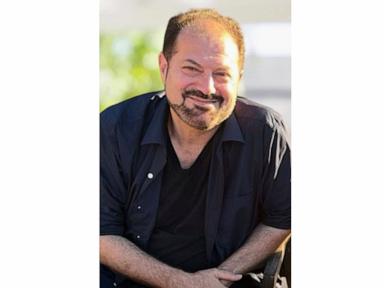
The fluorescent lights of an immigration detention center do not change when the sun sets. They hum. It is a flat, sterile sound that fills the gaps between heavy doors locking and rubber-soled boots squeaking against linoleum. For a man whose life has been measured by the sunrise calls to prayer and the steady, quiet rhythm of a neighborhood mosque, this artificial perpetual day is the first thing that breaks the sense of time.
The second thing is the shaking.
It starts in the fingertips. A slight, unpredictable tremor that makes it hard to hold a plastic cup. Then comes the blurred vision, turning the concrete walls into a watery smear. Next is the thirst—an deep, unquenchable panic in the throat that water cannot fix because the blood itself is turning to syrup.
This is what happens when a body accustomed to a precise, daily regimen of insulin is suddenly cut off from its lifeline. It is not a sudden, dramatic collapse. It is a slow, agonizing unraveling. And right now, inside an Immigration and Customs Enforcement (ICE) facility, a community leader is living through it.
The Empty Chair at the Friday Prayer
To understand the weight of an arrest, you have to look at the space a person leaves behind.
In a tight-knit religious community, the imam or mosque leader is not just a religious figure. He is the person who knows who cannot afford groceries this week. He is the one who sits with grieving families, arbitrates marital disputes, and reminds young people born in America of the roots that ground them. When such a figure is abruptly removed from his community, the effect is immediate and disorienting.
Imagine a Friday afternoon. The carpets are vacuumed, the shoes are lined up by the door, and hundreds of people sit shoulder-to-shoulder in anticipation. But the pulpit remains empty. The man who usually stands there, offering words of peace and patience, is miles away, wearing a generic jumpsuit, trying to remember the last time his blood sugar was checked.
His attorneys are not just arguing a legal point about immigration status; they are fighting a medical emergency. They are shouting into a bureaucratic void, warning that a routine administrative detention has effectively been transformed into a dangerous, potentially lethal medical deprivation.
The core of the legal argument is simple. Detention is meant to ensure a person appears for their immigration hearings. It is not supposed to be a punishment, and it is legally required to provide adequate healthcare. Yet, the gap between what the law mandates and what happens behind reinforced glass is often vast.
The Invisible Math of Chronic Illness
Diabetes is a relentless accountant. It demands balance.
For a severe diabetic, life is a series of precise calculations. A specific number of carbohydrates requires a corresponding dose of insulin. A drop in activity requires an adjustment. Stress—the kind of adrenaline-spiking stress that comes with being locked away indefinitely—sends cortisol levels through the roof, which in turn causes blood sugar levels to spike unpredictably.
Consider a hypothetical scenario that plays out every day in detention facilities across the country. A medical unit is understaffed. A line for morning medications forms at 6:00 AM. If a detainee misses that window because of a facility lockdown, or because a guard was late opening a cell door, the entire chemical balance of their day is ruined.
By afternoon, their body begins to produce ketones. The blood becomes acidic. This is diabetic ketoacidosis, a medical emergency that can lead to a coma or death.
To the bureaucracy, a missed dose or a delayed blood sugar check might look like a minor administrative hiccup—a box left unchecked on a busy shift. To the human being inside that system, it feels like drowning while people watch from the shore.
+-------------------------------------------------------------+
|               THE SPIRAL OF MEDICAL NEGLECT                 |
+-------------------------------------------------------------+
|  Stress/Detention -> Cortisol Spikes -> Sugar Rises          |
|  Delayed Insulin   -> Acidic Blood     -> Organ Strain        |
|  No Intervention   -> Ketoacidosis     -> Medical Emergency   |
+-------------------------------------------------------------+
Attorneys representing the mosque leader have made it clear that this is not a case of a patient being difficult or demanding luxury care. It is about basic survival. They have filed urgent appeals, presented medical records documenting years of careful management, and warned that every day without proper oversight brings him closer to irreversible organ damage.
The Culture of Indifference
Why is it so hard to get a bottle of insulin to a man who needs it?
The answer lies in the structural design of immigration detention. These facilities are often run by private contractors or located in rural areas where local jails lease out bed space to the federal government. The primary metric of success in these places is security and cost-containment, not holistic healthcare.
When a person enters this system, their identity is stripped down to a number. Their history as a community pillar, a father, or a spiritual guide vanishes. They become a file. And files do not feel pain.
Medical staff within these facilities are frequently overworked and insulated from the consequences of their inaction by layers of legal immunity. If a detainee complains of a headache or dizziness, they are often told to drink water or given an over-the-counter painkiller. But you cannot cure a failing pancreas with ibuprofen.
The attorneys' public outcry is an act of desperation. When the internal grievance procedures fail, when the formal requests are ignored, the only tool left is exposure. By bringing the story to the public, they are trying to force the system to see the human being behind the case number.
But the real problem lies elsewhere. It is not just about one facility or one specific guard. It is about a collective cultural blind spot that allows us to tolerate conditions for immigrants that we would find abhorrent for any other population. We have created a parallel legal and medical universe where the normal rules of human decency seem suspended.
What We Lose When We Look Away
This story is larger than a single legal dispute over an immigration status. It touches on a fundamental question about who we are as a society. If a community leader, backed by legal representation and a vocal congregation, can be denied basic medical care in broad daylight, what happens to the thousands of detainees who have no one speaking for them?
What happens to the young father who doesn't speak English well enough to explain his symptoms? What happens to the woman who is too terrified of retaliation to report that her medication was withheld?
They suffer in silence. They become the quiet statistics of a system that treats human life as a logistical line item.
The mosque leader’s congregation continues to gather. They pray for his return, and they pray for his health. They have watched him give his life to supporting others, and now they are forced to watch his life be jeopardized by administrative inertia.
The legal battle will continue, filled with motions, hearings, and jurisdictional arguments. But while the lawyers argue over paragraphs of code, a man sits in a cell, watching his hands shake, wondering if the next meal he is given will be the one that pushes his body past the point of no return.
The hum of the fluorescent lights continues, indifferent to the prayers whispered beneath them.