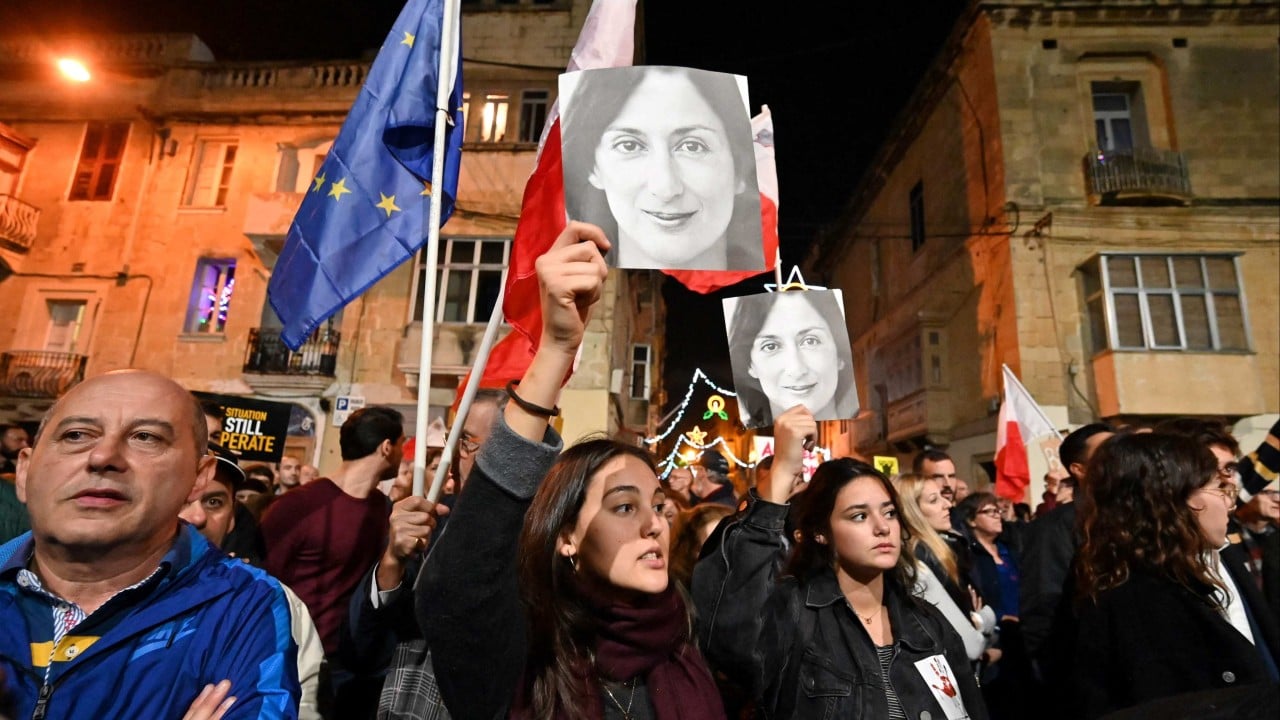
Yorgen Fenech, the multi-millionaire heir to one of Malta’s most powerful property and gaming dynasties, has finally stood before a jury in Valletta. He faces charges of complicity in the 2017 car-bomb assassination of investigative journalist Daphne Caruana Galizia, a crime that shattered the Mediterranean island’s reputation and exposed systemic corruption at the highest levels of government. Fenech, who has spent more than five years in preventive custody before receiving bail under unprecedented financial terms, pleaded not guilty as his trial officially commenced. The prosecution is seeking a life sentence, aiming to prove that Fenech was the ultimate architect who commissioned and financed the hit to protect his vast financial interests.
This trial represents far more than the prosecution of a single tycoon. It is a direct confrontation with a state-sanctioned culture of impunity that allowed corporate greed and political power to merge into a lethal force. For decades, Malta operated as an insular financial paradise where the wealthy bought influence and regulatory bodies looked the away. Caruana Galizia used her blog, Running Commentary, to systematically dismantle this facade. Her assassination was not a random act of violence. It was a cold, calculated corporate execution designed to silence a reporter who was on the verge of exposing an energy deal involving Fenech and top government officials.
The Infrastructure of an Execution
Assassinations in the European Union rarely resemble the chaotic street violence of failed states. They are structured, outsourced, and treated like clandestine business transactions. The prosecution’s case against Fenech rests heavily on this corporate hierarchy of violence.
According to the indictment, the conspiracy began in April 2017. Fenech allegedly summoned a taxi driver named Melvin Theuma to a restaurant in his family-owned Portomaso development. Theuma was not a killer; he was a fixer, a middleman with ties to the criminal underworld. Fenech allegedly tasked him with finding contract killers to eliminate Caruana Galizia, specifically suggesting the underworld figure George Degiorgio.
The transaction moved along a clear chain of custody:
- The Client: Fenech allegedly provided the capital and the target, motivated by panic over Caruana Galizia’s impending revelations about his secret Dubai company, 17 Black, and its links to state energy contracts.
- The Broker: Melvin Theuma secured the hitmen, handled the logistics, and distributed the cash. He later secured a presidential pardon in exchange for his testimony and a stash of covertly recorded conversations.
- The Logisticians: Robert Agius and Jamie Vella procured the military-grade explosive device. Both were sentenced to life imprisonment last year.
- The Executioners: Brothers George and Alfred Degiorgio, along with Vincent Muscat, monitored the journalist’s movements for weeks. They broke into her car on the night of October 15, 2017, planted a bomb inside a children's shoebox beneath the driver's seat, and detonated it remotely the next afternoon.
The cost of this operation was €150,000. A mere €30,000 was paid upfront, with the remaining €120,000 delivered after the burning wreckage of a Peugeot 108 was scattered across a field in Bidnija. The mechanics of the crime reveal a chilling assumption by everyone involved: they believed they would never be caught because the system was rigged in their favor.
State Collapse and the Portomaso Monolith
To understand why it took nearly a decade to bring Fenech to a jury, one must understand the Tumas Group and the architecture of Maltese power. The Fenech family built the Portomaso marina, a sprawling complex of luxury apartments, high-end restaurants, and a 23-floor tower that dominates the skyline of St. Julian's. It stands as a physical manifestation of the country’s economic model: real estate speculation, passport sales, online gambling, and offshore finance.
Caruana Galizia’s reporting established that this economic engine was fueled by political patronage. A subsequent 437-page independent public inquiry concluded that the Maltese state bore responsibility for her death by creating an "atmosphere of impunity" that flowed from the office of then-Prime Minister Joseph Muscat down to the regulatory bodies and the police force.
When the state treats investigative journalists as enemies of economic progress, it signals to criminal syndicates that those journalists are fair game. The political fallout from the murder eventually triggered mass street protests, forcing the resignation of Joseph Muscat in January 2020. Yet, the structures that enabled the crisis remain largely intact. The trial faces an uphill battle against a defense strategy that has spent years exploiting procedural loopholes, challenging evidence admissibility, and painting the star witness, Theuma, as a liar who fabricated recordings to protect higher-ranking political figures.
The Trial of a System
The defense team has signaled its intention to attack the integrity of the prosecution's digital evidence and the reliability of a compromised middleman. This is standard legal strategy, but in the context of Malta's tight-knit elite, it carries heavier weight. The jury, isolated from the public and stripped of electronic communication, must navigate a labyrinth of financial records, wiretaps, and underworld testimonies.
The prosecution’s challenge is to prove beyond a reasonable doubt that Fenech shared the criminal intent of the hitmen. It is not enough to prove he hated the journalist or that her writing threatened his business; they must anchor the financial trail and the voice recordings directly to the order to detonate that bomb.
If the state secures a conviction, it will signal a breaking point for the old guard, proving that even the most insulated tycoons can be held accountable. If the prosecution fails, it will reinforce the grim reality that Malta’s institutions are still incapable of policing the elites who fund them.
The ultimate tragedy of the Bidnija bombing is that it exposed a truth Caruana Galizia wrote in her final blog post, just minutes before her death: "There are crooks everywhere you look now. The situation is desperate." This trial will determine whether that desperation is permanent.