The Myth of the Unshakable Knick
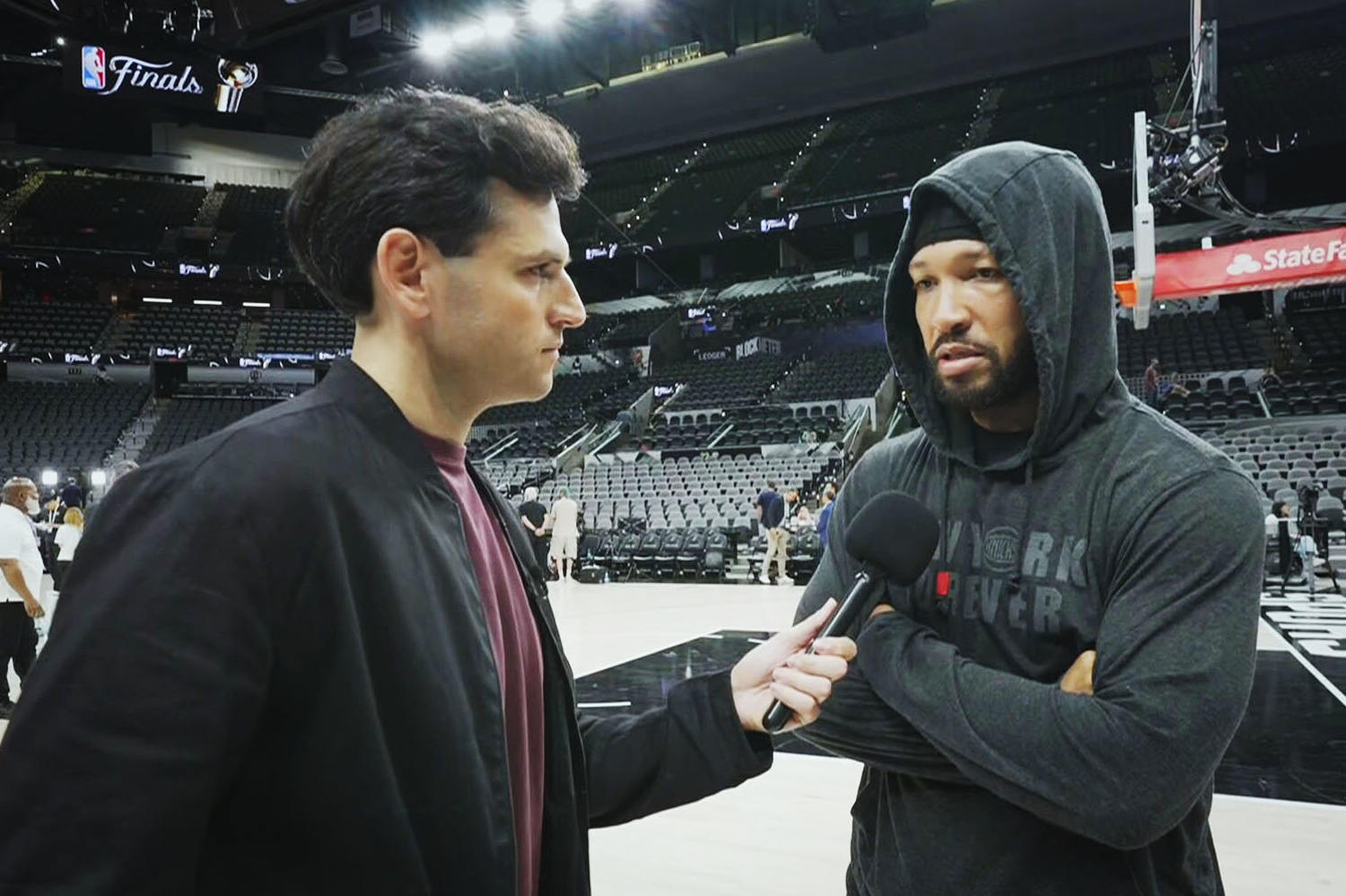
Jalen Brunson stood at the microphone after yet another grueling postseason battle, his face wearing the exhaustion of a man who plays every basketball game as if it is a 12-hour shift in a coal mine. A reporter asked the predictable question about momentum, shifting dynamics, and the psychological weight of a wild Game 4 comeback. Brunson gave the predictable answer. He insisted that the New York Knicks’ mindset had not changed, that the team remains locked into a singular, unwavering approach regardless of the emotional roller coaster surrounding them.
It is a beautiful narrative. It is exactly what Tom Thibodeau wants his players to say, and it is precisely what the Madison Square Garden faithful want to believe. But it ignores the brutal physiological and tactical reality of modern NBA basketball.
The Knicks’ mindset cannot change because change implies flexibility, and this roster is currently constructed with absolutely zero margin for error. When a team relies so heavily on a microscopic rotation and the sheer willpower of its lead guard, consistency isn't just a mental choice. It is a survival mechanism. To acknowledge the chaos of a wild comeback is to admit how close they are to the edge of the cliff.
Behind the stoic post-game press conferences lies a much more complex truth about how New York is winning, the unsustainable physical tax being levied on their star player, and the tactical adjustments that will dictate whether this postseason run ends in a parade or a collapse.
The Illusion of Stability
Sports culture loves the concept of the flatline competitor. We praise athletes who refuse to ride the emotional waves of a playoff series. When Brunson claims that nothing changes after a chaotic victory, he is attempting to project an aura of total control.
Look closer at the actual basketball being played. The idea that the Knicks are playing a steady, controlled brand of basketball is an illusion. Their victories are forged in chaos. They win by crashing the offensive glass with reckless abandon, turning 50-50 balls into violent collisions, and relying on Brunson to bail out stagnant possessions with impossible, contested mid-range jumpers.
An analysis of New York's offensive tracking data reveals just how precarious this approach is.
- Isolation Dependency: During their most successful postseason stretches, the Knicks' percentage of unassisted field goals spikes dramatically. When the system breaks down, the strategy defaults to "Jalen, save us."
- The Possession Game: New York routinely loses the shooting efficiency battle but wins the game by generating extra possessions through offensive rebounds and forced turnovers.
- The Fatigue Factor: Players like Josh Hart and Donte DiVincenzo are routinely tracking over 40 minutes per game, leading to visible drop-offs in lateral defensive quickness by the fourth quarter.
This is not a team operating with a comfortable, repeatable system. It is an elite group of high-effort athletes executing a high-wire act. When Brunson says the mindset hasn't changed, he means they are committed to the wire. They cannot afford to look down.
The Tactical Burden on Number 11
To understand why the Knicks are forced into this rigid mental posture, you have to look at the defensive coverages Brunson faces on a nightly basis. Opponents are no longer playing him straight up. They are throwing hard blitzes at the level of the screen, utilizing lengthy wing defenders to deny him the ball, and sagging off non-shooters to clog the paint.
The Anatomy of the Blitz
When an opposing defense traps Brunson at the top of the key, it forces a definitive mathematical choice. He must either skip the ball over the top of the defense to a weak-side shooter, or he must manipulate the pocket pass to a rolling big man.
The problem? The Knicks' current injury situation and roster construction mean that the rolling big man is often a non-threat from the perimeter, allowing the back-line defense to rotate early and recover. This turns every single possession into an exhausting chess match where Brunson must use his body to shield off defenders twice his size just to get an entry pass into the paint.
The Secondary Playmaker Deficit
Every great postseason team needs a release valve. When LeBron James faced heavy pressure, he had Dwyane Wade or Kyrie Irving. When Stephen Curry gets trapped, Draymond Green orchestrates the four-on-three advantage.
Without a consistent, elite secondary playmaker on the floor, the Knicks' offense becomes incredibly predictable. Julius Randle's absence removes a massive isolation threat that previously forced defenses to split their attention. Now, the entire defensive game plan is focused squarely on Brunson's chest. He isn't just fighting the five players on the court; he is fighting the collective institutional knowledge of an entire coaching staff that has spent days designing ways to make him miserable.
The Lie of the Golden Grind
There is a dangerous romanticism surrounding the way Tom Thibodeau runs his basketball teams. Media markets celebrate the 48-minute performances and the refusal to rest starters as badges of honor. It sells tickets, and it creates a fiercely loyal fanbase that mirrors the blue-collar ethos of the city.
The history of the modern NBA tells a different story.
Heavy minutes in October and January lead to dead legs in May and June. The human body does not care about New York grit. Muscles fatigue, lactic acid builds up, and the split-second reaction times required to contest a corner three-pointer begin to slow down.
Consider a hypothetical scenario where an elite guard plays 45 minutes a night through three consecutive seven-game series. By the time they reach the conference finals, that player has essentially logged an extra month of high-intensity basketball compared to a rival who averaged 34 minutes on a deeper roster. The drop-off doesn't happen gradually. It happens all at once. A short jumper here, a missed box-out there, a step slow on a recovery—these are the quiet indicators of physical bankruptcy.
When the Knicks enter these wild fourth-quarter scrambles, they are playing with fire. The emotional highs of a comeback victory mask the underlying reality that they are burning through their physical reserves at an alarming rate.
Adjustments the Knicks Must Make to Survive
Projecting an unchanged mindset is fine for the media, but inside the film room, adjustments are mandatory. If New York expects to turn a gritty run into a legitimate championship pursuit, several structural changes must occur on the floor.
Unlocking the Short Roll
Since teams are selling out to stop Brunson from getting to his preferred spots in the paint, the Knicks must optimize their four-on-three opportunities. The player catching the ball in the middle of the floor after a Brunson trap cannot simply be a play-finisher; they must become a play-maker.
This means using Isaiah Hartenstein or Mitchell Robinson not just as traditional rim-runners, but as passers who can quickly identify the weak-side corner shooter before the defense can recover. If the big men cannot make these reads at a high level, the offense will continue to stall out for long stretches, forcing Brunson into low-percentage, circus shots at the end of the shot clock.
Spacing Variation
The Knicks frequently fall into the trap of standing and watching their star guard operate. Stationary targets are easy to guard. To alleviate the pressure on Brunson, Thibodeau needs to implement more off-ball screening actions.
- Ghost Screens: Having a shooter pretend to set a pick and then quickly pop to the perimeter can create the necessary split-second confusion to give Brunson a clean driving lane.
- Flex Actions: Forcing opposing guards to fight through baseline screens removes their ability to sit in the gap and help on Brunson's drives.
- Decoy Possessions: Using Brunson as a spacer for a few possessions a game to let others initiate the offense, even if less efficient, preserves his energy for the final five minutes of the game.
The Real Danger of the Unchanged Mindset
The greatest risk to the Knicks is not that their mindset will change, but that their rigidity will prevent them from evolving when an opponent finally solves their primary equation.
Basketball is a game of continuous adjustments. A strategy that wins a wild Game 4 might be completely neutralized by Game 6 once video coordinators have spent 48 hours dissecting the tape. Relying entirely on "effort" and "toughness" is a trap. Every team in the postseason is playing hard. Every player in the playoffs is tough. At a certain point, the tactical scheme must carry the weight that sheer will can no longer support.
Brunson knows this, even if his public statements suggest otherwise. His stoicism is a shield, protecting a locker room that is running on fumes from acknowledging just how difficult the road ahead actually is. They will keep grinding, they will keep playing heavy minutes, and they will keep telling the world that nothing has changed. But beneath the surface, the gears are grinding, and the machinery is being pushed to its absolute limit.