The room in Washington is always perfectly air-conditioned. It smells faintly of expensive floor polish and dry-cleaned wool. When a politician stands behind a mahogany dais, their voice carries a specific kind of weight, the kind backed by the full economic might of a superpower.
Thousands of miles away, in a cramped metal workshop on the outskirts of Noida, just outside New Delhi, the air smells completely different. It smells of hot iron, pungent mustard oil cooking on a small portable stove, and the heavy, humid exhaust of a city perpetually under construction. Here, a man named Amit—a composite of the millions of small-scale machine parts manufacturers who form the backbone of the Indian economy—watches a flickering television screen during his lunch break.
On the screen, an American senator is talking about his livelihood as if it were a pawn on a global chessboard.
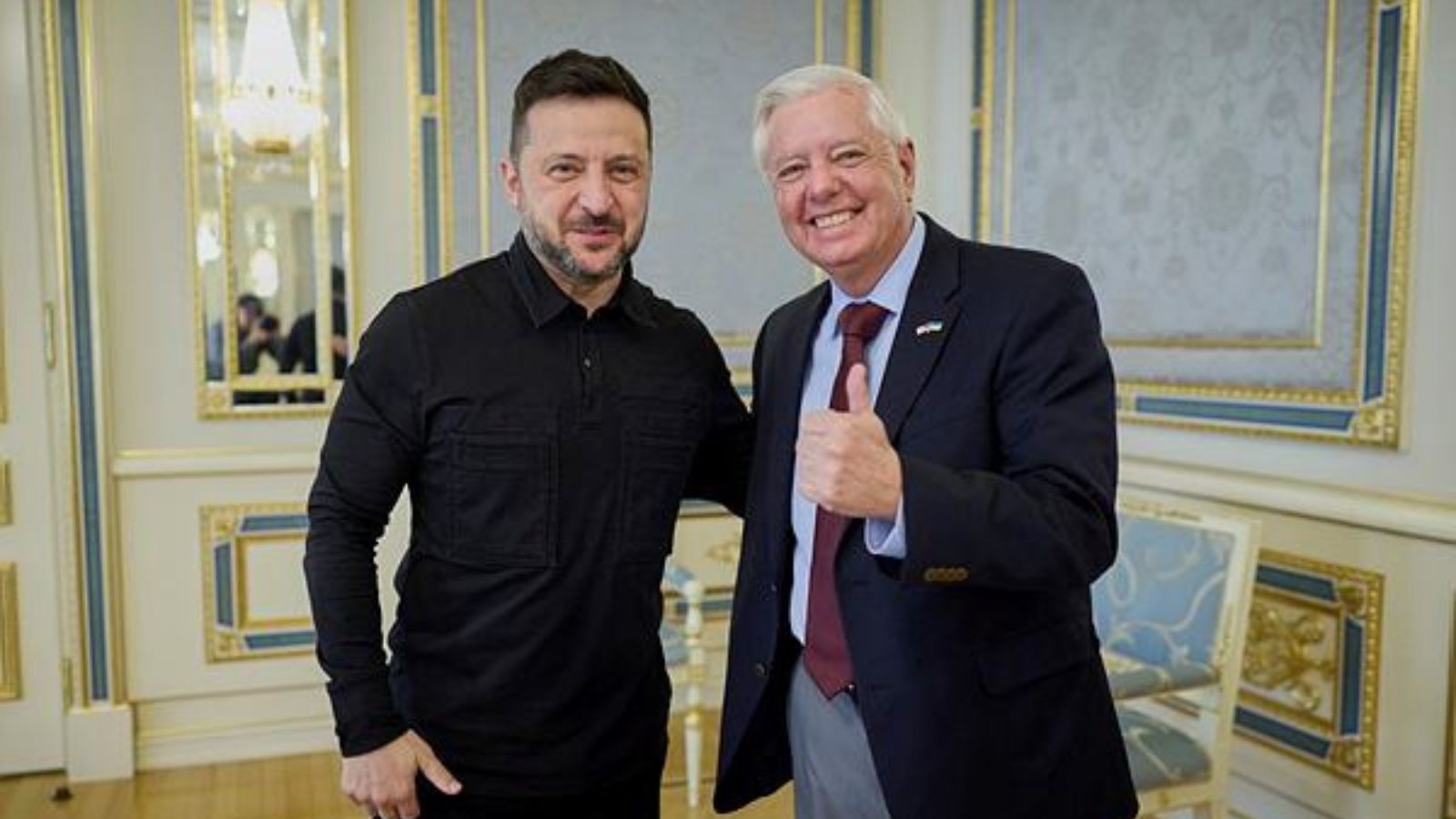
The rhetoric coming out of Capitol Hill has turned exceptionally sharp. Senator Lindsey Graham recently weaponized a phrase that sent tremors through diplomatic circles: "blood money." He followed it up with a threat that sounded more like an act of economic warfare than a diplomatic grievance—a proposal for 500% tariffs on Indian goods.
To the lawmakers in Washington, this is a clear-cut moral equation. You are either with the democratic alliance against authoritarian expansion, or you are funding the Russian war machine by purchasing their discounted crude oil. But to Amit, and to the policymakers steering the world’s most populous nation, the view through the window looks entirely different.
The disagreement is not just about trade policy. It is a fundamental clash between two entirely different ideas of survival.
The Long Memory of a Cold Stove
To understand why India refuses to bend to Washington’s pressure, you have to step away from the spreadsheets and look at the domestic reality. India imports nearly 85% of its crude oil. Energy is not a luxury here; it is the oxygen that keeps the nation breathing.
Consider what happens when oil prices spike on the global market.
When energy becomes expensive in a wealthy Western nation, people complain about the cost of filling their SUVs, or perhaps they turn down their thermostats by two degrees. When oil prices spike in India, the consequences are visceral. The price of tomatoes doubles because trucking costs skyrocket. The cost of running a diesel generator to keep a small garment factory operating during a power outage becomes unsustainable. People go hungry. Businesses close their doors forever.
For decades, New Delhi practiced a foreign policy born out of necessity: strategic autonomy. They refused to join formal military alliances during the Cold War, and they maintain that stance today.
When the conflict in Ukraine escalated and the West imposed sweeping sanctions on Russian energy, the global oil market fractured. Moscow, desperate for buyers, offered its Ural crude at steep discounts. India looked at its ledger, looked at its millions of citizens living just above the poverty line, and made a purely pragmatic choice. They bought the oil.
In the eyes of Washington critics, this choice was an act of betrayal.
Lindsey Graham’s outrage reflects a deep-seated frustration within the American political establishment. From their perspective, the United States has spent the last two decades building a strategic partnership with India, viewing it as a crucial counterweight in Asia. To see New Delhi fill its coffers with cheap Russian oil feels like a rejection of that relationship. The phrase "blood money" was chosen precisely because it stings; it is designed to shame an ally into submission.
The Threat of the Economic Hammer
But shaming rarely works when a nation feels its core interests are at stake. When moral arguments failed to shift New Delhi’s stance, the language shifted from ethics to punishment.
The threat of 500% tariffs is a massive economic hammer. If enacted, such tariffs would effectively banish Indian products from the American market overnight. The textiles woven in Surat, the generic pharmaceuticals manufactured in Hyderabad, the software solutions designed in Bengaluru—all of it would become instantly unaffordable for American consumers.
Let us be completely honest about the anxiety this causes.
For an entrepreneur like Amit, the threat feels personal. His workshop supplies small steel components to an exporter who ships them to the United States. He does not know the intricacies of the US Senate, nor does he have an opinion on the geopolitical nuances of Eastern Europe. He knows only that if his exporter loses the American market, his workshop will fall silent. His three employees will lose their jobs. His daughter's school tuition will go unpaid.
This is the hidden friction of modern geopolitics. The decisions made in pristine, carpeted rooms in Washington ripple outward, turning into quiet catastrophes in faraway neighborhoods.
Yet, the irony of the 500% tariff threat is that it exposes the limitations of American leverage. A tariff that high is a double-edged sword. The American economy relies heavily on Indian imports, particularly in sectors that keep everyday costs low for American citizens.
- Pharmaceuticals: India provides a vast portion of the generic medicines filling American pharmacies. A sudden cutoff would trigger a healthcare crisis for millions of Americans who rely on affordable prescriptions.
- Technology: The back-office operations of countless American corporations are anchored in Indian tech hubs. Severing that link would disrupt global business operations.
- Supply Chains: Modern manufacturing is highly fragmented. Disrupting one node causes the entire system to stutter.
If Washington were to actually pull the trigger on such extreme measures, the economic self-harm would be immediate and severe. It is a classic example of political theater—a performance meant for domestic voters back home, wrapped in the language of strength, but entirely disconnected from the realities of global interdependence.
Two Parallel Realities
The current standoff reveals a deeper, more troubling truth about our world. The global North and the global South are speaking entirely different languages.
Washington speaks the language of a rules-based international order, expecting nations to make economic sacrifices to defend abstract principles of sovereignty and international law. New Delhi speaks the language of development, arguing that its primary moral duty is to lift hundreds of millions of its own people out of poverty.
When these two worldviews collide, communication breaks down.
American policymakers wonder aloud why a fellow democracy would refuse to stand against aggression. Indian diplomats counter by pointing out the historical hypocrisy of Western nations, who routinely purchase energy from questionable regimes when it suits their own national interests. They note that Europe continued to buy Russian gas long after the conflict began, tapering off only when it was economically and politically viable for them to do so.
It is easy to feel a sense of despair when watching this play out. The rhetoric grows louder, the threats grow wilder, and the space for compromise seems to shrink.
But out in the real world, away from the television cameras, a quiet accommodation often takes place. Even as politicians threaten fire and brimstone, trade delegations continue to meet. Businesses continue to sign contracts. The economic ties that bind the two nations are incredibly thick, woven out of thousands of individual relationships, shared technologies, and mutual needs. They are much harder to tear apart than a single politician's speech would suggest.
Amit turns off the television in his workshop. The news segment has ended, replaced by a loud commercial for a new smartphone. He picks up his tools and goes back to work. The metal is cold in his hands, but as the machinery whirs to life, the friction creates heat. He focuses on the precise cut of the steel, knowing that no matter what words are spoken across the ocean, the demand for what he creates will remain. The world still needs to build things, and as long as that is true, he has a place in it.
The politicians will keep talking. They will continue to draw lines in the sand, demand allegiances, and threaten ruin. But the quiet momentum of millions of people simply trying to build a better life for their families possesses a gravity of its own—one that eventually forces even the loudest voices in Washington to recalculate their math.