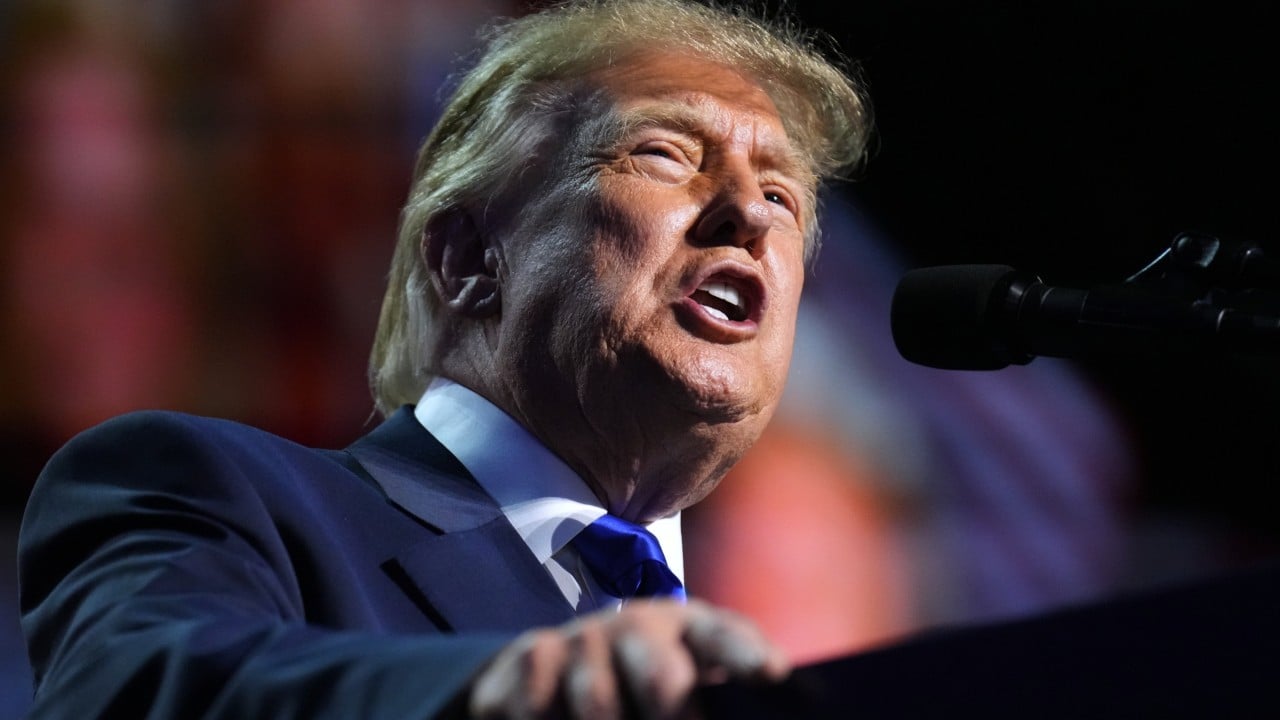
The air inside the convention hall smelled of damp wool, fried grease, and the distinct, ozone tang of ten thousand bodies packed tightly beneath fluorescent lights. It was an environment designed to flatten nuance. Every sound echoed off cinderblock walls, turning a speaker’s cadence into a physical weight that pressed against the chest. When Donald Trump stepped to the podium, the room did not merely cheer; it exhaled a collective, ragged breath of expectation that had been gathering force for years.
He stood behind the thick acrylic shield, flanked by flags that looked heavy enough to anchor a ship, and looked out over a sea of faces worn by factory shifts, small-town mortgage anxieties, and the quiet humiliation of watching their savings evaporate against the grocery counter.
"We built the most successful economy in the history of the world," he told them. The microphones caught the familiar cadence, the rhythmic up-and-down of syllables that had become the background music of American life.
Down in row fourteen, a man named Arthur—forty-eight years old, his knuckles permanently stained with machine oil from a tool-and-die shop that had survived three recessions only to face a fourth—nodded slowly. Arthur had not seen the success stories on the financial networks. He had seen his health insurance premiums double. He had seen the diner down the street close its doors after forty years of serving coffee to men in muddy boots. Yet, when the speaker behind the glass offered a different ledger, Arthur wanted to believe the math.
Listen to the promise that followed.
It was a figure designed to cut through the static of white papers and congressional debates. Five thousand dollars. A dividend, handed directly to the citizens, drawn from the ether of high-tariff trade policies and corporate repatriations. To an economist sitting in a glass tower in Washington, the proposition was an analytical impossibility, a fiscal heresy that would ignite inflation and shatter debt ceilings. But to Arthur, five thousand dollars was not a macroeconomic variable. It was three months of back-rent. It was a new alternator for the truck that had been grinding its gears every morning. It was breathing room.
This is the eternal tension of modern politics. We mistake policy for poetry.
When a leader declares a presidency the most successful in history, they are not speaking to the Bureau of Labor Statistics. They are speaking to the emotional baseline of a populace that feels left behind by its own map. The data, of course, tells a more complicated story. Unemployment metrics danced across historical lows before the pandemic scrambled the board, but wage growth fought a sluggish battle against the rising cost of housing and healthcare. National debt climbed upward regardless of who held the quill. Yet numbers are cold things. They do not keep you warm when the furnace breaks in January.
Consider what happens when a campaign trail intersects with kitchen-table arithmetic. The abstract becomes visceral.
The strategy behind the rhetoric is as old as the republic itself. Paint the past in brilliant, golden hues; paint the present as a betrayal by unseen forces; and offer a singular, tangible token of redemption. Five thousand dollars is that token. It is a modern-day talisman, shiny and heavy with potential. It asks the voter to suspend disbelief, to trade the grinding complexity of structural reform for the sudden, electric shock of a cash infusion.
Economics, at its core, is the study of scarcity, but politics is the art of abundance.
Arthur walked out of the hall into the damp evening air, his ears still ringing from the applause. The streetlights flickered on, casting long, bruised shadows across the pavement. In his pocket was a pamphlet detailing the speech, the bullet points reduced to ink smudges against his thumb. He knew, with the cynical part of his mind that had been honed by decades of broken promises from both sides of the aisle, that the check might never arrive. He knew that Congress would choke on the legislation, that economists would write stern columns in newspapers he no longer subscribed to, that the machinery of government would grind the idea into dust before it ever reached a bank account.
And yet, as he climbed into his truck and turned the key—the engine catching with a familiar, desperate rattle—he held onto the image of the number.
Because sometimes, the belief in a better ledger is the only currency left that spends.