The subway car screams at ninety-four decibels. That is roughly the acoustic equivalent of standing three feet away from a gas-powered lawnmower while someone screams your name into a megaphone.
If you live in a city, you know this sound. You feel it rattle in your teeth before you even hear it in your ears. It is the screech of iron wheels grinding against curved steel rails, the hiss of pneumatic brakes, the overlapping static of forty different phone speakers playing forty different videos at maximum volume.
And right in the middle of that sensory wreckage stands a hypothetical commuter—let’s call her Maya. Maya has twenty-two minutes between her apartment and a presentation that could define her year. She is trying to read three pages of dense quarterly projections on her phone. Her jaw is clenched. Her shoulders are pulled up toward her earlobes. By the time she steps onto the platform, her cortisol levels have spiked, her focus is shredded, and she hasn't even spoken to a colleague yet.
Noise is not merely an annoyance. Noise is a tax on your nervous system.
For years, the tech industry treated active noise cancellation as a luxury feature reserved for business-class flyers sipping warm sparkling water at thirty-five thousand feet. Then the world got louder, our attention spans got thinner, and a pair of tiny white plastic stems became the primary psychological armor for millions of people.
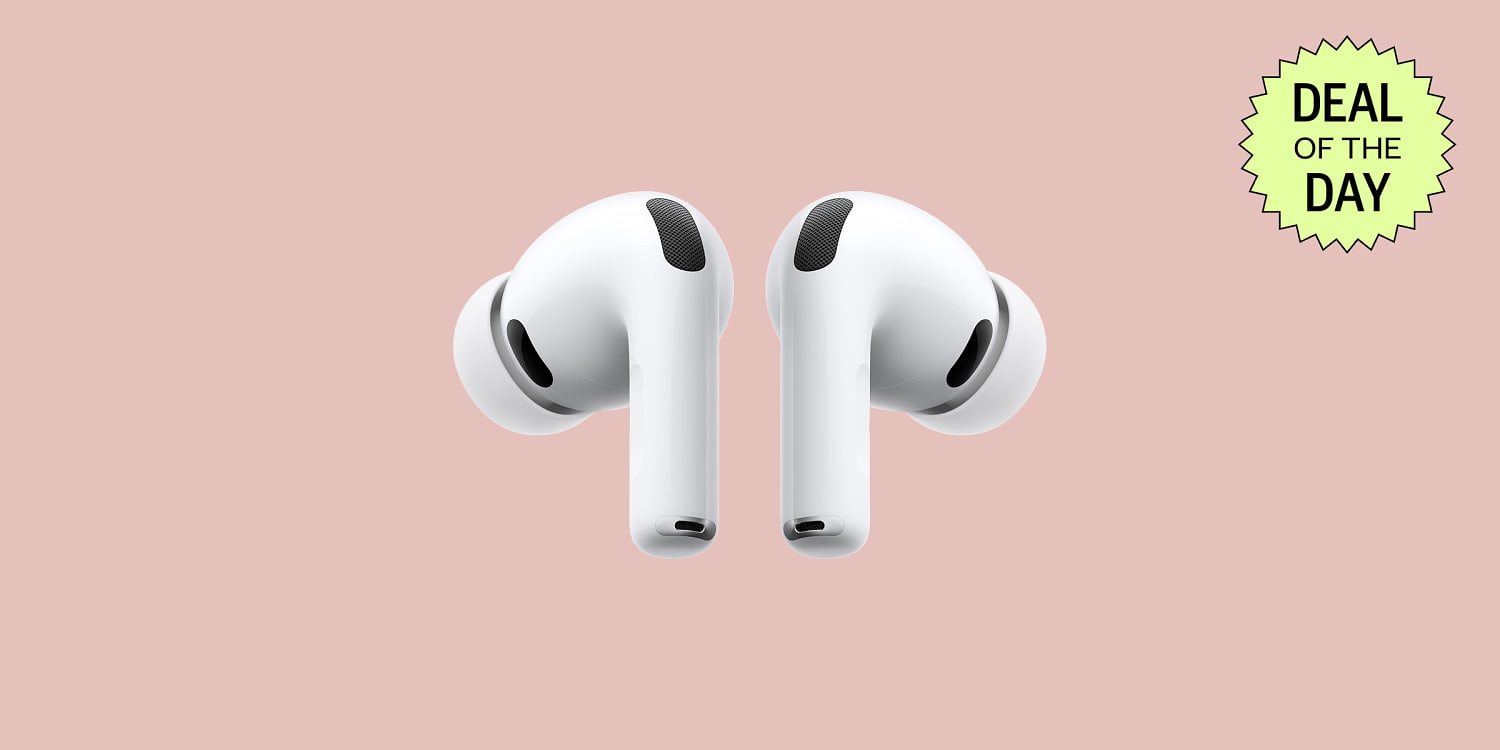
Which brings us to a seemingly mundane piece of retail news making the rounds today: Apple AirPods Pro 3 have dropped back down to their lowest Prime Day price.
On paper, that is just a discount alert. A few dollars shaved off a hardware sticker. A digital coupon clipped in the middle of a busy week.
In reality, it is the rare moment when the highest tier of personal acoustic engineering becomes accessible enough to stop being an indulgence and start being a necessity.
The Myth of the "Just Good Enough" Earbud
Most people buy headphones the way they buy umbrellas. They grab whatever is cheap, convenient, and sitting near the register, fully expecting it to break or disappoint within six months.
I used to be one of those people. For three years, I swore I didn't need high-end wireless earbuds. I had a drawer full of forty-dollar pairs that connected sporadically, sounded like music playing through a tin can at the bottom of a well, and turned a windy walk down the avenue into a hurricane inside my skull. Every time someone mentioned spending over two hundred dollars on tiny speakers the size of lima beans, I rolled my eyes. It felt like pure brand worship.
Then I took a cross-country red-eye flight sitting directly behind a crying infant and beside an engine nacelle. My cheap earbuds were cranked to one hundred percent volume just to make out the dialogue in a podcast. When I landed, my ears were ringing so loudly I couldn't hear the gate agent's instructions. I realized I wasn't saving money. I was trading my hearing and my sanity for a slightly smaller credit card charge.
That is the trap of mid-tier audio. When your earbuds fail to block external sound, your brain compensates by demanding more volume. You push the decibels higher and higher to drown out the street, the gym, or the open-office chatter, slowly damaging the microscopic hair cells in your inner ear that never—ever—grow back.
True noise cancellation does the exact opposite. It subtracts chaos so you can listen at a whisper.
What Actually Changed Inside the Shell
To understand why the current price drop on the AirPods Pro 3 matters, you have to understand what Apple actually rebuilt beneath that familiar glossy white exterior.
When the second generation arrived, it felt like a peak. People wondered how much quieter a tiny piece of silicone could possibly make the world. With the third generation, the engineering focus shifted from raw volume suppression to something far more nuanced: acoustic intelligence and physical endurance.
Think of traditional noise cancellation like building a brick wall. It blocks everything indiscriminately, which often creates that eerie, pressurized "cabin pressure" sensation in your eardrums—the feeling that you are trapped inside a vacuum-sealed jar.
The architecture inside the AirPods Pro 3 operates more like an active immune system. Powered by the upgraded H3 silicon chip, the internal microphones sample the acoustic environment tens of thousands of times per second. Instead of slapping a blunt wall of anti-noise over your eardrums, the processor identifies the specific frequency profile of the intrusion—whether it is the low rumble of a bus engine or the sharp clatter of dishes in a coffee shop—and generates a custom inverse wave in real time.
The result isn't dead, suffocating silence. It is stillness.
Even more impressive is how that intelligence handles the human voice. Anyone who has worn older noise-canceling earbuds knows the awkward dance of ordering a coffee: you either yank an earbud out and fumble with it at the counter, or you yell "THANK YOU" at three times your normal speaking volume because you can't hear yourself talk.
Conversation Awareness on the third-generation model eliminates that friction entirely. The moment your vocal cords vibrate, the earbuds recognize that you are speaking, drop your media volume to a murmur, focus the beamforming microphones on the person standing in front of you, and filter out the espresso machine behind them. When you stop talking, the world fades back out and your music swells smoothly back into place.
The Invisible Upgrade Nobody Talks About
If you ask ten buyers why they picked up the AirPods Pro 3 during this price dip, nine of them will talk about sound quality or noise cancellation. The tenth person—usually someone who runs marathons, lifts weights, or sweats through humid summer commutes—will talk about the fit and the seal.
Ear canals are as unique as fingerprints. Historically, wireless earbuds solved this problem with a crude compromise: jam a piece of rubber into the opening and hope friction keeps it there when you start jogging.
Apple redesigned the acoustic venting system and introduced an expanded range of adaptive silicone-foam hybrid tips for the third generation. These tips soften slightly as they warm up to your body temperature, molding to the exact contours of your ear canal without creating pressure points. I wore them through a four-hour writing session at a crowded airport terminal last month and genuinely forgot they were in my ears until I reached up to scratch my jaw.
Combined with an upgraded IP57 dust, sweat, and water resistance rating—meaning they can survive not just a rainstorm or a brutal spin class, but an accidental drop into a puddle—they stop feeling like delicate jewelry and start feeling like genuine everyday tools.
And then there is the battery life. Nothing ruins the magic of wireless audio faster than hearing that hollow, descending four-note chime warning you that you have ten percent power left right as you board a flight. Pushing the single-charge listening window past seven hours with active noise cancellation engaged—and stretching total playback past thirty-six hours with the MagSafe case—means you stop babysitting a battery icon.
The Economics of Timing
Retail pricing in consumer electronics follows a predictable, almost theatrical rhythm.
When a flagship product launches, early adopters pay the "impatience tax." They pay full retail price for the privilege of having the newest box on their desk on day one. Months later, major shopping events like Prime Day create artificial cliffs in pricing—brief, forty-eight-hour windows where algorithms slash margins to capture massive volume.
Usually, once those event banners disappear, prices snap right back to retail and stay frozen until the holidays.
What makes this current window unusual is that the AirPods Pro 3 have settled back down to that exact Prime Day floor without the surrounding circus of countdown timers and expiring flash-sale badges. Retailers are quietly matching that historical low, creating a rare pocket of value where the price tag finally aligns with the real-world utility of the hardware.
Of course, value is relative. Let’s be honest about the limitations.
If you use an Android phone, buying AirPods Pro 3 is like buying a Porsche and only ever driving it in first gear. Yes, the basic Bluetooth audio and noise cancellation will still function, and they will still sound remarkably clean. But you lose the effortless device switching between your laptop and phone, you lose personalized spatial audio head-tracking, you lose Find My precision tracking when the case inevitably slips between your couch cushions, and you lose automatic firmware updates. Android users are far better served by Sony’s WF-1000XM5 or Bose’s QuietComfort Ultra Earbuds, both of which offer deeper customization outside Apple’s walls.
Even inside the Apple ecosystem, if your current AirPods Pro 2 are holding a solid charge and the tips still seal properly, upgrading right this second isn't mandatory. The leap from generation two to generation three is evolutionary refinement, not a reinvention of physics.
Who This Moment Is Actually For
Consider a second hypothetical scenario. Imagine a father working from a kitchen table because his apartment doesn't have a spare bedroom for a home office. Three feet away, a dishwasher is running its rinse cycle. Outside the window, a landscaping crew is operating a leaf blower. He has forty minutes to finish an invoice before picking his daughter up from school.
Or imagine a college student living in a dorm where the walls are thin enough to hear the neighbor’s video game explosions through the drywall at midnight before an organic chemistry exam.
Or imagine someone simply trying to walk their dog at dusk while listening to an audiobook, needing to hear an approaching electric car without letting wind roar drown out the narrator.
For those people—and for anyone still clinging to first-generation AirPods whose batteries die after ninety minutes, or wired earbuds tangled into permanent knots at the bottom of a backpack—this price drop isn't about specs on a comparison chart.
It is about reclaiming sovereignty over your own sensory environment.
We spend thousands of dollars on mattresses to protect our sleep, ergonomic chairs to protect our spines, and blue-light glasses to protect our eyes. Yet we routinely subject our brains to relentless, unfiltered acoustic chaos from the moment we step out the front door until the moment we collapse into bed.
Technology rarely delivers on its grandest promises. Most gadgets simply add another screen to look at, another notification to dismiss, another cable to untangle.
The rare exceptions are the ones that take something away.
When you press the stems of the AirPods Pro 3 and feel the roar of the train, the hum of the refrigerator, and the chatter of the crowd dissolve into a calm, velvet quiet, you realize you didn't just buy a pair of speakers on sale. You bought a door you can close whenever the world gets too loud.