Every morning, Catherine Herridge wakes up to a ledger that grows heavier by the sun. Eight hundred dollars. That is the daily cost of her silence. It is not a fine for a crime committed in the dark, but a penalty for a promise kept in the light.
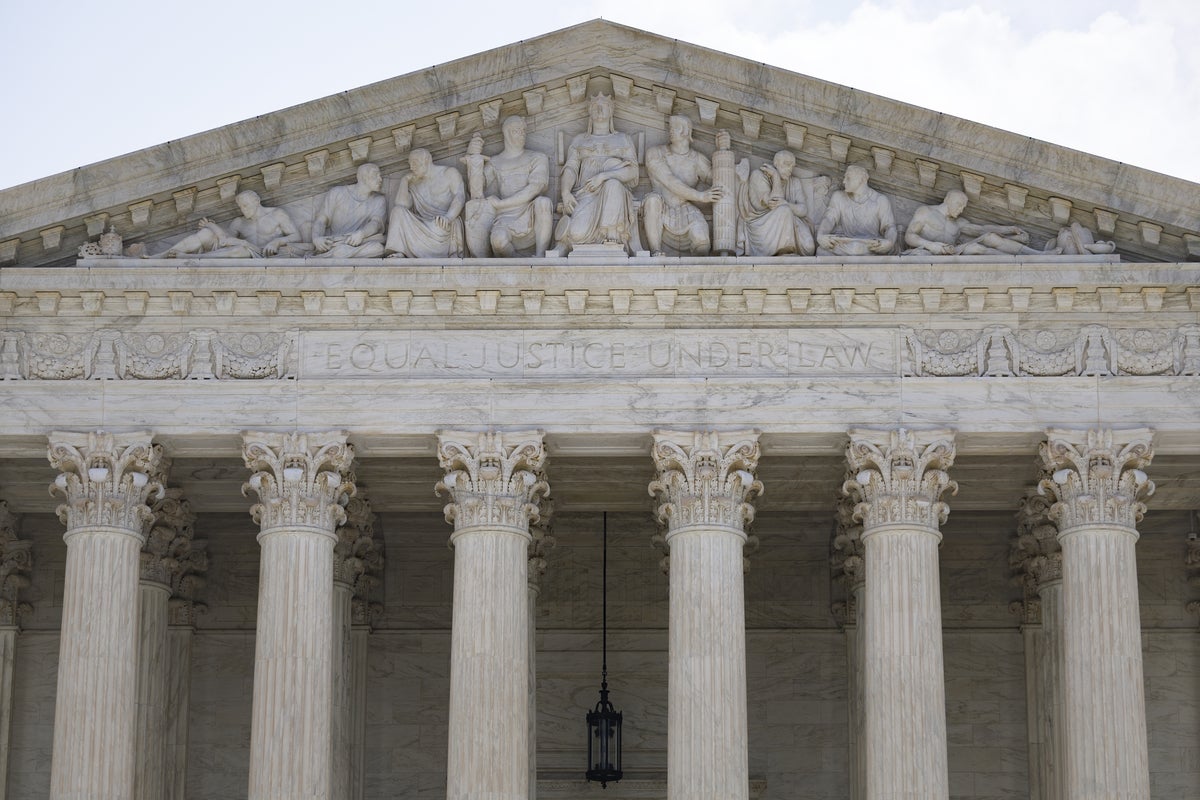
To understand the weight of this number, you have to look past the cold marble of the United States Supreme Court, past the dense legal briefs, and step into the quiet panic of a newsroom. Imagine a desk cluttered with lukewarm coffee cups, the erratic hum of a police scanner, and a telephone that holds the potential to upend a life. When that phone rings, a reporter makes a silent pact with the person on the other end. Your secret is safe with me. Without that pact, the machinery of a free press grinds to a halt.
Now, the highest court in the land has decided not to intervene, leaving Herridge alone in a financial squeeze play designed to make her break.
The Midnight Knock and the Paper Trail
The dispute traces back to a series of investigative reports Herridge produced in 2017 for Fox News. The stories focused on a scientist running a graduate school in Virginia, raising questions about a federal investigation into the institution. The scientist sued the government, alleging that officials leaked private records to Herridge to damage her reputation.
Then came the demand: name the sources.
In the legal world, this is called a subpoena. In the journalistic world, it is an existential threat. A federal judge ordered Herridge to reveal who gave her the information. When she refused, citing the foundational journalistic duty to protect confidential sources, the court imposed a contempt fine of $800 a day.
Herridge appealed, hoping for a shield. The Supreme Court, without comment, declined to hear her case.
The meter is running.
Consider the arithmetic of pressure. Eight hundred dollars a day equals nearly $24,000 a month. It is an unsustainable sum for any individual, an aggressive financial asphyxiation meant to force a surrender. The court is not sending marshals to lock a door; it is simply letting the math do the interrogating.
The Ghost in the Machine
Why should anyone who does not buy a newspaper or watch the evening news care about a reporter’s bank account?
Think of a whistleblower as a passenger on a ship who notices a crack in the hull below the waterline. If they tell the captain, they might be ignored. If they tell the public, they risk being thrown overboard by the people who let the hull rot in the first place. The reporter is the only person who offers a life jacket. They provide a safe corridor to get the truth out without drowning.
When a court penalizes a journalist for protecting a source, it does not just punish that single reporter. It sends a chilling frequency through the phone lines of every potential whistleblower in the country.
Consider what happens next:
A civil servant notices corruption in a government agency. They look at their phone. They remember Catherine Herridge. They picture their own mortgage, their kids’ tuition, the terrifying prospect of a court dismantling their life. They set the phone back down.
The story dies. The corruption stays in the dark.
This is the invisible tax of the Supreme Court's refusal to step in. The loss is not measured in dollars, but in the stories that will never be told.
A Patchwork Shield
The United States is an anomaly among modern democracies regarding this specific vulnerability. Forty-nine states and the District of Columbia have some form of "shield law" that protects reporters from being forced to reveal their sources in state courts. But at the federal level, where the highest-stakes national security and government corruption stories take place, no such protection exists.
Journalists operate on a high-wire act without a net.
The legal system often views this through a different lens. Judges argue that the courts have a right to "every man's evidence" to ensure justice is served in civil and criminal trials. In this specific case, the plaintiff argues that her life was disrupted by the leaking of her files, and she has a right to know who broke the law to expose her. It is a clash of two competing goods: the right to an individuals privacy and legal redress versus the collective right to a free and uninhibited press.
But when the balance tips too far toward forced disclosure, the press becomes an investigative arm of the state or the judiciary, rather than an independent watchdog.
The Human Ledger
Behind the legal definitions lies a person who spent decades building a reputation for integrity. Herridge, who later moved to CBS News and was subsequently laid off, faces this mounting financial penalty personally. The network is not paying this fine; she is.
The psychological toll of this isolation is immense. To sit in a room knowing that every twenty-four hours, a chunk of your savings vanishes because you refuse to say a name is a psychological test few people are ever asked to pass. It requires a rare, stubborn brand of conviction.
It is easy to champion the First Amendment when it is an abstract concept carved into stone buildings. It is a completely different matter when it requires a checkbook.
The pressure on Herridge is designed to be relentless, a slow tightening of the vise. Yet, the history of journalism is populated by individuals who chose jail cells over betrayal. They did not do it out of arrogance, but out of a clear-eyed understanding that once a reporter gives up a source, their career—and the credibility of their peers—is finished. Who would ever trust a journalist who blinked when the price got too high?
The Supreme Court’s silence on the matter leaves the question hanging in the air, unanswered and dangerous. It signals to every aggressive litigant that the financial squeeze is a viable strategy to unmask the critics and whistleblowers who expose them.
The sun sets, and the ledger ticks upward. Another eight hundred dollars gone. The phone on the desk remains silent, holding its secrets tight, waiting to see who breaks first: the system or the woman holding the line.