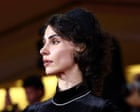
The applause in the grand auditorium of the Venice Film Festival was still ringing when the heavy, invisible doors of consequence slammed shut thousands of miles away.
Imagine standing under the cool, forgiving glare of international spotlights. The flashbulbs pop like distant stars. You hold a heavy glass trophy in your hands—an Orizzonti best actress award for your performance in Mohsen Gharaei's searing drama Falling House. In the film, you play a woman literally held hostage inside her own home by a tyrannical father. You know the script too well. Every actor from that part of the world carries the weight of a double life: the character on screen, and the reality just outside the stage door. Recently making waves in related news: When Running Becomes a Claiming Ground.
Laleh Marzban looked out at the glittering crowd of European cinephiles, festival directors, and critics. She didn't read from a safe, sanitized card thanking her agent. Instead, she opened her mouth and dedicated her victory to the brave women of Iran.
It was a simple sentence. It was also an earthquake. Further details regarding the matter are covered by TIME.
Consider what happens next in a society where art is treated as an ideological threat. Within hours of her speech echoing across the Venetian lagoon, the digital machinery of state-aligned media and institutional power pivoted toward her. The congratulatory notices evaporated, replaced by official condemnations and biting warnings. The message from authorities was loud, clear, and dripping with menace: step out of line on a global stage, and expect the full weight of a system built on surveillance and control to follow you home.
This is the hidden tax paid by artists who refuse to separate their craft from their conscience. We often talk about cinema as an escape, a darkened room where we go to forget our troubles for two hours. But for filmmakers and actors working under authoritarian regimes, the screen is a mirror held up to a cage.
In Falling House, the metaphor of domestic imprisonment—three generations of women locked away by a patriarch—is barely a metaphor at all. It is a cinematic translation of daily existence. When Marzban breathed life into that role, she wasn't just acting. She was channeling the stifled ambitions, the quiet resistances, and the unyielding resilience of millions of women who navigate systemic restrictions every single day.
When she won, she tried to deflect the glory back to where it belonged. “I have made my small part,” she told the audience, her voice steady despite the adrenaline. “I have given my contribution. I really hope many other people can make small steps towards our common objective.”
Those small steps, however, are viewed as giant threats by those who maintain power through fear.
The immediate backlash highlights a grim truth about cultural diplomacy. Festivals like Venice love the romance of the dissident artist. They roll out the red carpet, celebrate the courage of foreign auteurs, and applaud fiery speeches from afar. Yet, when the festival ends and the VIP guests pack their bags, the actor must return to the jurisdiction of the very authorities they just criticized. The applause fades. The security guards leave. The threats remain.
Look at the pattern. Every year, international film circuits celebrate stories of rebellion from regions of conflict, turning resistance into an exoticized aesthetic for western audiences to consume. But the people embodying that resistance absorb the shockwaves. They become lightning rods for state anger.
Marzban’s situation forces us to confront our own passive consumption of courage. We watch from comfortable living rooms, scrolling past headlines about state threats and artistic censorship as if they were plot points in a fictional thriller. We consume their bravery as entertainment, forgetting that the blood, sweat, and sleepless nights belong to real human beings facing very real reprisals.
The trophy sits on a shelf, heavy and cold. Back home, the air grows thin.
Yet, the words are already out there. They cannot be unsung, unfilmed, or unsaid. Across Tehran and beyond, whispered conversations carry the echo of an actor who refused to pretend that everything was fine.
The stage lights go dark. The red carpet is rolled up. But the light she let into that Venetian room cannot be put back in the box.