The scent of woodsmoke and frying dough usually defines the morning air in the Upper Kurram district. It is a sensory anchor for the thousands who call this rugged stretch of northwest Pakistan home. In the marketplace of Parachinar, the day begins with the rhythmic clatter of shutters rising and the sharp, rhythmic hiss of tea hitting a metal pot. This is not just a place of commerce. It is a vital artery of survival in a region where the mountains are high and the oversight is thin.
Then comes the silence.
It is a specific, vacuum-like silence that precedes the sound of tearing metal. When the blast finally ripped through the crowded stalls on this particular Tuesday, it didn't just shatter glass and bone. It leveled the fragile equilibrium of a community that has spent decades stitching itself back together after every fresh tragedy.
Nine lives ended in the space of a heartbeat.
Police reports will tell you the cold geography of the event: the blast occurred in a central market area near the Afghan border. They will tell you the number of the dead and the fluctuating count of the wounded. But a police report cannot describe the weight of a half-filled tea cup left on a splintered wooden table, or the way a stray sandal looks resting in a pool of motor oil and dust.
The Geometry of Loss
To understand the impact of nine deaths, you have to look at the circles they leave behind. In a tribal society, no one dies in a vacuum. A single casualty is a father, a breadwinner, a mediator, and a memory.
Imagine a man named Abbas—a hypothetical composite of the shopkeepers who have worked these stalls for generations. Abbas doesn't just sell grain. He knows which of his neighbors is struggling with a sick child and which one is celebrating a daughter's wedding. He extends credit on a handshake. He is a walking ledger of the village’s social health. When a blast claims a man like Abbas, it isn't just one death. It is the sudden, violent erasure of a pillar. The credit he extended vanishes. The wisdom he offered in disputes is gone. The children who expected him home for dinner are suddenly cast into a different, harsher version of the world.
Twenty-five others were rushed to local hospitals, their bodies peppered with the debris of a normal day turned lethal. Shrapnel in these regions is rarely just metal; it is often the very tools of the trade—nails, bolts, and shards of the carts that once held fruit or fabric.
A Borderland Under Pressure
The Kurram district is a complex mosaic of sectarian identities and tribal loyalties. It sits as a gateway, a narrow corridor of land that has historically been sensitive to the shifting winds of neighboring Afghanistan. For the people living here, "security" isn't an abstract policy term discussed in Islamabad. It is the presence of a checkpoint on the way to school. It is the calculation one makes before deciding which gate to enter at the market.
For years, this region has been a fault line. When tensions rise across the border or within the corridors of power, the tremors are felt most acutely in the markets of Parachinar. The blast was not an isolated lightning strike. It was the latest eruption from a deep, subterranean reservoir of instability that the state has struggled to cap.
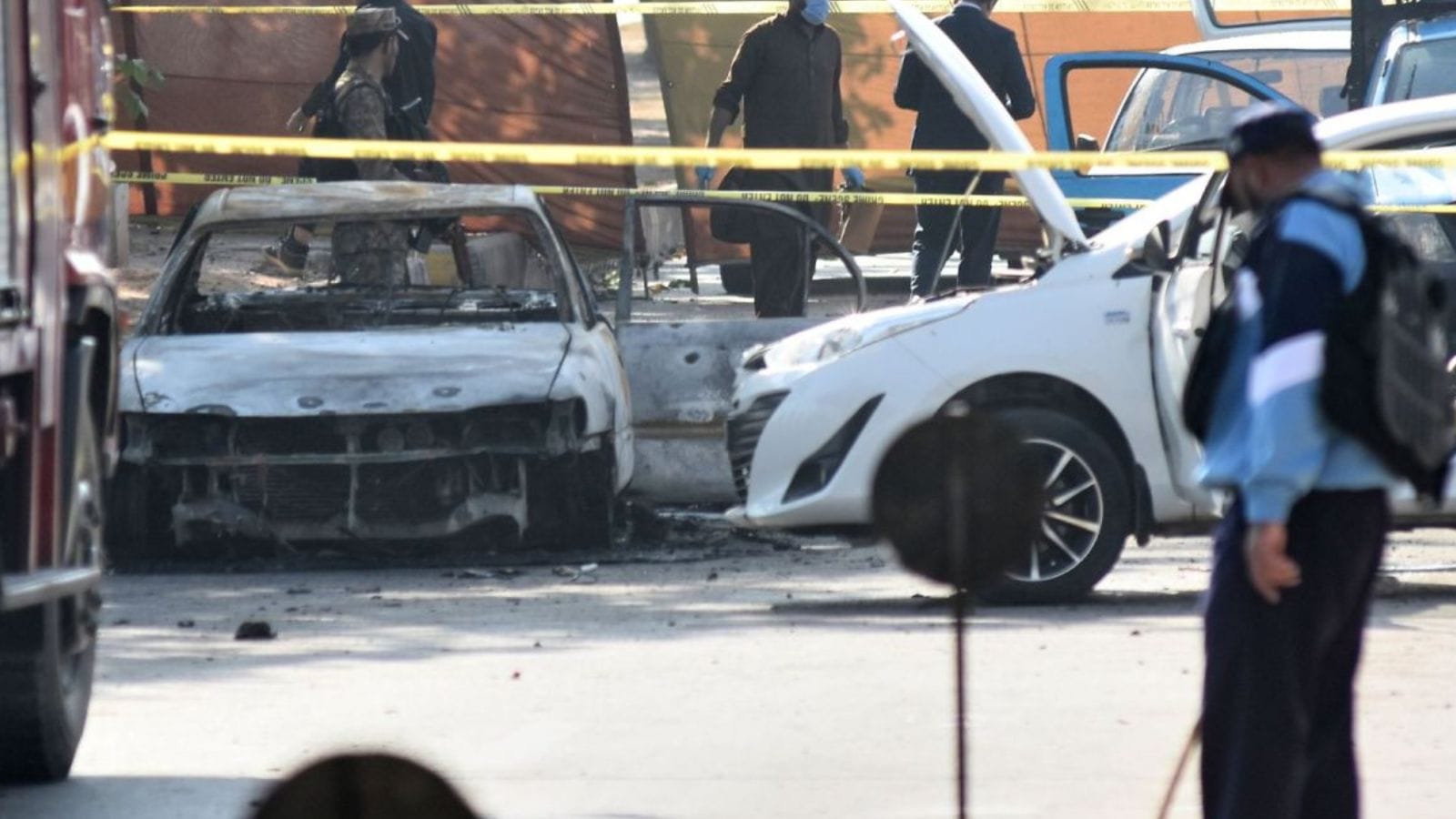
The police cordoned off the area with yellow tape that looked garish and flimsy against the backdrop of ancient stone and charred debris. They spoke of "improvised devices" and "unidentified attackers." These are the phrases of a government trying to categorize chaos. But for the survivors, the perpetrator's name matters less than the vacancy at the breakfast table.
The Invisible Stakes of the Everyday
We often consume news of global conflict as a series of numbers. We see "9 killed" and our brains subconsciously sort it into a folder of "unfortunate events in distant places." We distance ourselves to stay sane. But the real story isn't the explosion; it is the courage required to open a shop the following morning.
Think about the sheer, stubborn defiance of the man who sweeps the glass from his doorstep while the smoke is still clearing. He isn't doing it because he is fearless. He is doing it because his children need to eat. This is the invisible stake of the northwest: the persistence of the ordinary in the face of the extraordinary.
The local hospitals, often under-resourced and over-strained, became the theater for the second act of this tragedy. In the wards, the air is thick with the smell of antiseptic and the low murmur of prayers. Families wait in the hallways, their faces etched with a peculiar kind of patience that only comes from living in a conflict zone. It is a stoicism that should break your heart.
The Echo in the Mountains
As the sun began to set over the Hindu Kush, the funerals began. In this part of the world, burial happens quickly. The grief is fast and public. The procession of coffins through the narrow streets is a sight that has become far too common, yet it never loses its sting. Each wooden crate represents a collapsed future.
There is a tendency in modern media to look for the "why" immediately. Was it a sectarian grudge? A spillover from the Taliban's shifting grip on the border? A localized tribal dispute? While investigators sift through the blackened earth for clues, the community is asking a different question: When will it be enough?
The tragedy of Parachinar is that it is a recurring loop. Each blast is followed by a promise of better security, a temporary surge in patrols, and then a slow slide back into the vulnerable silence of the status quo. The people here live in the "meanwhile." They live between the last blast and the next one, trying to build lives of meaning in the intervals of peace.
The market will eventually be rebuilt. The blood will be washed from the cobblestones. New vendors will take the place of the nine who fell. But the texture of the town has changed. There is a new layer of grief added to the soil, a new set of orphans navigating the streets, and a lingering, watchful tension in every eye that meets yours over a cup of tea.
The true cost of the blast isn't found in the crater. It is found in the trembling hands of a father who now realizes that even the act of buying bread is a gamble with fate. It is found in the silence of a house where nine voices used to carry through the halls. The mountains of Kurram are beautiful, but they are also heavy. They keep the secrets of the dead, and they watch as the living prepare for another Wednesday, hoping that the air stays clear of smoke.
Night falls on the valley. The shutters are lowered once more, clattering against the ground with a sound like distant thunder. In the darkness, the only thing left is the flicker of candles in the homes of the mourning, small and defiant against the vast, indifferent shadows of the peaks.