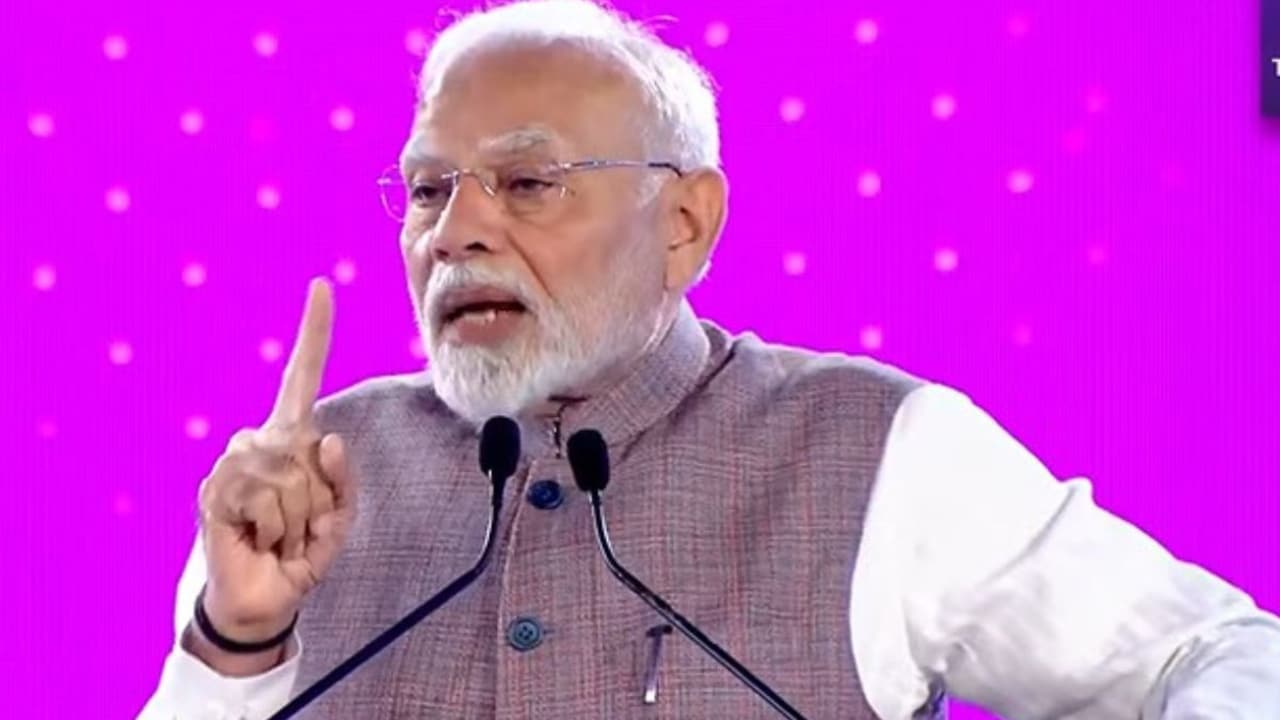
Every major media outlet is currently running the exact same shallow headline about Prime Minister Narendra Modi headlining the NDTV World Summit 2026. They talk about India rising, strategic autonomy, and a world order balancing between superpowers. It is comfortable. It is predictable. It is also entirely missing the point of what is actually happening beneath the surface of global capital flows and supply chain restructuring.
The consensus narrative assumes that India’s diplomatic balancing act is a permanent superpower state. It treats high-level summits as the primary engine of geopolitical gravity. That perspective belongs in the last decade. While pundits obsess over speech optics and stagecraft at international forums, the real structural transformation is happening at the level of municipal execution, logistics friction, and raw energy dependencies that no summit speech can gloss over.
Let us dismantle the lazy consensus piece by piece.
The Myth of Strategic Autonomy as a Free Lunch
The core argument of the mainstream summit coverage is that New Delhi has mastered the art of non-alignment 2.0, playing Washington, Moscow, and Brussels against one another to extract maximum economic and security concessions. Analysts call this diplomatic agility.
I call it a high-wire act with a fraying safety net.
I have watched foreign direct investment committees review Indian expansion plans over the last twenty-four months. They are not mesmerized by grand pronouncements about multipolarity. They are looking at state-level land acquisition delays, power tariff unpredictability, and judicial backlogs that stretch commercial dispute resolutions into decades.
Strategic autonomy only works if your domestic engine is so efficient that global players cannot afford to ignore you, regardless of your geopolitical stance. Right now, India’s domestic regulatory friction acts as a tax on ambition. When capital can just as easily flow to Vietnam, Indonesia, or Mexico with fewer friction points, speeches about a world between orders will not bridge the gap.
The Manufacturing Illusion
Every time a high-profile summit convenes, we hear breathless projections about India replacing China as the world's factory floor. The production-linked incentive schemes get lauded as masterstrokes of industrial policy.
Let us look at the actual data rather than the press releases.
India’s manufacturing share of GDP has hovered stubbornly around fifteen to seventeen percent for years, refusing to break out despite massive state subsidies. Why? Because assembly is not manufacturing. Importing high-end components from East Asia to screw them together in Tamil Nadu or Uttar Pradesh is not supply chain sovereignty; it is just a relocation of the final packaging step.
The real bottleneck is intermediate goods and precision engineering. Until domestic heavy industry scales its upstream chemical, metallurgical, and semiconductor precursor capabilities, every surge in Indian exports triggers a corresponding surge in import bills for inputs. The trade deficit does not vanish; it merely changes passport.
What the People Also Ask Queries Get Wrong
If you search for coverage surrounding these high-level geopolitical summits, the automated query engines spit out a predictable set of anxieties.
Is India ready to lead the Global South?
How does India maintain ties with both Russia and the West without breaking?
Can India decouple its economy from Chinese supply chains?
These questions are traps. They accept the premise that India must choose a camp or successfully herd a diffuse group of developing nations that have competing economic interests.
The question you should be asking is far more uncomfortable: Can India fix its internal economic plumbing fast enough before demographic dividend turns into demographic drag?
Demographic windows do not wait for bureaucratic consensus. A youthful population is only an asset if they are gainfully employed in high-productivity sectors. When millions of graduates are competing for low-wage service jobs or informal gig work, national prestige on a summit stage does not put food on the table or build durable consumer demand.
The Unspoken Cost of Domestic Protectionism
There is a dark side to the inward-looking trade policies that often accompany nationalist political rhetoric. While leaders project a confident face to the international community at luxury summits, domestic tariff walls frequently protect legacy inefficiencies at the expense of globally competitive exporters.
When you make imported capital goods expensive to protect local champions, you punish the very companies trying to integrate into global value chains. I have spoken with mid-sized manufacturing founders who spend more time navigating customs compliance for specialized machinery parts than they do designing products.
True economic power is not built by shutting out competition; it is forged by surviving it.
The Reality Check on Green Transitions
Another favorite talking point at these summits is India balancing rapid economic growth with aggressive climate commitments. The narrative paints a picture of a nation leaping straight into green hydrogen and solar dominance, skipping the carbon-heavy phase altogether.
Physics does not negotiate with political rhetoric.
Base load power requires reliability. Coal usage continues to set records because intermittent renewables cannot yet power heavy steel mills, cement plants, and chemical refineries around the clock without astronomical battery storage costs that developing economies cannot absorb. Pretending otherwise makes for good television, but it leaves grid operators scrambling behind the scenes.
The truth is messy. India will burn more fossil fuels over the next decade to lift its poorest citizens out of energy poverty, regardless of what is signed in international climate pacts. Acknowledging this reality is not cynical; it is a prerequisite for honest economic planning.
Stop Watching the Stage
The next time you see headlines about world leaders gathering to discuss the global order, turn off the broadcast. Look instead at the freight turnaround times at ports, the state-level power purchase agreements, and the vocational training completion rates in Tier-2 cities.
That is where the future of the nation is actually being decided.
The diplomats will keep talking. The pundits will keep spinning grand narratives about multipolarity. But capital respects neither speeches nor summit credentials. It flows to efficiency, rule of law, and relentless execution.
Until those domestic realities match the grand ambition of the rhetoric, every world summit will just be an expensive echo chamber.