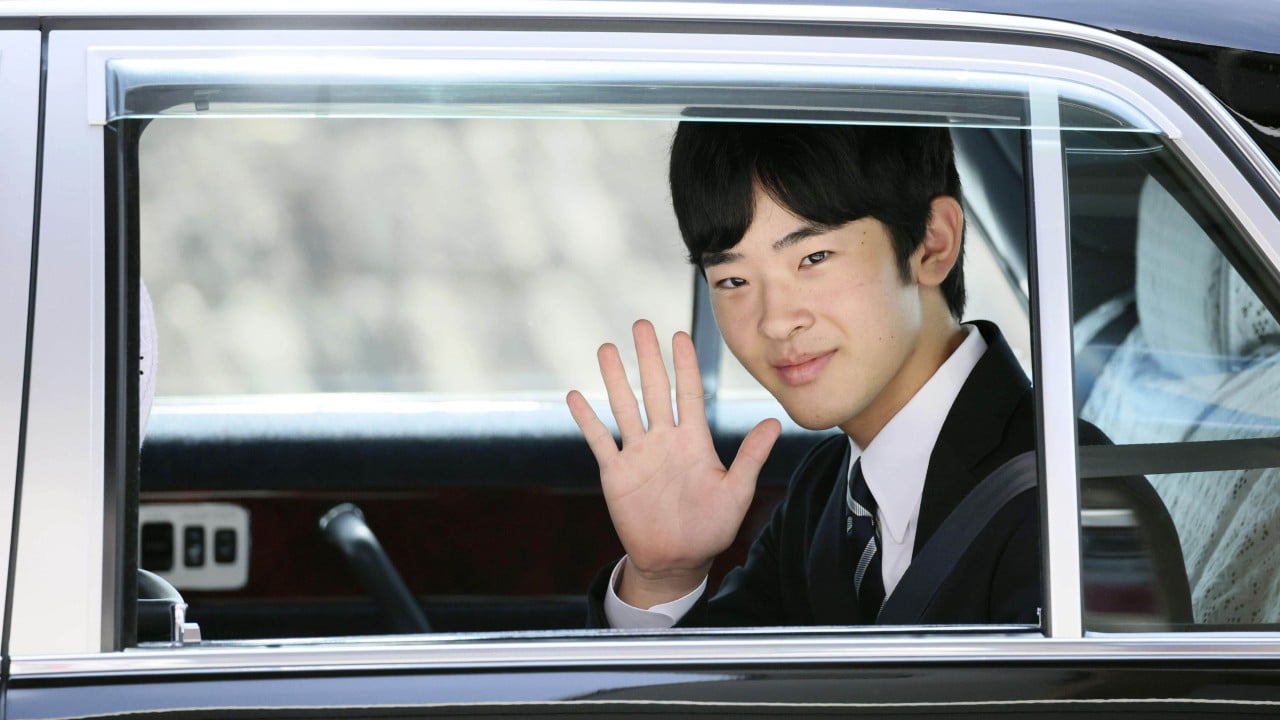
Japan’s monarchy is currently staring at a mathematical dead end. You might think that a royal family with a history stretching back two millennia would have a solid plan for the future, but the reality is much more fragile. Prince Hisahito recently turned 18, and as of 2026, he’s finished high school and is deep into his university studies in biology. On the surface, it’s a standard coming-of-age story for a young royal. Beneath the surface, it’s a slow-motion institutional crisis that the Japanese government is desperately trying to manage without actually solving.
The core of the problem is simple: Japan’s 1947 Imperial Household Law says only men from the male line can take the throne. Right now, there are exactly three people in that line. First is Crown Prince Akishino (Hisahito’s father), who is 60. Second is Hisahito himself. Third is Prince Hitachi, the current Emperor’s 90-year-old uncle. Honestly, the entire weight of a 2,600-year-old dynasty is resting on the shoulders of one college student who just wants to study dragonflies.
The burden of being the only one
Hisahito isn’t just a prince; he’s a statistical anomaly. He was the first male born into the family in over 40 years. Before he arrived in 2006, the government was actually on the verge of changing the law to allow Princess Aiko—the current Emperor’s only child—to become Empress. The moment a boy was born, those reform plans were shelved.
Fast forward to 2026, and that "relief" has turned into a different kind of pressure. While his peers at the University of Tsukuba are worrying about exams and social lives, Hisahito is being groomed to be the solo savior of a dwindling house. If he doesn't have a son one day, the line ends. Period. That’s a massive amount of psychological baggage for anyone, let alone a teenager. We’ve seen how this kind of pressure affected his mother, Crown Princess Kiko, and his aunt, Empress Masako, both of whom struggled with the intense scrutiny and the "baby boy" expectations for years.
Why the government won't just let Aiko rule
If you ask the Japanese public, the answer is clear. Recent polls from April 2026 show that a massive 61% of people support a female emperor. Princess Aiko is widely respected, well-educated, and already performs her royal duties with a poise that reminds people of her father, Emperor Naruhito. So why is the government dragging its feet?
It’s about "male-line" (patrilineal) descent. Traditionalists argue that the throne has been passed from father to son (or at least through the male bloodline) since the mythical Emperor Jimmu. While Japan has had eight female emperors in the past, they were mostly "placeholders" who didn't pass the throne to their own children. Conservatives fear that if Aiko becomes Empress and has a child, that child would be from a "female line," breaking what they see as an unbroken biological chain.
Current Prime Minister Sanae Takaichi—the first woman to hold the office—has been vocal about keeping the male-only tradition. Her stance is a bit of a paradox: a woman leading the modern government while insisting women can’t lead the ancient monarchy. Her administration is currently pushing for "compromise" solutions that feel like band-aids on a gunshot wound.
The weird solutions on the table
Instead of just letting women rule, the Japanese government is looking at some pretty obscure legal maneuvers. Here’s what’s being discussed right now:
- Adopting "former" royals: After WWII, the US occupation stripped 11 branches of the imperial family of their titles to save money and reduce the Emperor's power. The government is now considering "re-adopting" male descendants from those branches to beef up the succession pool.
- Letting princesses stay: Currently, when a princess marries a "commoner" (which is basically everyone), she loses her royal status and becomes a regular citizen. Just look at Mako Komuro, Hisahito's sister, who moved to NYC. The new proposal would let princesses keep their titles after marriage so they can keep performing official duties, but they still wouldn't be able to inherit the throne.
The problem with these ideas? They’re incredibly complicated and don't actually fix the long-term math. If you don't allow female-line succession, you're always one generation away from another crisis.
The silent struggle of the modern royal
It’s easy to look at the palaces and the $60,000 annual allowance Hisahito now receives as an adult and think it’s a dream life. It’s not. The Imperial Household Agency (IHA) micromanages every aspect of these people's lives. Hisahito’s education has been a break from tradition—he attended a university-affiliated high school instead of the traditional Gakushuin school—which shows his parents are trying to give him some semblance of a "normal" perspective.
But "normal" is impossible when your marriage prospects will be a matter of national security and your every hobby is analyzed for "emperor-like" qualities. His interest in biology and habitat conservation is genuine, but even that is framed as him following in the footsteps of his grandfather, the "shrimp scientist" Emperor Akihito.
What happens if Japan does nothing
If the laws don't change, the Imperial Family will eventually just disappear. There are only 16 members left, and most are aging women who will eventually marry out or pass away. By the time Hisahito is in his 40s, he could literally be the only person left in the palace.
The "wait and see" approach is the most dangerous one. The government is banking on Hisahito getting married and having a son. That's a huge gamble. If he remains single, or has only daughters, Japan will face a constitutional crisis that makes the current debate look like a polite tea party.
Practical steps for following the story
If you’re watching this play out, don't just look for the big ceremonies. Watch the small legislative tweaks.
- Monitor the "former branches" debate: This is the litmus test for how conservative the current government really is. If they move to adopt distant relatives, they’re doubling down on the male-only rule.
- Watch Princess Aiko’s public appearances: The more she becomes a "face" of the monarchy, the harder it is for the government to ignore the public's desire for her to stay in the family.
- Follow the IHA’s social media: They’ve recently started trying to be more "modern" to connect with younger Japanese citizens. It’s a sign they know they’re losing the PR war with the public.
The succession debate isn't just about who sits in a chair. It’s about whether Japan wants a monarchy that reflects its modern, egalitarian society or one that remains a museum piece of the 19th century. Right now, Hisahito is the bridge between those two worlds, and it’s a very lonely place to be.