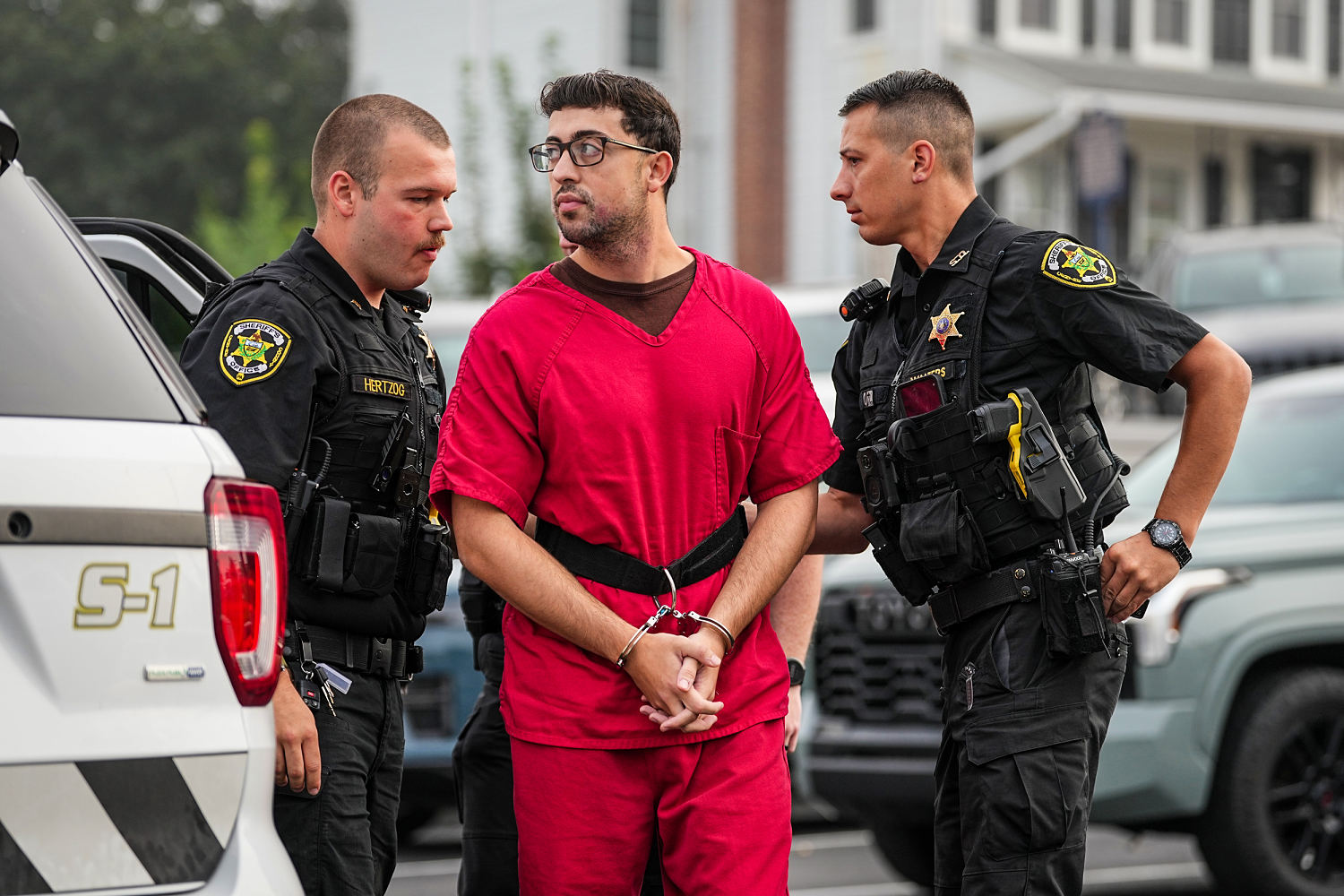
Federal prosecutors just indicted a former Penn State student at the center of a massive fraternity drug bust, and the local media is already running its favorite predictable victory lap.
Headline after headline frames the arrest as a triumph of law enforcement cleaning up Greek life. They point to the seized narcotics, the federal charges, and the suspended chapter, treating the whole affair like a neat, closed loop. Bad apple found. Bad apple removed. Campus saved.
That narrative is lazy, comforting, and dangerously wrong.
When the Department of Justice steps into a college town to dismantle a fraternity-linked drug operation, they aren't solving a campus safety crisis. They are treating a symptom of a structurally broken system while leaving the actual machinery untouched. Having spent years analyzing institutional risk management, higher education liability, and federal enforcement patterns around university life, I have watched this exact movie play out from State College to Tuscaloosa to Boulder. The script never changes, and neither do the results.
If you think a federal indictment stops the flow of illicit substances into Greek housing, you don't understand how campus ecosystems actually work.
The Myth of the Rogue Kingpin
The standard media coverage around the Penn State bust relies heavily on the "kingpin" trope. It paints a picture of a single enterprising student—or a tight-knit clique—operating a shadowy cartel out of a fraternity house basement, corrupting an otherwise wholesome student body.
Prosecutors love this framing because federal conspiracy and distribution statutes are built to target hierarchical organizations. Under 21 U.S.C. § 846, establishing a conspiracy allows the DOJ to sweep up peripheral actors, apply mandatory minimums, and secure high-profile plea deals. It makes for a clean press release.
Here is the reality on the ground. College drug networks are rarely top-down cartels. They are decentralized, peer-to-peer supply chains driven by hyper-localized demand.
When a fraternity member becomes the primary distributor for a chapter—or several chapters—they aren't operating in a vacuum. They are fulfilling a logistical function that the surrounding social economy demands. In high-pressure academic environments mixed with intense binge-party cultures, substances like Adderall, cocaine, Xanax, and counterfeit pressed pills are treated as standard social currency.
Arresting the guy holding the bag doesn't reduce demand by a single milligram. It simply creates a temporary market vacuum. Within seventy-two hours of a major bust, three other lower-level suppliers in neighboring off-campus apartments absorb the customer base. The supply chain fragments, moves off-campus where university oversight is zero, and becomes vastly harder to monitor.
Why Universities Secretly Prefer Federal Raids
Let's talk about the elephant in the room: university administration complicity.
When a drug bust happens inside a recognized fraternity house, the university immediately issues a statement expressing shock, revokes the chapter's recognition, and praises federal partners for their swift action. Behind closed doors, university general counsel breathes a massive sigh of relief.
Why? Because a federal criminal prosecution shifts the narrative away from institutional negligence.
Universities collect millions in tuition, housing fees, and alumni donations tied directly to the social ecosystem that Greek life anchors. Yet, for decades, administrators have maintained a deliberate "plausible deniability" buffer regarding off-campus and fraternity housing. Under the Clery Act, institutions are required to report certain crimes on or near campus, which creates a perverse incentive: the less university police actively patrol inside private Greek houses, the fewer reportable incidents hit the annual security report.
By outsourcing enforcement to the DOJ and local drug task forces, universities avoid doing the hard, expensive work of structural reform. They don't have to overhaul campus mental health infrastructure, audit academic stress drivers, or permanently sever ties with wealthy alumni boards that bankroll these properties. They get to sacrifice one student's future on the altar of federal sentencing guidelines, call it "accountability," and reset the clock until the next bust.
What Everyone Gets Wrong About Fraternity Accountability
If you search online right now for details on the Penn State fraternity drug case, you will see the same surface-level questions pop up repeatedly. Let's dismantle the flawed premises behind them.
Does shutting down the fraternity chapter stop the drug problem?
No. In fact, it often makes the environment more lethal. When a university revokes a chapter's charter, the house doesn't vanish. The national organization pulls its insurance, the university removes its disciplinary oversight, and the physical building—often owned by a private alumni housing corporation—continues operating as an unregulated "underground" fraternity. Without national oversight or university conduct boards, risk management disappears entirely. Binge drinking escalates, fentanyl testing drops, and emergency medical calls are delayed out of fear of arrest.
Why didn't campus police catch this sooner?
Because campus police are structurally discouraged from proactive narcotics enforcement inside private residences. Unlike public dormitories, where Resident Assistants and campus security have broad contractual rights to enter rooms under health and safety clauses, fraternity houses are private property. Campus police need probable cause and a warrant, just like municipal officers. Unless a medical emergency forces the front door open, the interior of a fraternity house is a legal blind spot.
Are federal charges actually a deterrent to other students?
Deterrence theory only works when the target audience perceives a high probability of getting caught. To a twenty-year-old making five thousand dollars a weekend selling party drugs to friends, a federal indictment at Penn State feels like a lightning strike—statistically rare and easily avoided by simply being "smarter" than the guy who got caught. Severe sentencing doesn't deter amateur dealers; it just teaches them to use encrypted messaging apps and keep smaller stashes on-site.
The Fentanyl Variable Nobody Wants to Discuss
Here is where the contrarian take hits a brick wall of harsh reality, and where I have to admit the limits of purely criticizing enforcement.
Ten years ago, a fraternity drug bust meant marijuana, diverted prescription stimulants, and stepped-on cocaine. You could argue—and many did—that federal intervention was an overreaction to standard collegiate excess.
That calculus is dead. The infiltration of illicit fentanyl and synthetic opioids into the counterfeit pill market has fundamentally altered the risk profile of every college campus in America. When a student at Penn State or any other major university buys what they think is a Xanax bar or a Percocet from a fraternity connection, they are playing Russian roulette with a lethal dose.
In that specific context, aggressive federal intervention isn't just bureaucratic theater—it is a blunt-force life-saving measure. If a supplier is moving pressed pills tainted with fentanyl through a campus network, the DOJ has to shut that pipeline down immediately, regardless of the broader systemic flaws. I will never argue against removing lethal batches of synthetic opioids from a student population.
The tragedy is that the DOJ treats the arrest as the finish line, while the underlying ecosystem remains wide open for the next batch of counterfeit pills to roll in.
How to Actually Dismantle Campus Drug Pipelines
If universities, national Greek organizations, and law enforcement actually wanted to stop fraternity drug rings instead of just generating press releases, they would abandon the "kingpin hunt" and target the structural incentives that make Greek houses attractive hubs for distribution.
- Eliminate the Private Housing Loophole. Universities must tie Greek recognition—and the massive social privileges that come with it—to mandatory, unannounced third-party safety inspections and strict occupancy agreements that mirror on-campus dormitories. If an alumni housing corporation refuses to allow university safety staff inside the building, the university should immediately prohibit the organization from recruiting on campus or participating in university-sanctioned events.
- Enforce True Medical Amnesty. Students die in fraternity houses because their peers are terrified of felony drug charges when an overdose happens. Most states and universities have "Good Samaritan" laws on paper, yet students routinely face conduct hearings, suspensions, and police questioning after calling 911. Until medical amnesty is absolute—covering both university discipline and local possession charges for everyone at the scene—students will continue to wait until it is too late to call for help.
- Target the Demand Side with Harm Reduction, Not Lectures. Mandatory online alcohol and drug modules are a joke that students click through while watching Netflix. Universities need to fund anonymous, accessible drug-checking resources, widespread Narcan distribution inside every Greek house, and peer-led harm reduction networks. You cannot arrest your way out of collegiate demand, so you must engineer the environment to keep students alive while they are in it.
- Hold Alumni Boards Financially Liable. Right now, when a chapter gets busted for running a drug ring, the student takes the felony, the chapter loses its charter for four years, and the alumni board quietly rents the property out to another group of students. Universities and insurers need to pierce that corporate veil. When chronic illegal activity occurs on a property, the institutional landlords who profited from the rent without exercising basic oversight should face crippling civil liability.
Stop Applauding the Press Release
The former Penn State student at the center of this case will spend the next several years navigating the federal court system, facing sentencing guidelines designed for career traffickers. The DOJ will chalk up another win. Penn State will point to its zero-tolerance policy.
Meanwhile, the music in State College hasn't stopped. The parties are still happening this weekend. The demand hasn't budged. And somewhere in a house three blocks off campus, someone else is already counting cash and answering texts.
Until we stop celebrating individual arrests and start dismantling the institutional negligence that turns college houses into safe havens for illicit markets, we aren't solving anything. We are just reloading the chamber.