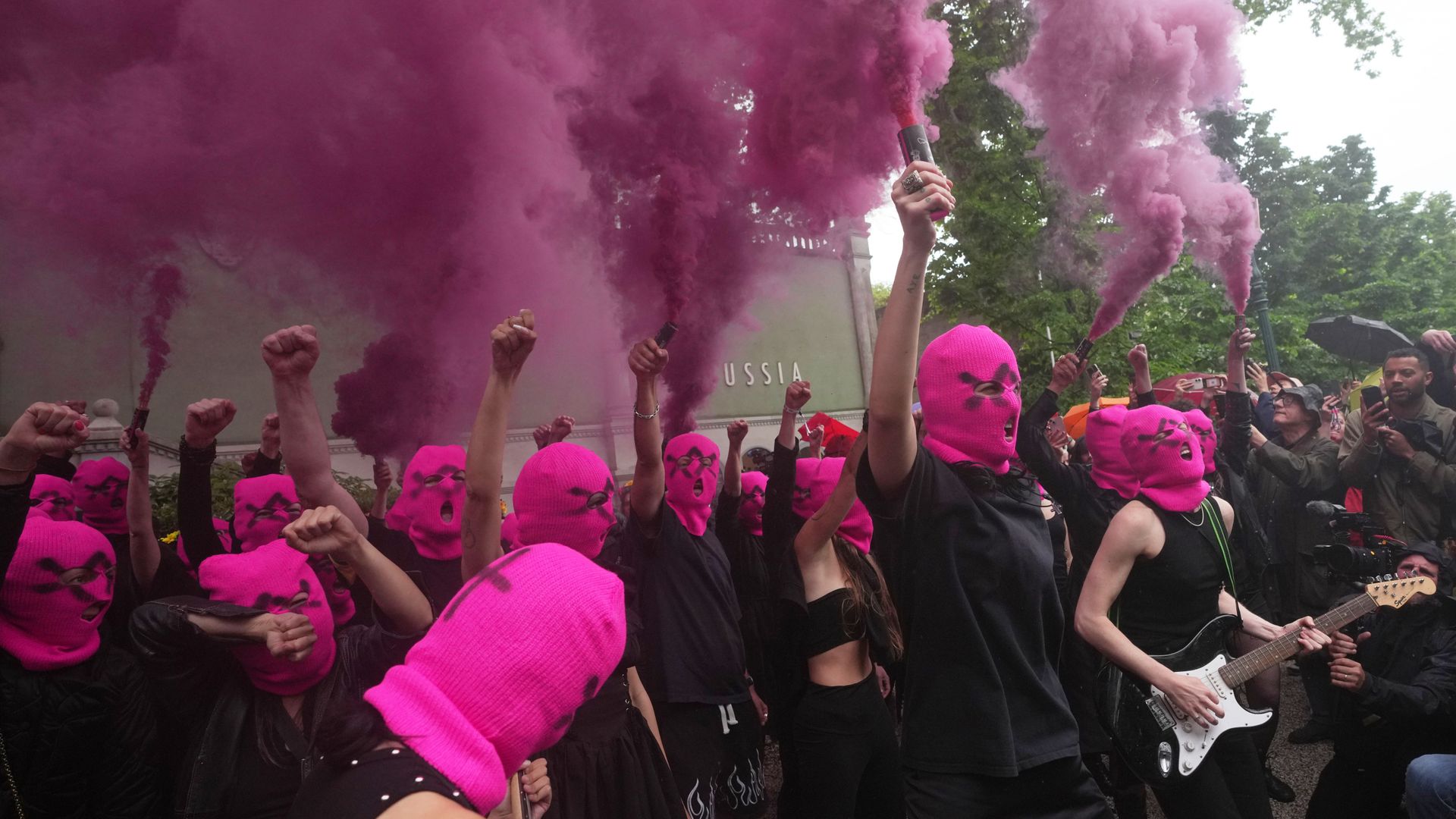
Pussy Riot just crashed the Venice Biennale and frankly, it's about time someone made things uncomfortable. While the art world spends millions on champagne and networking in historic Italian villas, Maria Alyokhina and her collective decided to remind everyone that a literal war is happening just a few borders away. They didn't come to look at paintings. They came to scream about the fact that Russia still has a footprint in international cultural spaces while its missiles hit Ukrainian museums.
This wasn't a scheduled performance. It wasn't a sanctioned part of the program. It was a messy, loud, and necessary disruption of the 60th International Art Exhibition. If you think art should just be pretty or "thought-provoking" in a safe, quiet way, you're missing the point of why these women have spent years in and out of Siberian prisons. For an alternative view, consider: this related article.
The Venice Biennale protest and the problem with Russian presence
The core of the Pussy Riot protest at the Venice art festival centers on a simple, biting reality. Even when the official Russian Pavilion stays closed, the influence and the money don't just vanish. Alyokhina and her group showed up outside the shuttered pavilion to perform "Velvet Terrorism," a piece that basically catalogs their decade-plus of state-sponsored harassment and resistance.
They stood there with signs. They wore their signature balaclavas. They made sure that every collector and tourist walking by had to acknowledge the political prisoners currently rotting in Russian cells. You can't just look at contemporary art and pretend the world isn't on fire. That's the trap the Venice Biennale often falls into—it becomes a bubble. Pussy Riot popped it. Further coverage on the subject has been shared by USA Today.
Why the official Russian Pavilion stays empty
It’s been empty since 2022. The curators and artists resigned right after the full-scale invasion of Ukraine began, and the building has been a ghost town ever since. But here’s the thing. An empty building is a passive statement. Pussy Riot is arguing that silence isn't enough. By staging their protest right in front of those locked doors, they turned a static piece of real estate into a stage for active dissent.
They aren't just mad at Putin. They’re calling out the international community for being "polite" about the whole thing. The Biennale leadership has been criticized before for how they handle geopolitical conflicts, but the Pussy Riot intervention forced a visceral reaction that a press release never could.
The reality of Velvet Terrorism
The performance itself is based on Alyokhina’s book and the touring exhibition of the same name. It’s not just "art." It’s a record of survival. We’re talking about women who have been monitored, arrested, and exiled. When they stand in Venice, they’re carrying the weight of friends like Alexei Navalny, who didn't make it out.
I’ve seen plenty of "political art" that feels like it was made in a comfortable studio by someone with a tenured teaching job. This is different. This is art as a weapon. They use photographs, videos, and live actions to document how the Russian state tries to break the spirit of anyone who says "no." In Venice, this message hits harder because the backdrop is so decadent. The contrast between the luxury of the Giardini and the raw, jagged energy of Pussy Riot is enough to give you whiplash.
Cultural boycotts and the art world hypocrisy
Let's be honest about the art market. It’s built on money that isn't always clean. For years, Russian oligarchs were the darlings of the Venice Biennale. They funded the parties. They bought the massive installations. Now that it’s no longer fashionable (or legal in some cases) to take that money, the art world has tried to scrub its hands clean.
Pussy Riot isn't letting them off the hook. Their protest asks a very uncomfortable question. If you’re against the war, why are you still providing a platform for those who are complicit? Even the act of leaving a pavilion empty can be seen as a way of "holding space" for a regime until things blow over. Alyokhina and her crew want that space reclaimed by the voices the Kremlin tried to silence.
What the critics get wrong about Pussy Riot
You’ll hear people say that Pussy Riot is "just a PR machine" or that they aren't "real artists" because their work is too blunt. That’s a lazy take. In a country where a social media post can get you ten years in a penal colony, bluntness is a luxury and a necessity. Their work doesn't need to be subtle. Subtlety is for people who aren't being hunted by the FSB.
Their Venice appearance wasn't a photo op. It was a logistical nightmare for them to even get there, considering the travel bans and legal hurdles they face. Every time they step into the public eye, they’re putting a target on their backs. That’s more "authentic" than 99% of the work hanging inside the galleries.
The impact of the protest on the 2026 art scene
People are still talking about this because it forced a shift in the conversation. It moved the focus away from "who is the best new painter from London?" to "how does the art world respond to genocide?" It’s a question that makes people squirm.
The protest also highlighted the work of Ukrainian artists who are actually at the Biennale. By drawing the cameras to the Russian Pavilion, Pussy Riot redirected that attention to the nearby Ukrainian exhibitions. They used their "fame" as a shield and a megaphone for people who are currently under fire. That’s how you use a platform.
How to support the cause without being in Venice
You don't need to fly to Italy to understand why this matters. The protest is a reminder that culture is a frontline. If you’re tired of seeing the same corporate-friendly art, start looking at the fringes.
- Look up the "Velvet Terrorism" exhibition tour dates. It’s traveling through Europe and North America.
- Support organizations that provide legal aid to Russian political prisoners. OVD-Info is a good place to start.
- Demand transparency from the major art institutions you visit. Ask who funds them.
The Pussy Riot protest at the Venice art festival wasn't just a moment. It was a demand for accountability in a room that usually prefers to keep things quiet. They didn't ask for permission. They didn't wait for an invitation. They just showed up and told the truth. In 2026, that’s the most radical thing an artist can do. Stop looking for the gift shop and start looking at the people holding the signs.