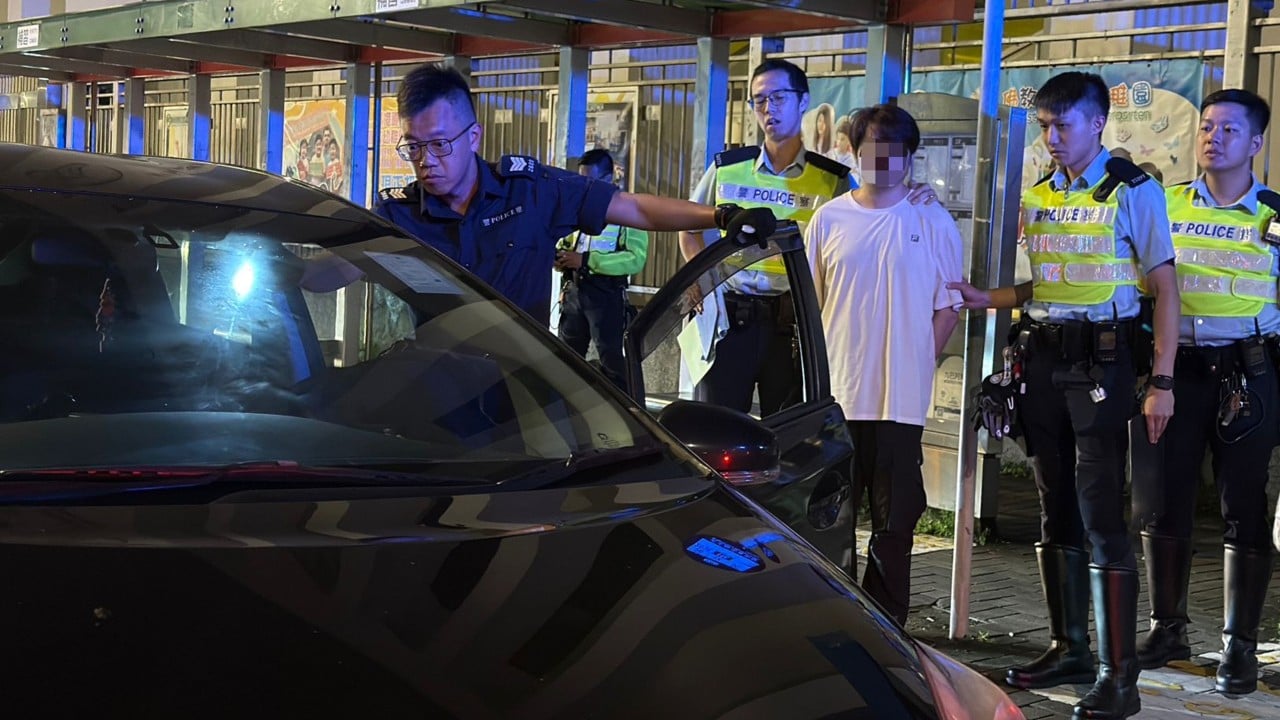
Large-scale international sporting events, such as the World Cup, create predictable surges in alcohol and substance consumption that directly correlate with elevated risks on public roadways. When municipal authorities execute crackdowns—such as the recent Hong Kong Police Force operation resulting in 13 arrests—the public often views the outcome through the binary lens of success or failure based purely on the volume of apprehensions. This constitutes a fundamental misunderstanding of law enforcement operational mechanics. High-visibility policing during major events does not exist to maximize arrests; it functions as a highly calculated resource deployment designed to shift the risk-reward calculus of potential offenders.
Analyzing these operations requires moving past sensationalized headlines and deconstructing the tactical framework into measurable components: deterrence elasticity, resource optimization, and the friction points of enforcement.
The Dual-Mechanism Deterrence Framework
Enforcement operations during high-velocity cultural events rely on two distinct mechanisms of deterrence: celerity (speed of punishment) and certainty (likelihood of apprehension). While statutory penalties represent severity, severity remains static during a two-week or one-month sporting tournament. Therefore, operational efficacy depends entirely on manipulating the public perception of certainty and celerity.
                  [Targeted Enforcement Surge]
                               |
            ---------------------------------------
            |                                     |
    [Overt Deterrence]                     [Covert Detection]
    - Mobile Breathalyzers                 - Intelligence-Led Checkpoints
    - High-Visibility Blockades            - Random Drug Testing (RDT)
            |                                     |
[Perceived Certainty of Catch]          [Actual Probability of Arrest]
            \                                     /
             \                                   /
              [Shift in Driver Risk-Reward Calculus]
Overt Deterrence and Mobile Breathalyzers
The deployment of random breath testing (RBT) and mobile breathalyzer units serves as the primary lever for overt deterrence. By establishing highly visible blockades on major arterial routes leading away from entertainment districts (such as Lan Kwai Fong or Wan Chai), police forces artificially inflate the perceived certainty of apprehension. The strategic objective is to alter the driver’s subjective probability assessment of getting caught from a low-frequency risk to an absolute certainty.
Covert Detection and Rapid Drug Testing
Conversely, drug driving enforcement relies on a different operational cadence. The identification of driving under the influence of drugs (DUID) involves a multi-tiered screening process, often beginning with Rapid Oral Fluid Tests (ROFT) for specific narcotics like ketamine, methamphetamine, and cocaine. Because drug impairment is less visually uniform than alcohol impairment, this mechanism relies on covert detection—police officers trained as Drug Recognition Expert (DRE) evaluators stationed at strategic chokepoints. Here, the deterrent effect shifts from visibility to the psychological friction of unpredictability.
Operational Resource Allocation and Chokepoint Physics
The structural limitation of any urban traffic enforcement operation is the finite nature of police personnel and physical roadway capacity. Conducting breath tests or oral fluid swipes introduces transactional friction into traffic flow, creating a distinct optimization problem: maximizing tests while minimizing systemic gridlock.
To solve this, traffic management commands utilize predictive mapping based on three variables:
- Historical Incident Density: Spatial clusters where alcohol-related accidents historically peak.
- Commercial Hospitality Saturation: The volume of licensed premises broadcasting the sporting events within a specific radius.
- Micro-Choke Infrastructure: Geographic bottlenecks (e.g., tunnel approaches, flyovers) that restrict evasive routing by compromised drivers.
When the Hong Kong Police Force executed their targeted crackdown, the selection of checkpoint locations was dictated by these constraints. A vehicle entering a tunnel queue or a single-lane exit ramp faces zero escape vectors. By compressing the physical space available to motorists, law enforcement optimizes its resource footprint—requiring fewer patrol units to monitor a larger volume of high-risk vehicles.
The Asymmetry of Detection Technology
A critical vulnerability in modern traffic enforcement strategies is the operational divergence between alcohol detection and drug detection. This asymmetry creates a tactical loophole that sophisticated offenders exploit, shifting the burden of proof heavily onto the state's logistical capacity.
| Variable | Alcohol Screening (RBT) | Drug Screening (ROFT/DRE) |
|---|---|---|
| Testing Velocity | High (seconds per motorist) | Low (10–15 minutes per subject) |
| Diagnostic Definitive Index | High (Immediate quantitative BrAC) | Moderate (Qualitative presumptive indicator) |
| Evidentiary Pipeline | Immediate secondary evidentiary test | Requires blood/urine sample validation |
| Operational Scalability | High mass-screening capability | Limited to targeted suspected profiles |
This operational imbalance means that during a massive surge in road users, a police force can efficiently screen thousands of drivers for alcohol, but can only realistically screen a fraction of that number for narcotics. The 13 arrests achieved during the World Cup crackdown reflect this bottleneck: drug-related driving arrests require significantly more man-hours per apprehension than standard driving-under-the-influence (DUI) processing.
The Behavioral Economics of Impaired Driving
To understand why individuals continue to drive under the influence despite aggressive enforcement campaigns, one must apply hyperbolic discounting theory. Human beings inherently overvalue immediate rewards relative to future consequences. In the context of a major sporting event, the immediate reward is convenience, peer validation, or avoiding the financial premium of peak-hour ride-sharing services. The future consequence is a statistically low probability of arrest or injury.
During events like the World Cup, two compounding variables distort this risk calculation:
- The Herd Effect: The collective normalization of substance consumption within social spaces lowers individual risk perception. Drivers assume that because hundreds of others are drinking and driving simultaneously, the statistical probability of their specific vehicle being stopped decreases.
- Cognitive Tuning: Alcohol and narcotics structurally impair the prefrontal cortex, the region of the brain responsible for risk assessment. The paradox of DUI enforcement is that the very substance the state seeks to regulate systematically dismantles the citizen's capacity to accurately calculate the penalty of the regulation.
Therefore, standard public relations campaigns focusing on the moral failings of impaired driving yield diminishing returns. The only effective counter-measure is altering the immediate environment—making the physical act of driving visibly difficult via omnipresent police blockades, thereby forcing the driver to confront an immediate, physical obstacle rather than a distant statistical risk.
Structural Vulnerabilities in Enforcement Data
While the arrest of 13 individuals indicates an active enforcement presence, relying on raw arrest metrics to determine policy efficacy introduces severe selection bias. Raw arrest numbers do not tell us the total volume of impaired drivers on the road; they only tell us how many drivers crossed a specific checkpoint and failed the screening threshold.
If a police force records 13 arrests over a weekend crackdown, that figure could indicate two entirely contradictory realities:
- Scenario A: The enforcement strategy was highly precise, deploying units to exact high-risk nodes and successfully removing the core demographic of offenders from the road.
- Scenario B: The enforcement strategy was inefficient, missing thousands of impaired drivers who bypassed predictable checkpoints using real-time crowdsourced navigation applications, leaving police to catch only the most visible or reckless outliers.
Furthermore, traditional checkpoint enforcement suffers from the "balloon effect." When law enforcement intensifies presence in primary entertainment corridors, the risk does not disappear; it displaces to secondary, unmonitored residential roads where drivers seek alternative paths. This structural evasion dilutes the overall safety yield of the operation, shifting accidents away from commercial hubs into suburban environments.
Tactical Optimization and Future Deployment Engineering
To transcend the limitations of static checkpoints and address the realities of modern urban mobility, law enforcement agencies must transition from static visibility to dynamic, intelligence-led intercept models.
First, agencies must integrate real-time digital surveillance data. By cross-referencing automated license plate recognition (ALPR) systems with historical vehicle data and erratic lane-deviation metrics captured by municipal traffic cameras, command centers can deploy mobile interceptor units to specific vehicles before they reach major thoroughfares. This removes the predictability of fixed geographic checkpoints, rendering crowdsourced navigation apps useless for evading detection.
Second, the operational bottleneck of drug screening must be streamlined. Municipalities must invest in decentralized, mobile evidentiary units—specially equipped vans stationed directly at major checkpoint perimeters. These units must be capable of processing blood and oral fluid samples on-site via rapid chromatography, reducing the time required to secure legally binding evidence from hours to minutes. This eliminates the need to transport suspects to distant police stations, keeping active patrol officers on the line of scrimmage for longer durations.
Finally, enforcement frameworks must account for the rise of micro-mobility options and ride-share ecosystems during major events. Rather than focusing exclusively on private automobiles, tactical deployment must encompass the peripheral transit options that intoxicated patrons utilize, ensuring that the perimeter of deterrence extends from the bar stool to the final destination. The objective is not a high body count of arrests at the end of a tournament, but the systematic sterilization of the roadway environment through unevadable operational friction.