Silence.
That is the first thing you notice when you walk past a hockey locker room at eleven in the morning, hours before the arena lights flicker on and the concrete bowls fill with twenty thousand screaming strangers. There is only the hiss of a skate sharpener biting into steel, the low thrum of industrial ventilation, and the sharp, clean scent of fresh tape and cold air rising off a freshly flooded sheet of ice.
Modern sports culture has trained us to worship noise. We measure greatness in decibels, viral highlight reels, and fifty-goal explosions that tear the roof off a building. When the Hockey Hall of Fame announces a new class of immortals, the public reflex is always the same: pull up the stat sheet, scan the bolded career totals, and argue over whether the numbers are loud enough to justify a plaque in Toronto.
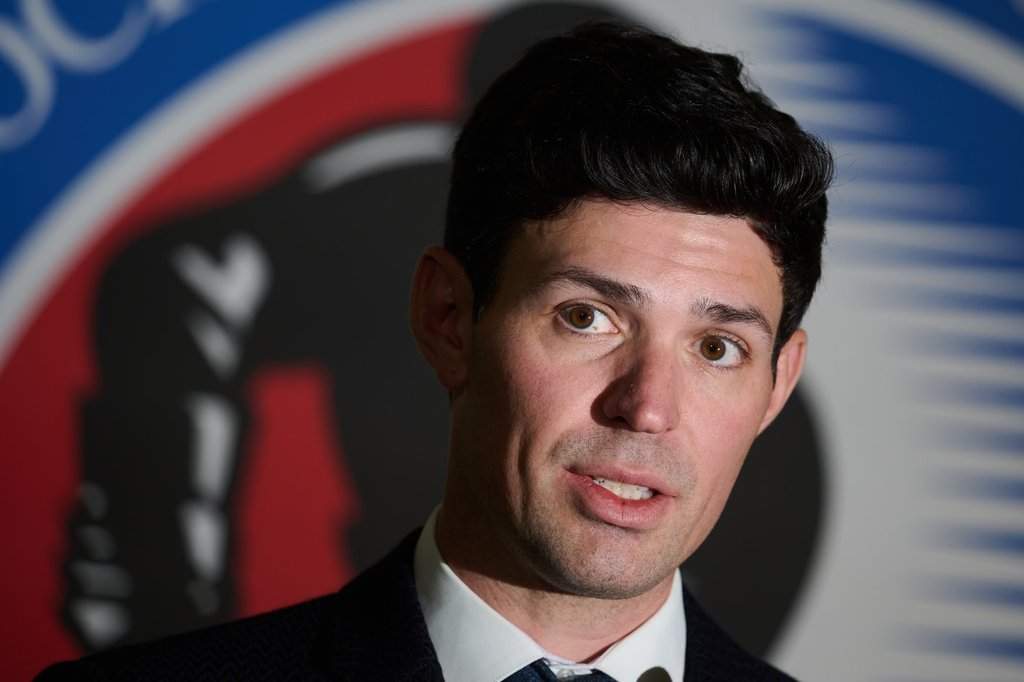
When the 2026 Hockey Hall of Fame class was unveiled, headlined by Carey Price and Patrice Bergeron, the surface-level reaction followed that exact script. Analysts immediately began dissecting Price’s lack of a Stanley Cup ring and Bergeron’s seemingly modest point-per-game averages compared to the scoring titans of the 1980s. Yet looking at these two men through the lens of raw box-score noise misses the entire point of why they are entering the shrine. The 2026 class is not a celebration of chaos. It is an overdue monument to control, sacrifice, and the quiet, exhausting work of preventing disaster before anyone in the upper bowl even realizes danger exists.
The Weight of the Crease
To understand Carey Price, you first have to understand the specific, suffocating madness of playing goaltender in Montreal.
Imagine a hypothetical young man—let us call him Julian—stepping off a plane at Pierre Elliott Trudeau International Airport at nineteen years old. Julian is shy, raised in a remote town where the nearest traffic light was hours away, and suddenly he is handed the keys to a religion disguised as a hockey franchise. Every grocery store trip becomes a press conference. Every bad bounce in November triggers a three-day municipal crisis on talk radio. That was not a hypothetical for Price; it was his Tuesday afternoon for fifteen years.
I still remember sitting in the lower bowl at the Bell Centre during the 2014-15 season, watching Price work against a relentless Washington Capitals attack. Most goaltenders look like they are surviving a car crash. They dive, they flail, they sprawl across the blue paint in desperate, theatrical arcs that make for glorious photographs. Price did none of that. He moved like a chess grandmaster who had already played out the next six sequences in his head before the opposing winger crossed the blue line. A subtle shift of his right skate, a two-inch adjustment of his blocker, and a ninety-five-mile-per-hour slap shot simply died against his chest without a rebound.
It looked effortless. That was the illusion that fooled casual observers for over a decade.
Behind that hypnotic calm was a body systematically tearing itself apart. Goaltending in the modern butterfly era is an unnatural act, requiring a six-foot-three frame to drop to its knees and explode back up fifty times a night while wearing forty pounds of wet gear. Price’s knees absorbed the trauma of a career spent carrying rosters that frequently relied on him to win games 2-1 or 1-0. In 2015, he accomplished something no goaltender had done since Dominik Hasek in 1998, sweeping the Hart Trophy as league MVP, the Vezina Trophy as top goaltender, the Ted Lindsay Award, and the William M. Jennings Trophy in a single season. He posted a 1.96 goals-against average and a .933 save percentage across sixty-six starts, dragging a middle-of-the-pack offensive team to the top of the Atlantic Division through sheer positional perfection.
Critics often point to the empty space on his finger where a Stanley Cup ring belongs, treating it as a fatal flaw in his resume. But hockey is not tennis, and a goaltender cannot score on a power play. Even so, Price came within three wins of immortality during the surreal, empty-arena run of 2021, playing on a knee so damaged that he could barely walk up stairs between games. He surrendered his remaining cartilage to give Montreal one last miracle. When the Hockey Hall of Fame voters inducted Price in 2026, they were acknowledging a fundamental truth: greatness is not always measured by the hardware you lift in June, but by the impossible burden you refuse to drop from October to April.
The Invisible Art of Patrice Bergeron
Two hundred feet away from the crease, Patrice Bergeron spent nineteen seasons in Boston perfecting a different kind of silence.
If Carey Price was the last line of defense, Bergeron was the reason the puck rarely made it that far. Consider what happens in the final forty seconds of a one-goal playoff game. Your team is clinging to a 3-2 lead. The opposing coach pulls his goalie, flooding the ice with six elite attackers. Your legs feel like wet concrete, your lungs burn from the dry arena air, and a single lost faceoff means sudden death.
In those moments, Boston coaches did not look down the bench to weigh options. They just tapped Bergeron on the shoulder.
To explain Bergeron’s brilliance to someone who has never laced up skates, think of him as the load-bearing beam hidden behind the drywall of a skyscraper. You never take pictures of the steel girder. You admire the glass facade and the penthouse views. Yet without that beam absorbing thousands of tons of lateral wind pressure every second, the entire structure twists and collapses into the street. Bergeron was the structural integrity of the Boston Bruins for nearly two decades.
While flashier centers hunted for breakaways and cheat-codes on the offensive blue line, Bergeron obsessed over the details that make coaches weep with gratitude. He won six Frank J. Selke Trophies as the NHL’s best defensive forward—an all-time record that shattered the previous mark of four held by Hall of Famer Bob Gainey. To win that award six times is not merely a nod to hustle; it is proof of complete spatial dominance. Bergeron won 58.9 percent of his career faceoffs across more than twenty-five thousand draws, an almost absurd statistical edge that meant his team started almost every crucial shift with possession of the puck.
He finished his career with 1,040 points in 1,294 regular-season games, alongside a Stanley Cup championship in 2011, two Olympic gold medals with Team Canada, and membership in the Triple Gold Club. Yet those numbers still feel oddly small next to the memory of him playing Game 6 of the 2013 Stanley Cup Final with a broken rib, torn cartilage, a separated shoulder, and a punctured lung. Most human beings would have been hospitalized on morphine. Bergeron was taking defensive-zone draws against the Chicago Blackhawks, refusing to yield an inch of ice because his teammates were watching him.
Why Voters Finally Looked Past the Box Score
There was a time, not so long ago, when the Hall of Fame selection committee operated like an accounting firm with a strict minimum balance. If you were a forward, you needed five hundred goals or twelve hundred points. If you were a goalie, you needed four hundred wins or multiple championships. Anything less meant waiting in the purgatory of the ballot box for ten years while flashier names jumped the line.
The 2026 class signals a profound maturation in how the sport evaluates its own history. We live in an era saturated with micro-tracking data—expected goals, high-danger scoring chances suppressed, zone-exit efficiency—and those metrics have finally confirmed what old-school scouts whispered in smoky rink corners for years. They proved that preventing a goal is mathematically identical to scoring one, even if nobody throws hats onto the ice when you tie up a stick in the slot.
Price and Bergeron were teammates on the international stage, winning Olympic gold together in Sochi in 2014 and the World Cup of Hockey in 2016. Watching them on the same sheet of ice was an exercise in total suffocation for opponents. Team Canada allowed just three goals in six games in Sochi, an absurd defensive stranglehold anchored by Bergeron’s relentless backchecking and Price’s serene command of the crease. Together, they represented the pinnacle of Canadian two-way hockey—a philosophy built on accountability, humility, and the refusal to cheat the game for personal glory.
The Architecture of a Legacy
Walking through the Great Hall in Toronto, surrounded by the silver chalice and rows of etched glass plaques, you start to realize that the legends who endure are rarely the ones who demanded the spotlight. The loud ones burn bright and fast, leaving behind highlight clips that slowly fade as the game gets faster and the shooters get stronger.
What stays are the standards.
Every young goaltender who learns to stay on his feet until the shooter commits, trusting his angles instead of panicking, is skating in Carey Price’s tracks. Every teenage center who sprints back two hundred feet to break up a three-on-two rush when his team is already up by three goals is honoring Patrice Bergeron’s blueprint. They took the most chaotic, violent, unpredictable sport on earth and imposed order upon it, night after night, until their bodies simply had nothing left to give.
Years from now, long after the speeches in Toronto are forgotten and the commemorative jackets are hung in closets, a kid will step onto an outdoor rink at dusk. The air will be bitingly cold, the floodlights will buzz overhead, and there will be no crowd to cheer. That kid will square up to an incoming shot with quiet, unshakeable poise, or lift an opponent’s stick just before the puck crosses the goal line, and in the crisp silence of the winter evening, the game will still be safe.