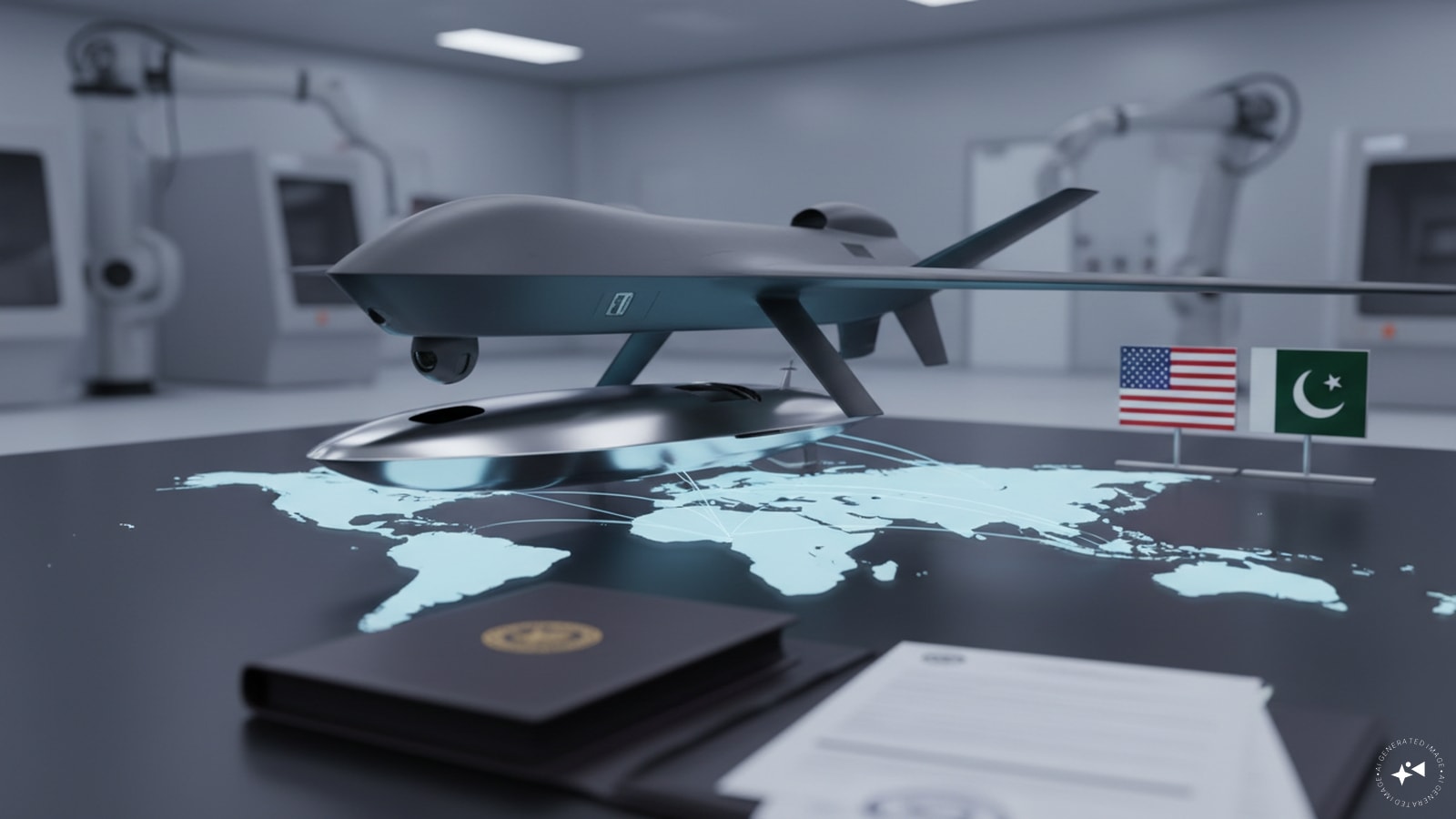
Power does not always announce itself with the roar of an engine or the strike of a gavel. Sometimes, it arrives in the quiet hum of a transformer coming online in a valley that had only ever known darkness at night. Sometimes, it looks like a handshake across a polished mahogany table in Washington, where billions of dollars are quietly rearranged not to conquer, but to anchor.
We talk about global competition as if it were fought exclusively with aircraft carriers and cyber weapons. We watch the headlines for trade wars, tariff hikes, and naval patrols in contested seas. But underneath the theater of statecraft, a different kind of architecture is being built. It is an architecture of concrete, fiber optic cables, critical minerals, and sovereign loans. It is concrete poured in places maps forget until the lights go on.
Consider Elena. She is a hypothetical small-business owner in a developing port city, though she represents thousands of real people whose names never cross a news ticker. For years, Elena’s textile business ran on the charity of a failing local grid. Power would vanish for hours without warning, frying motors, ruining looms, and turning fulfillment deadlines into a game of pure chance. When foreign capital from state-backed lenders offered to build her country's infrastructure, the terms came wrapped in invisible strings—debt traps disguised as development, sovereignty bartered for concrete. She did not want to choose between stagnation and surrender. Yet, for a long time, those felt like the only choices on the board.
Then the calculus shifted.
The US International Development Finance Corporation recently dropped an anchor of its own into the global economy, committing more than eight billion dollars toward investments designed to secure American economic and national security interests. On paper, it sounds like bureaucratic jargon. A press release wrapped in numbers too large for the human brain to easily digest. Eight billion dollars. To most people, that is simply a constellation of zeros.
Strip away the Washington shorthand, however, and the real shape of the story emerges.
This money is not charity. It is a strategic counterweight. For decades, global development finance operated under the naive assumption that capital has no flag, that money flows wherever profit beckons, and that geopolitical rivalries would melt away in the warm bath of globalized trade. That assumption died quietly in the 2010s. Nations with state-directed economies realized that buying a port or financing a mine is not just an investment; it is a permanent foothold. It is a choke point. It is a way to write the rules of the twenty-first century in a language that favors authoritarian efficiency over messy, open-market democracy.
When the DFC deploys billions into energy independence, supply chain resilience, and critical infrastructure, it is engaging in economic defense.
Let us look at what that actually means on the ground. Energy security is national security. When a developing nation relies entirely on a single foreign power for its electrical grid, its freedom of action evaporates. It cannot vote against that power in international bodies. It cannot regulate foreign corporations operating within its borders without risking a sudden blackout. By financing alternative energy grids, clean tech manufacturing, and secure telecommunications, American development finance provides an exit ramp. It offers countries a chance to modernize without mortgaging their independence.
There is a rhythm to how great powers rise and fall, and it rarely happens in a single dramatic afternoon. It happens in the margins. It happens when a nation decides whether to buy its 5G network from a company accountable to a foreign intelligence service or from open, transparent markets. It happens when a lithium mine is developed with local labor standards and environmental safeguards rather than stripped bare by transient extraction crews.
Critics often ask why American taxpayers should care about a port in the Global South or a critical mineral processing plant halfway across the planet. The answer is painfully practical. Modern supply chains are spiderwebs. If one strand snaps, factories in Ohio stall. If one shipping lane falls under monopolistic control, the cost of everyday goods spikes in Chicago. Prosperity at home is tethered to stability abroad. When developing economies grow within a transparent, rules-based framework, they become stable trading partners rather than geopolitical leverage points for rival superpowers.
The eight billion dollar commitment is a recognition that you cannot compete with something by offering nothing.
For years, Western private equity sat on the sidelines of high-risk infrastructure projects because the quarterly return metrics did not pencil out. Private capital hates sovereign risk, regulatory unpredictability, and long timelines. But strategic competition does not care about quarterly earnings reports. By utilizing government-backed insurance, debt financing, and equity investments, the DFC acts as a financial bridge. It lowers the barrier of entry for private American enterprise, coaxing capital out of safety and into the places where the future of the global economy is actually being decided.
Imagine the alternative.
Picture a world where every emerging market relies on opaque loans that lead straight to foreclosed sovereignty. Picture a global digital infrastructure built entirely on surveillance-state architecture. In that world, American security is compromised long before a single shot is fired. Economic isolation is a slow poison.
This is why the current wave of development finance matters so much. It is an admission that security and economics are fused at the hip. You cannot protect the homeland by building walls; you protect it by building bridges that others actually want to cross.
Elena’s looms are running today. The power stayed on through the afternoon shift, driven by a diversified energy grid financed through modern international partnerships. She does not know the acronyms of the agencies that helped make the financing possible, and she does not care about the geopolitical chess match playing out above her head. She only knows that her workers have jobs, her shipments are leaving on time, and her country’s future belongs, at least for now, to its own people.
That is what eight billion dollars buys. Not just infrastructure. Space to breathe.