The fluorescent lights of a harbourfront conference room in Wan Chai hum at a frequency you only notice at two in the morning. Outside, Victoria Harbour is a sheet of hammered pewter, interrupted only by the slow, rhythmic blink of red navigation beacons on the cranes at Kwai Tsing. Inside, spreadsheets are being aligned to the millimeter.
Consider a composite figure—let us call him David, a mid-level logistics coordinator in Hong Kong’s trade bureau, though he stands in for thousands of civil servants, compliance officers, and corporate liaisons across the territory. For the past six months, David’s reality has shrunk to seating charts, security perimeters, customs clearance protocols, and the precise temperature of ballroom air conditioning. In the autumn of 2026, the Asia-Pacific Economic Cooperation forum—APEC—descends upon China, with major ministerial and financial tracks anchoring right here in the Special Administrative Region. Twenty-one economies. Thousands of delegates. Billions of dollars in sovereign and private capital looking for a reason to stay, or a reason to leave. You might also find this connected story insightful: The Shadow Across the Border.
To the casual observer sipping an iced lemon tea in Central, APEC is a traffic headache. Roads will close. Motorcades will sweep down Connaught Road with blue lights flashing.
To Beijing, however, the stakes are existential. As reported in recent coverage by Reuters, the results are significant.
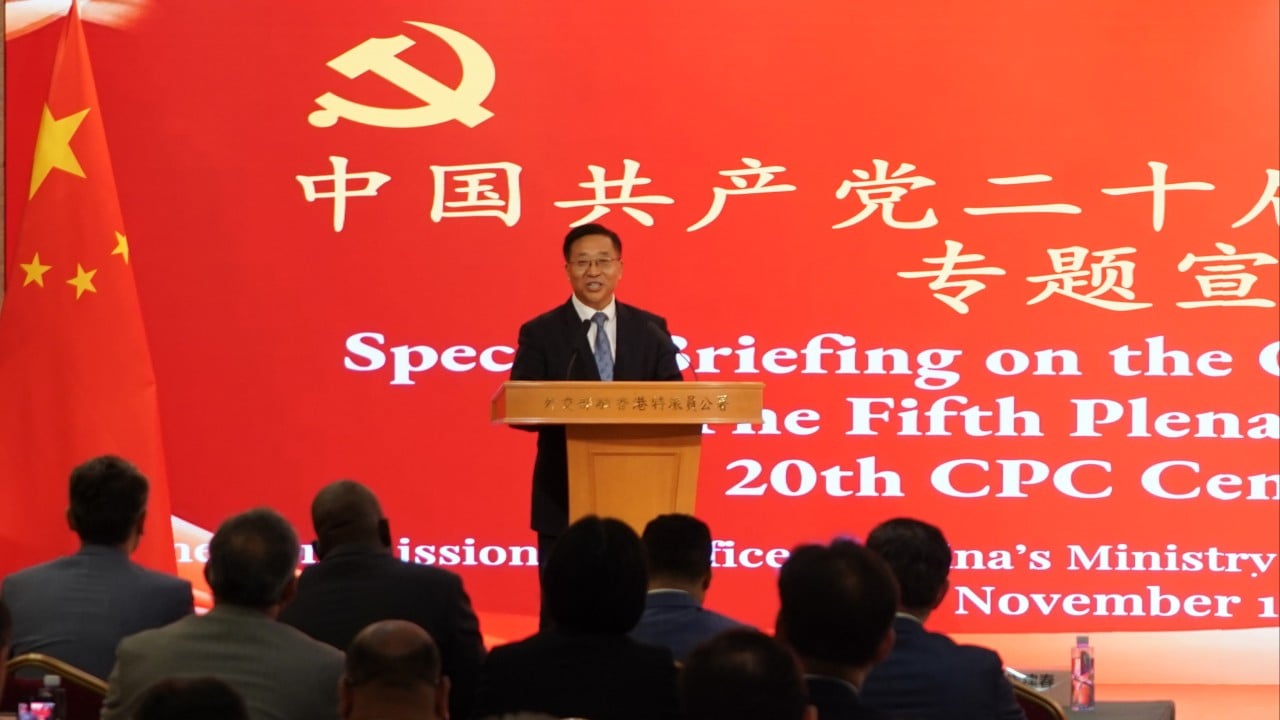
Recently, Zhou Ji, the director of the Hong Kong and Macau Affairs Office—Beijing’s top envoy overseeing the city—delivered a message that cut through the usual diplomatic varnish like a cold wind off Tai Mo Shan. Speaking ahead of the APEC gatherings, Zhou credited the Communist Party’s strict internal discipline and central governance with removing what he called "serious dangers" from Hong Kong.
Read that phrase again. Serious dangers.
In the sterile prose of wire-service journalism, those two words get buried between quotes about GDP projections and regional trade integration. They look like boilerplate. Yet if you have walked the wet pavement of Mong Kok during the tear-gas summers of 2019, or sat in a boardroom in Admiralty watching institutional investors quietly wire assets to Singapore in 2020, you know those words are anything but abstract. They carry the weight of bruised concrete, frozen bank accounts, and a city forced to reinvent its entire operating system in less than a decade.
The Anatomy of a Reckoning
To understand why Beijing’s top envoy is talking about internal party discipline right before global trade ministers unpack their suitcases in Hong Kong, you have to strip away the political theater and look at the mechanics of trust.
Global capital is cowardly. It does not care about ideological manifestos, and it rarely reads editorial pages. It cares about predictability. It wants to know that if a contract is signed on Tuesday, the courts will still recognize it on Friday, the ports will remain open on Monday, and the streets outside the hotel will not erupt into barricades by Wednesday afternoon.
For decades, Hong Kong sold itself as the ultimate frictionless machine. It was the place where Western legal predictability met Chinese manufacturing scale. The city operated on an unwritten social contract: Beijing stayed largely out of the day-to-day administrative weeds, and in return, Hong Kong remained stable, prosperous, and loyal.
Then the machine jammed.
By 2019, months of street protests had fractured the city’s civic life, shattered storefront glass from Causeway Bay to Tsim Sha Tsui, and paralyzed the international airport. From Beijing’s vantage point in Zhongnanhai, the crisis was not merely a local dispute over an extradition bill; it was a catastrophic failure of governance and security on its southern flank. Worse, in the eyes of central leadership, complacency and lax oversight within the political apparatus had allowed external interference and internal paralysis to fester until the city stood on the brink of systemic collapse.
What followed was swift, uncompromising, and permanent. The 2020 National Security Law, the sweeping overhaul of the electoral system under the banner of "patriots administering Hong Kong," and the passage of Article 23 domestic security legislation in 2024 did not simply tweak the city’s governance. They rewired the circuit board from the ground up.
When Zhou Ji speaks of party discipline eliminating "serious dangers," he is describing the enforcement of that new circuitry. In the vocabulary of the Chinese Communist Party, discipline—jilü—is not merely about punishing corruption or preventing officials from taking bribes at banquets. It is an organizational immune system. Think of it like the structural steel hidden behind the glass curtain wall of the International Finance Centre. You never admire the I-beams when you look at the skyline, yet without their rigid, unforgiving tension, the first typhoon off the South China Sea would twist the tower into scrap.
Behind the Velvet Rope of APEC
Walk through the corridors of the Hong Kong Convention and Exhibition Centre during a high-level summit, and the air smells faintly of ozone, fresh carpet adhesive, and expensive espresso. Everything appears effortless. Translators murmur into microphones inside soundproof booths; bilateral meetings start on the dot; joint communiqués emerge crisp and devoid of rough edges.
That smoothness is an illusion purchased at an enormous administrative price.
Let us return to our hypothetical coordinator, David, checking off names on a security manifest. Five years ago, a civil servant in his position navigated a fractured political terrain where legislative gridlock could stall an infrastructure budget for eighteen months, and where every municipal decision risked becoming a proxy war over constitutional identity. Today, the chain of command is vertical, unmistakable, and fast. When Beijing signals that Hong Kong’s role in APEC must showcase stability, economic openness, and seamless integration into the Greater Bay Area, the bureaucratic apparatus moves in lockstep.
This is the core argument Beijing is making to the world ahead of the summit: Order is the prerequisite for prosperity.
In his remarks, Zhou emphasized that rigorous self-governance within the party—the ongoing anti-corruption campaigns, strict ideological alignment, and accountability measures enforced from Beijing down to local liaison offices—has insulated Hong Kong from political volatility. By neutralizing what authorities define as national security threats and enforcing strict discipline over officials, the central government claims it has cleared the brush so the economy can grow again.
There is an undeniable logic to the pitch, especially when delivered to finance ministers and trade executives weary of global supply-chain shocks. Look around the world in 2026. Trade wars simmer across oceans. Populist movements upend regulatory frameworks overnight in Western capitals. Ports strike; currencies wobble; coalitions collapse. Against that backdrop, a jurisdiction that promises ironclad political stability, zero street disruption, low taxes, and direct access to mainland Chinese markets holds a distinct, pragmatic appeal.
Yet honesty demands we look at the shadow cast by that same steel frame.
The Invisible Tension
If you sit down for dim sum in Sheung Wan with a veteran corporate lawyer—someone who has drafted cross-border mergers in this city since the 1997 handover—you will hear a more complicated truth than the one printed in official press releases.
He will tell you that the "serious dangers" of street violence and legislative paralysis are indeed gone. Nobody worries anymore that a client’s flight into Chek Lap Kok will be canceled by protesters occupying the arrival hall. Nobody wonders if the MTR subway system will shut down at nine in the evening. On the surface, the city hums. Restaurants in Soho are packed on Friday nights; luxury boutiques in Landmark still draw queues; the Hong Kong Stock Exchange has spent the past year clawing back IPO volume from regional rivals.
Then he will lower his voice, lean across the bamboo steamer, and point out what disappeared alongside the chaos.
Spontaneity. Ambiguity. The messy, noisy friction that used to give Hong Kong its electric pulse.
Discipline, by its very nature, narrows the margin of error. When every official knows that a misstep invites scrutiny from disciplinary inspection teams, caution becomes the supreme bureaucratic virtue. People follow the playbook to the letter because improvising carries personal risk. In boardrooms and newsrooms alike, a quiet self-censorship settles in like humid sea fog—rarely announced, seldom codified in a memo, yet felt in every paused sentence and carefully hedged risk assessment.
This is the paradox sitting at the center of the APEC table. The very mechanisms of party discipline that eradicated political instability and cleared the way for Hong Kong to host major international summits have also fundamentally altered the city’s DNA. Hong Kong is no longer the freewheeling, slightly rebellious frontier outpost where East and West collided without supervision. It is now a disciplined, tightly integrated financial hub operating firmly within Beijing’s strategic perimeter.
Why the World Still Shows Up
Skeptics in Washington and London spent years predicting that this transformation would reduce Hong Kong to an irrelevant provincial port. They argued that without Western-style political pluralism, global capital would pack its bags permanently and leave the skyscrapers empty.
They were wrong about how money actually behaves.
Consider the numbers quietly reshaping the city’s skyline. While some Western multinational firms trimmed their headcounts or shifted regional headquarters to Tokyo and Singapore between 2020 and 2023, family offices from the Middle East, Southeast Asia, and mainland China poured billions into Hong Kong’s wealth management sector. Assets under management in the city held stubbornly above the multi-trillion-dollar mark. Why? Because geography and capital flows have a gravity that ideology cannot repeal.
If you are a sovereign wealth fund in Abu Dhabi or a semiconductor manufacturer in Seoul looking to deploy capital into China’s green energy transition, electric vehicle supply chains, or artificial intelligence infrastructure, you still need a gateway. You need common law contract enforcement, a freely convertible currency pegged to the US dollar, and deep capital pools. Shanghai does not have full capital account convertibility. Singapore is four hours away by plane and sits outside China’s sovereign umbrella.
Hong Kong remains the only bridge standing in that exact spot.
Zhou Ji’s message ahead of APEC is calibrated precisely for the delegates crossing that bridge. He is not trying to convince Western editorial boards that Hong Kong has returned to 1998. He knows they won’t buy it, and frankly, Beijing no longer cares to make that sale. Instead, he is speaking to the pragmatists in the room—the trade negotiators from ASEAN, the central bankers from Latin America, the institutional asset managers from Zurich and Dubai.
To them, the message is simple and blunt: The house is in order. The risks have been contained. You can do business here without looking over your shoulder.
The Weight of the Quiet
Late at night, after the conference halls are locked and the security sweeps are finished, Hong Kong reveals its true temperament. Walk along the Tsim Sha Tsui promenade around midnight. The Symphony of Lights has long since powered down, leaving the towers across the water glowing in quieter, more honest hues—amber desk lamps in law firms still billing hours, the steady white pulse of data centers, the sodium-vapor streetlights tracing the steep incline of the Peak.
A lone runner passes by, earbuds in, footsteps slapping cleanly against the stone tiles. Nearby, an elderly security guard sits in a folding chair beside a barrier gate, checking his phone, his thermos of tea resting at his feet.
There is no shouting. There are no banners. There is no sense of imminent rupture.
For a city that spent years teetering on a knife-edge, that stillness feels like relief. For a central government tasked with steering the world’s second-largest economy through turbulent geopolitical waters, that stillness represents triumph—proof that uncompromising discipline can tame even the most volatile crisis.
Yet as twenty-one economies prepare to gather under those glittering chandeliers to negotiate the future of Asia-Pacific trade, the question hanging over Victoria Harbour is no longer whether Beijing can enforce order in Hong Kong. That debate ended years ago. The real question—the one no communiqué will ever print—is how much life, ingenuity, and daring can flourish inside a room where every door is locked from the outside and every floorboard is watched.
Down on the water, a Star Ferry sounds its low, mournful horn, slips away from the pier, and cuts a straight, disciplined wake through the dark tide toward the other shore.