Rain falls differently in the English fens. It does not storm or rage against the glass; it simply settles, cold and grey, turning the flat agricultural fields of East Anglia into a vast mirror of the overcast sky. Inside the perimeter fences of Royal Air Force bases like Mildenhall or Lakenheath—sprawling, self-contained slices of American suburbia dropped incongruously into the Suffolk countryside—the air smells of wet tarmac, diesel exhaust, and burnt coffee.
For decades, these bases have been the quiet beating heart of the transatlantic alliance. Young men and women from Ohio, Texas, and Georgia walk past British pubs on their way to work on the most sophisticated reconnaissance aircraft, fighter jets, and intelligence hubs in the Western arsenal. They carry security clearances that grant them access to the digital nervous system of NATO. They sign oaths. They wear flags on their shoulders.
And then, every so often, one of them decides to sell it all for the price of a used sedan.
When news broke that a United States Army service member had been arrested in the United Kingdom on suspicion of espionage on behalf of Russia, the headlines treated it like a fleeting bureaucratic blotter item. A brief dispatch from London. A mention of the Metropolitan Police Counter Terrorism Command. A vague reference to the National Security Act of 2023. Most readers scrolled past it before their morning coffee went cold, filing it away under the familiar, abstract hum of geopolitical background noise.
That reaction is precisely what foreign intelligence services count on.
To understand what actually happened in the shadows of that British airbase—and why it should keep anyone who cares about global stability awake at night—you have to strip away the Hollywood mythology of trench coats, microdots, and dead drops under park benches. Modern treason rarely begins with an ideological conversion in a smoky café. It begins with a glowing phone screen at two in the morning, a mounting pile of credit card debt, a bruised ego, and a recruiter sitting three thousand miles away in Moscow who knows exactly how to turn human loneliness into a weapon.
The Architecture of an Invisible Breach
Let us step back and look at the mechanics of how this happens, using a hypothetical composite drawn from dozens of real counterintelligence prosecutions over the past decade.
Call him Specialist Miller. He is twenty-four years old, stationed thousands of miles from home on a joint military installation in the United Kingdom. He works in logistics, or perhaps signals maintenance, or base network administration—one of the unglamorous, essential cogs that keep the machinery of American power running overseas. He does not hold the nuclear launch codes. He is not a general briefing the President. On paper, he looks entirely unremarkable.
That ordinariness is his greatest value to an adversary.
Think of a modern military base not as a fortress with thick stone walls, but as a bustling international airport where thousands of employees hold different colored badges. A foreign intelligence officer does not need to steal the master key to the vault if they can convince a baggage handler to leave a side door propped open for ten minutes. In the language of intelligence, this is known as mosaic warfare—the patient collection of seemingly mundane puzzle pieces that, when assembled in an analytical room in Moscow, reveal the entire picture. Flight schedules. Maintenance logs. Personnel rosters. Base entry protocols. The names and routines of pilots who fly sensitive missions over the Black Sea or the Baltic.
Sitting alone in his barracks room, scrolling through encrypted messaging apps like Telegram or Discord, Specialist Miller is drowning in quiet frustrations. Maybe he was passed over for a promotion. Maybe he lost thousands of dollars in crypto speculation or sports betting. Maybe he simply feels invisible, an underpaid cog in a massive machine that barely knows his name.
Somewhere in a nondescript office building in Russia, an intelligence officer—or a contracted cyber-broker working for the GRU or FSB—is trawling the exact digital watering holes where disaffected Western service members vent their grievances. They do not approach Miller waving a Russian flag. They approach him as a sympathetic ear, a financial savior, or an anonymous broker looking for "market research" or "consulting data."
The first request is always harmless. A public base directory. A photo of a bulletin board. Five hundred dollars arrives in a cryptocurrency wallet within an hour.
Hooked.
Once that first transaction clears, the trap snaps shut. The recruiter now owns something far more valuable than the petty information Miller handed over; they own the proof of his betrayal. The demands escalate. The payments grow larger, though they remain shockingly modest compared to the damage inflicted. What begins as an impulsive side hustle curdles into full-blown espionage under the revised, razor-sharp teeth of British law.
Why London Changed the Rules of the Game
For over a century, British counterintelligence officers fought twenty-first-century spies with a blunt, Victorian weapon: the Official Secrets Act of 1911. Written when German agents were sketching naval dockyards in charcoal notebooks, that aging law made it notoriously difficult to prosecute modern espionage unless prosecutors could prove the suspect was directly aiding an "enemy" in a declared state of war.
Then came the poisoning of Sergei and Yulia Skripal in Salisbury in 2018, when Russian military intelligence officers smeared a Soviet-era nerve agent on a suburban front door, killing an innocent British citizen and turning a quiet cathedral city into a biohazard zone.
That attack shattered the lingering complacency of the British security establishment. By the time Parliament passed the National Security Act of 2023, the legal landscape had been utterly transformed. Under the new law, prosecutors no longer need to prove a formal state of war, nor do they need to catch a spy handing over blueprints marked "Top Secret." Simply obtaining, copying, or passing along information that could be useful to a foreign power—when done with the intent to prejudice the safety or interests of the United Kingdom—is enough to trigger life imprisonment.
And because the United Kingdom is the single most critical forward-operating platform for American military power in Europe, an attack on American secrets on British soil is treated by London as an existential threat to its own sovereignty.
When the Metropolitan Police Counter Terrorism Command—known as SO15—moves in to arrest a US service member on British turf, it is the culmination of months of silent, breathless collaboration between MI5, the FBI, and the US Army Counterintelligence Command. Having spent years studying how these joint operations unfold, I can tell you that by the time the handcuffs click shut, the investigators already know every keystroke the suspect made, every encrypted message they thought they deleted, and every blockchain transaction they assumed was untraceable.
The tragedy is not that the spy got away with it. The tragedy is how much damage can be done in the weeks between the first betrayal and the final knock on the door.
The Human Cost of a Compromised Network
It is easy to talk about intelligence leaks in the abstract, as if data were merely lines of code floating harmlessly through the ether. We treat espionage like a chess match played by faceless grandmasters.
It is not a chess match. It is a matter of life and death for people who will never know the name of the person who sold them out.
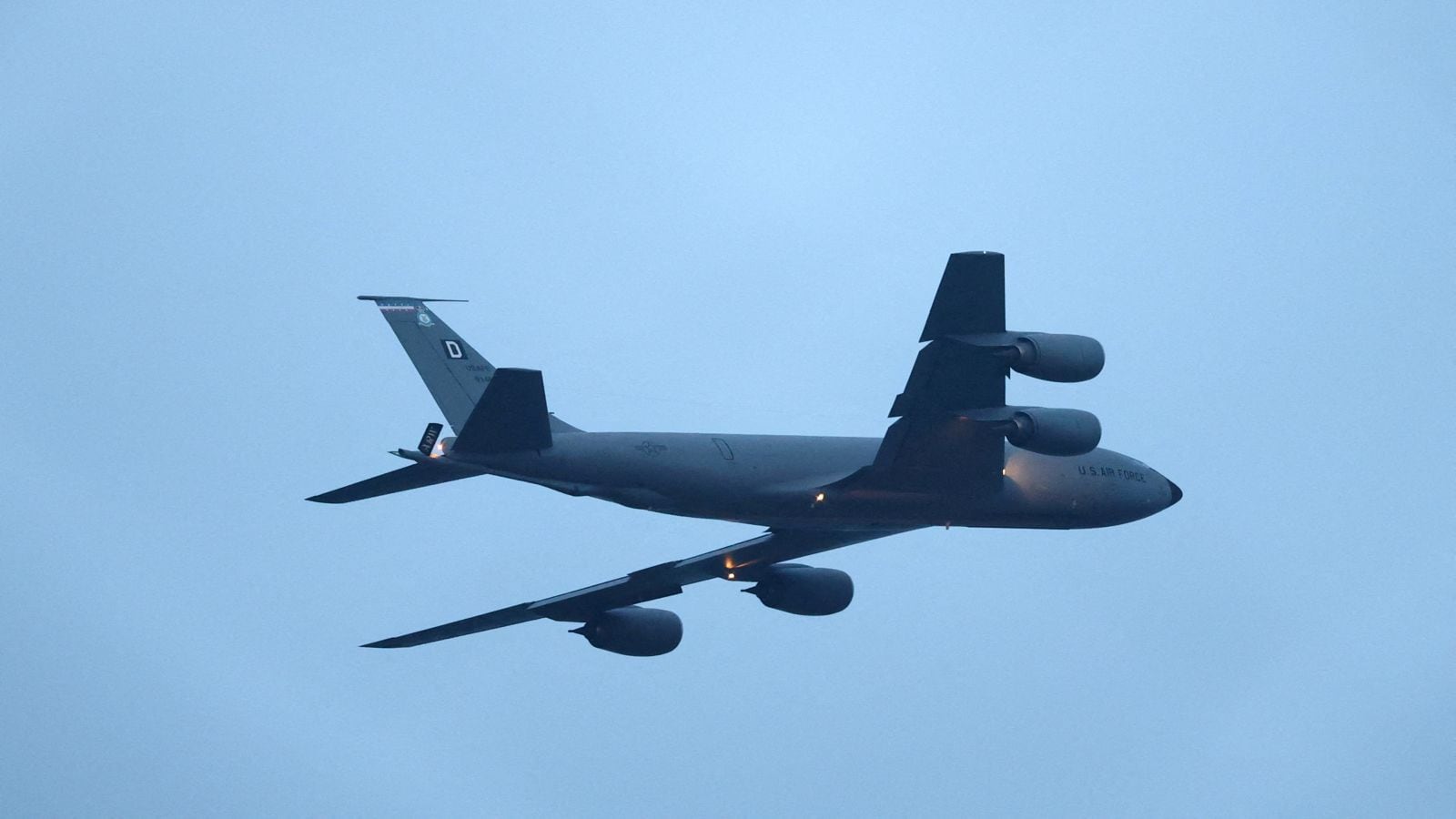
Consider what happens when Russian military intelligence gains access to the operational rhythms of a joint US-UK airbase. Since Russia's full-scale invasion of Ukraine in 2022, British installations have served as vital logistical hubs for training Ukrainian troops, coordinating intelligence, surveillance, and reconnaissance flights, and supplying weaponry to the front lines. Every time a Rivet Joint reconnaissance plane takes off from East Anglia to monitor Russian radar emissions over the Black Sea, it carries a crew of roughly thirty young men and women.
If an insider compromises the flight schedules, the technical vulnerabilities of the aircraft's communications gear, or the personal details of the crew members, those thirty lives are suddenly exposed. In 2022, a Russian Su-27 fighter jet nearly shot down a manned RAF Rivet Joint aircraft over international waters after a pilot misinterpreted a ground command, releasing a missile that malfunctioned. Imagine what happens when an adversary does not have to guess where those planes will be, or how their crews operate, because someone inside the fence sold them the playbook.
Beyond the immediate physical danger to aircrews, there is a quieter, more insidious poison that seeps into the alliance itself. Intelligence sharing between Washington and London—the bedrock of the "Five Eyes" partnership—runs on one currency alone: absolute, unyielding trust. When an American soldier in Britain is arrested for spying for Moscow, every British commander has to ask themselves a chilling question: What else did he have access to? Which of our systems did he touch? Who else is in his unit?
I remember speaking years ago with a retired British intelligence officer who had worked through the tail end of the Cold War, an era scarred by infamous traitors like Kim Philby and George Blake. He told me that the hardest part of uncovering a mole is never the arrest itself; it is the paralyzing paranoia that follows. Suddenly, every routine network glitch looks like sabotage. Every delayed deployment looks like a tip-off. Months of operational momentum are lost while teams tear down their own digital infrastructure to scrub away the fingerprints of a single compromised insider.
Why the Insider Threat Is Exploding Now
If you feel like you are hearing about these arrests more frequently lately—an Air National Guardsman leaking classified documents on a gaming server in Massachusetts, Navy sailors in California selling technical manuals to Chinese handlers, an Army intelligence analyst in Kentucky peddling defense secrets for a few thousand dollars, and now an American soldier arrested in Britain for spying for Russia—you are not imagining things.
We are living through a golden age of insider recruitment, driven by three converging forces that military leaders are struggling to contain.
First, there is the sheer democratization of access. During the Cold War, stealing secrets required physical proximity to locked filing cabinets and heavy cameras. Today, a twenty-two-year-old specialist sitting at a desk in Suffolk has access to classified networks containing millions of documents, satellite imagery, and tactical assessments. The surface area of vulnerability has expanded exponentially.
Second, hostile intelligence agencies have abandoned the slow, expensive tradecraft of the twentieth century in favor of industrial-scale digital grooming. Russian intelligence services, heavily depleted after hundreds of their diplomats were expelled from European embassies following the invasion of Ukraine, pivoted aggressively to online recruitment. They treat espionage like targeted advertising. By scraping leaked databases, gaming forums, and social media platforms, they can identify thousands of Western military personnel who exhibit signs of financial distress, ideological alienation, or psychological vulnerability. If they reach out to ten thousand people and 9,999 ignore them, the one person who replies gives them a foothold inside NATO.
Third, and perhaps most uncomfortable to admit, is a profound cultural shift in how younger generations relate to institutional loyalty and digital privacy. Raised in an era where personal boundaries are routinely monetized online, where clout is measured in shares and likes, and where the line between the digital world and physical reality feels blurred, some young service members fail to grasp the visceral weight of classified material. To them, a PDF on a secure server does not feel like a weapon that could kill their peers; it feels like a file to be copied, shared, or traded.
None of this excuses treason. Every member of the armed forces undergoes exhaustive background checks and recurring security briefings that spell out the consequences of espionage in stark, unmistakable terms. Ignorance is not a defense.
Yet, recognizing the vulnerability of the human mind under pressure is essential if we want to stop the bleeding. You cannot build a firewall strong enough to stop an authorized user who has decided to betray their oath. Cybersecurity can block an external hacker, monitor unusual data downloads, and flag unauthorized thumb drives, but it cannot read the quiet desperation in a young soldier's eyes when they stare at an overdue loan notice in a lonely barracks room thousands of miles from home.
The Reckoning
Think back to that rainy airbase in East Anglia.
Tonight, somewhere on that installation, a young American specialist is finishing a twelve-hour shift. They will walk out into the damp English chill, pull their collar up against the wind, and head toward the dining facility or the gym. They are surrounded by fences topped with razor wire, guarded by armed sentries, watched by cameras that track every movement across the perimeter.
Every physical defense on that base is designed to keep enemies out.
Yet the greatest threat to the alliance has never been the stranger trying to climb over the wire in the dark. It is the quiet temptation whispering through a glowing screen inside the barracks, waiting for the exact moment when loneliness, greed, or pride outweighs a promise made in front of a flag. Until we learn how to guard the human heart as fiercely as we guard our networks, the doors will never truly be locked.