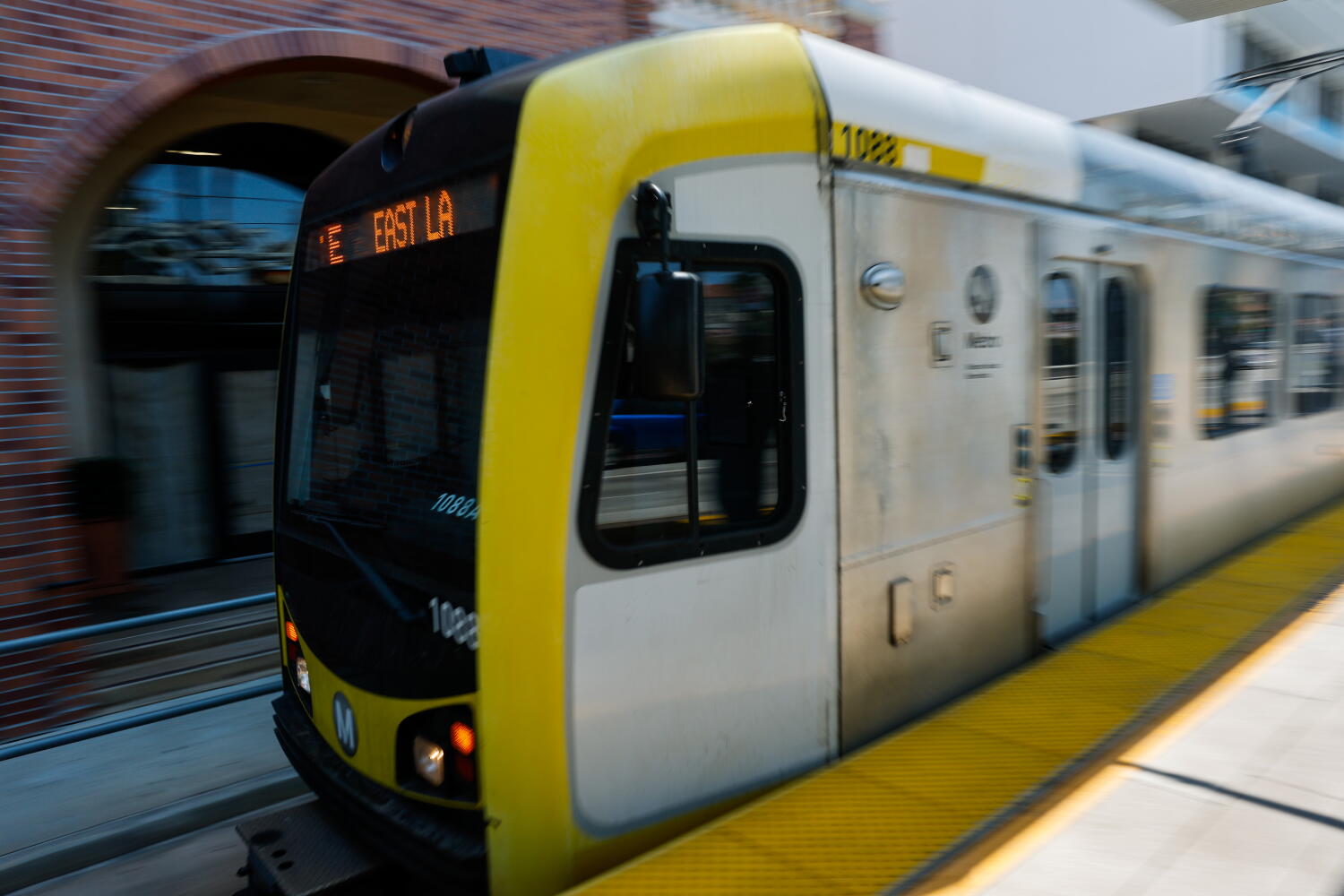
Morning light hits the concrete overpass on the edge of the Valley before it ever touches the glass towers downtown. Tires hum over expansion joints at sixty miles an hour, carrying people who live in one city and work—or struggle to keep working—in another. For years, the two sides of this map have felt separated by more than zip codes and arterial roads. They have felt separated by memory, by who gets called first when a water main breaks, and by who gets asked when city hall draws up a ten-year plan.
Then a political endorsement arrives, and on paper it looks like a transaction. One figure steps beside another. A press line is quoted. A coalition gains a name.
Politics.
It is easy to treat an endorsement in a mayor's race as mere arithmetic—a ledger entry where a known ally adds weight in the Valley and across the Westside. Yet any voter who has ever watched a neighborhood fight for a crosswalk or a clinic knows that endorsements rarely move people through press releases alone. They move people when a familiar voice says, Look closely at who is standing here, and ask what they will do when the cameras leave.
When Horvath backs Raman in the mayor's race, the immediate headline points to geography and momentum: a strong ally in the Valley and Westside. Beneath that headline sits a messier, more human question. How do two parts of a city that often speak past each other start pulling on the same rope?
Two Maps of the Same City
Every growing city carries an unofficial atlas. One version shows parks, transit lines, and zoning districts; the other shows where people feel heard and where they feel like an afterthought.
Consider a hypothetical resident—let's call her Nadia—who commutes from the Westside toward the Valley each weekday morning. (This is a hypothetical character created to illustrate how municipal decisions land in daily life.) By the time Nadia drops her kids at care, catches a bus that runs every twenty-five minutes instead of every twelve, and reaches her shift, she has already spent ninety minutes negotiating infrastructure she did not design. When she thinks about the mayor's race, she is not thinking about political party jargon or cable-news talking points. She is thinking about whether the next administration knows the difference between a ribbon-cutting and a repaired sidewalk.
Down in the Valley, someone else—say, a hypothetical small-business owner named David—looks at the same ballot through a different lens. (Again, a purely hypothetical figure used to ground everyday trade-offs.) David has watched costs climb, permits drag, and neighborhood storefronts turn over while promises of "revitalization" echoed from podiums miles away. For people like David, skepticism isn't cynicism. It is scar tissue.
I have spent enough time walking neighborhood corridors, sitting in community basements with folding chairs squeaking on linoleum, and listening to residents argue over streetlights and rent to know that voters rarely wake up wanting a speech. They want proof that the person asking for their vote actually sees the cracks in the pavement outside their door. Sometimes that proof starts with a name they already trust vouching for someone they are still sizing up.
Why Coalition Politics Feels Like a Gamble
Endorsements make people nervous, and they should. A voter's gut reaction—Who owes whom what?—is a healthy reflex in local politics. Cities are small enough that favors cast a long shadow, yet large enough that ordinary people can easily get lost in the shuffle.
Think of a municipal coalition like a relay team passing a baton in the rain. If the runner coming in knows the crowd along the backstretch—the families in the Valley, the households across the Westside—and hands the baton cleanly to a candidate trying to build a broader citywide mandate, speed increases. Drop the baton, or hand it off awkwardly without shared footing, and everyone loses ground.
That is the tension baked into Horvath's backing of Raman. Support from a figure tied to the Valley and Westside can widen Raman's reach into neighborhoods where a mayoral campaign cannot afford to sound distant or purely transactional. At the same time, an endorsement raises the stakes on accountability. Voters in those districts do not hand over goodwill on credit forever. They watch what happens after election night, when budgets tighten and competing priorities collide.
It is okay to admit that reading political alignments from the outside can feel confusing and even unsettling. Campaigns polish every word. Opponents spin every motive. Even seasoned observers sometimes misread whether an alliance reflects genuine shared purpose or short-term tactical math. When you care about where you live, uncertainty feels personal—because the stakes are personal.
What an Ally Actually Means on the Ground
A strong ally in the Valley and Westside is more than a surrogate on a stage. In practical terms, an ally acts as a translator between neighborhood reality and executive power.
City hall runs on schedules, ordinances, and multi-year capital cycles that can feel glacial to a family dealing with an immediate problem. A mayor can have grand intentions and still miss what is happening three blocks off the main boulevard if the lines of communication are clogged. When Horvath steps in behind Raman, the promise implied—and the standard Raman will be judged against—is that those lines stay open.
Look at what that looks like in ordinary, unglamorous terms:
- Listening before announcing: Bringing Valley and Westside concerns into policy drafts early rather than treating neighborhoods as an afterthought once plans are already locked.
- Testing slogans against street-level reality: Asking whether a citywide proposal works for shift workers, renters, and local shopkeepers, not just for people with flexible hours and easy parking.
- Staying visible after the yard signs come down: Turning campaign alignment into working relationships that hold up during budget hearings, zoning fights, and tough compromises.
None of those things happen automatically because two leaders stand together at a rally. A handshake is a starting line, not a finish line. Voters in the Valley and Westside know the difference between being courted during an election season and being represented during governance.
The Invisible Stakes Behind Every Vote
Why do local elections stir up such quiet intensity even when turnout is lower than a national race? Because municipal decisions shape the texture of daily existence. State and national debates fill screens; local choices fill potholes, set permitting timelines, shape neighborhood safety, and influence whether young adults can afford to stay near the people they love.
When a race narrows to competing visions of leadership, alliances like Horvath's backing of Raman shift the center of gravity. They signal who is trying to knit together different corners of the city—the Valley, the Westside, and beyond—into a single governing coalition. Whether that coalition holds depends on honesty about trade-offs. Every promise made in a mayor's race carries an unspoken question: What gets funded first, and who bears the cost if things take longer than hoped?
Consider what happens next if Raman leans into this support with substance rather than bluster: the campaign gains credibility among voters who want proof of reach beyond familiar circles. Consider the opposite risk: if an endorsement is treated like a trophy instead of a responsibility, skepticism in the Valley and Westside won't just linger—it will harden.
Beyond the Headline
Years from now, nobody will frame this moment around a single campaign line. People will remember how the city felt to live in. They will remember whether neighborhoods felt stitched together or pulled apart, whether leadership felt close enough to touch or too far away to reach, and whether the promises made on the campaign trail turned into steady work on ordinary days.
An endorsement is a spark, not a fire. It takes wind, dry wood, and steady tending to keep anything warm through a long winter.
Out by the overpass, the morning rush rolls on, headlights cutting through the early haze as another day begins on both sides of town.