The Hubble Space Telescope is dying, and the engineers on the ground have finally run out of miracles. NASA announced the official failure of its latest attempt to stabilize the aging observatory using a single-gyroscope operational mode, confirming what industry insiders have whispered for years. The telescope that fundamentally rewrote our understanding of the cosmos is slowly succumbing to atmospheric drag, orbital decay, and a bureaucratic lack of political will.
Gravity cares nothing for heritage. Every day, low Earth orbit pulls Hubble a fraction of a meter closer to a fiery reentry, and the agency charged with maintaining humanity's greatest scientific eye has effectively thrown its hands up. Meanwhile, you can find other events here: What Most People Get Wrong About China Landing Reusable Rockets.
Understanding how we arrived at this terminal juncture requires looking past the glossy press releases and examining the cold mechanics of orbital decay. Launched in 1990, Hubble was never meant to survive this long. Its longevity stands as a monument to the extraordinary craftsmanship of early 1990s aerospace engineering, but longevity breeds its own form of institutional hubris. NASA relied on the Space Shuttle program as a cosmic pickup truck, sending astronauts up repeatedly to swap out gyroscopes, upgrade optics, and nudge the observatory back into a higher, safer path.
When the shuttle fleet was retired in 2011, Hubble was stranded without an upgrade path. No other spacecraft possessed the cargo bay capacity, the robotic arm dexterity, or the human crew capability to service a complex optical instrument at 540 kilometers altitude. To see the bigger picture, check out the detailed report by CNET.
For over a decade, operators stretched the telescope's life through sheer cleverness. They transitioned Hubble from a six-gyroscope setup down to three, and eventually to a single-gyro mode to conserve remaining hardware. That strategy has now shattered. When a primary gyro malfunctioned permanently, forcing the spacecraft into a safe mode, the recovery attempts stalled. The hardware is simply too old, thermal stress has warped connections, and the magnetic torquer bars can no longer compensate for the missing stabilization data.
Space agencies face an uncomfortable fiscal reality. Billions of dollars flow toward the James Webb Space Telescope and future infrared observatories, leaving the ultraviolet and optical legacy of Hubble to starve for operational funding. Maintaining a legacy asset costs money, diverts engineering talent from newer flagships, and carries high-profile public relations risks if something goes catastrophically wrong on live television.
Yet abandoning Hubble represents a profound failure of nerve. Ultraviolet astronomy requires space-based assets because Earth's atmosphere blocks these wavelengths entirely. Without Hubble, humanity suffers a blind spot in our immediate cosmic neighborhood, losing the ability to track transient phenomena, supernovae evolution, and solar system weather patterns with continuous multi-decade baselines.
The Private Sector Lifeline That Never Was
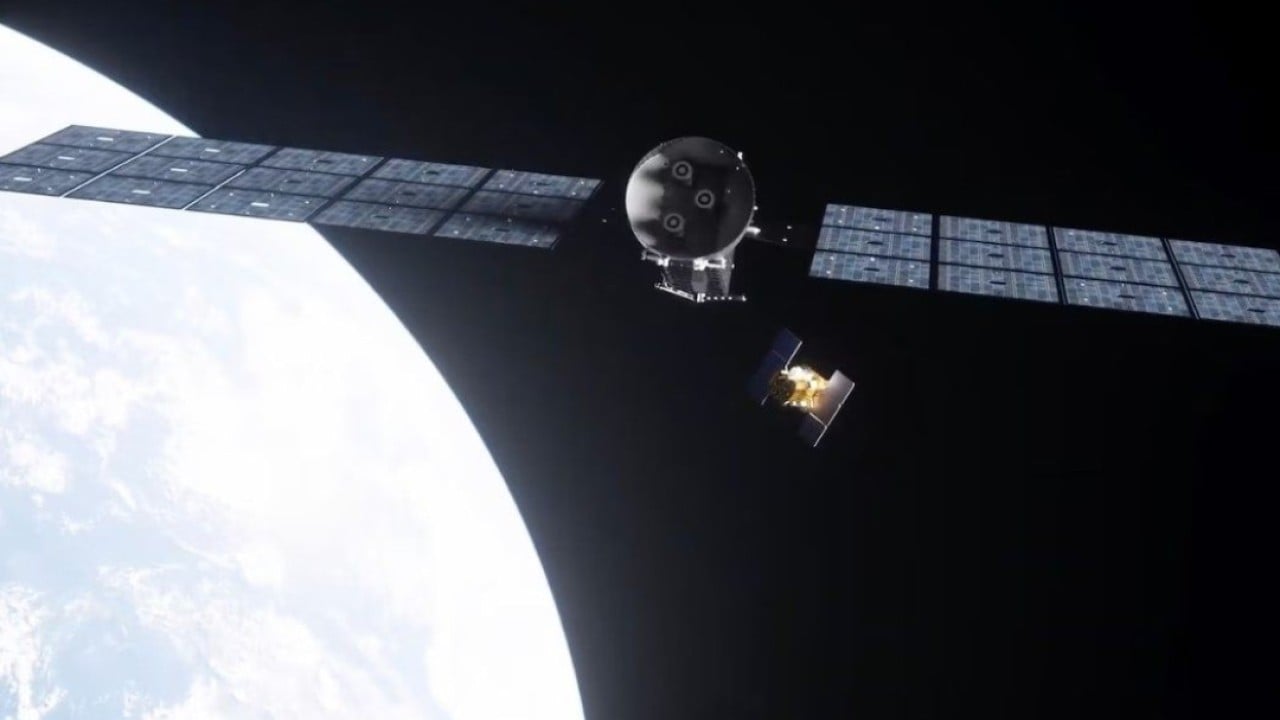
A glimmer of hope appeared when billionaire Jared Isaacman and SpaceX proposed a privately funded servicing mission under NASA's unfunded Space Act Agreement framework. Using a Crew Dragon capsule, civilian astronauts would rendezvous with Hubble, attach a propulsion pack, and boost the telescope into a higher orbit while potentially replacing degraded hardware.
It was an audacious proposal. It was also rejected by NASA safety panels and bureaucrats who preferred a slow, managed decline over the perceived risks of a commercial intervention.
Risk aversion has paralyzed modern space exploration. NASA operates under a zero-failure mindset that paradoxically prevents the agency from taking the exact kinds of calculated risks that built its reputation during the Apollo era. Touching a spacecraft that lacks docking fixtures is difficult, yes. The potential for damaging a national treasure exists. But the alternative is watching a multi-billion-dollar asset burn up in the upper atmosphere simply because administrators lacked the stomach for an orbital rescue operation.
Critics of the rescue mission often point out that the instruments themselves are outdated. They argue that spending capital on a thirty-year-old telescope is throwing good money after bad. That argument collapses under scientific scrutiny. Hubble’s wide-field camera and spectrographs remain extraordinarily potent tools, particularly when working in tandem with the infrared vision of newer telescopes. Multi-wavelength astronomy requires synergy between old and new platforms. Losing Hubble means losing the anchor of our historical archive.
The Inevitability of the Drop
Right now, drag is accelerating. As solar activity fluctuates, the outer layers of Earth's atmosphere expand and contract, catching low-orbit satellites like a microscopic handbrake. Without a reboost capability, Hubble’s descent curve will steepen sharply over the next decade.
When the end finally comes, it will not be cinematic. Operators will send a final command sequence, venting remaining fuel and locking internal shutters. Gravity will take over completely. As the spacecraft hits the denser layers of the mesosphere, frictional heat will tear the solar panels away, melt the primary mirror casing, and scatter twisted titanium across an unpopulated stretch of the southern ocean.
We are watching the slow-motion demolition of a scientific icon, not because it broke beyond repair, but because we decided it was cheaper to let it fall.
The lessons of Hubble's demise extend far beyond a single telescope. As low Earth orbit fills with thousands of commercial satellites, debris fields, and aging scientific platforms, we desperately need a working economy for orbital maintenance and de-orbiting infrastructure. If we cannot save a national treasure like Hubble with all our modern technology, we have zero chance of managing the looming trash crisis in our skies.
The gyroscopes have stopped. The orbit is decaying. The silence from mission control is deafening.