Standing in Aisle 4 on a Tuesday evening, you can feel the exact moment a household budget breaks.
It does not happen with a dramatic gasp or an abandoned shopping cart. It happens in silence. A hand reaches out for the familiar, dark-green box of pasta, pauses for three seconds over the white shelf tag, and drifts six inches to the left toward the yellow-and-black discount label. Multiply that micro-hesitation by ten million households across Ontario and Quebec, and you get the tectonic shift currently redrawing the map of Canadian retail.
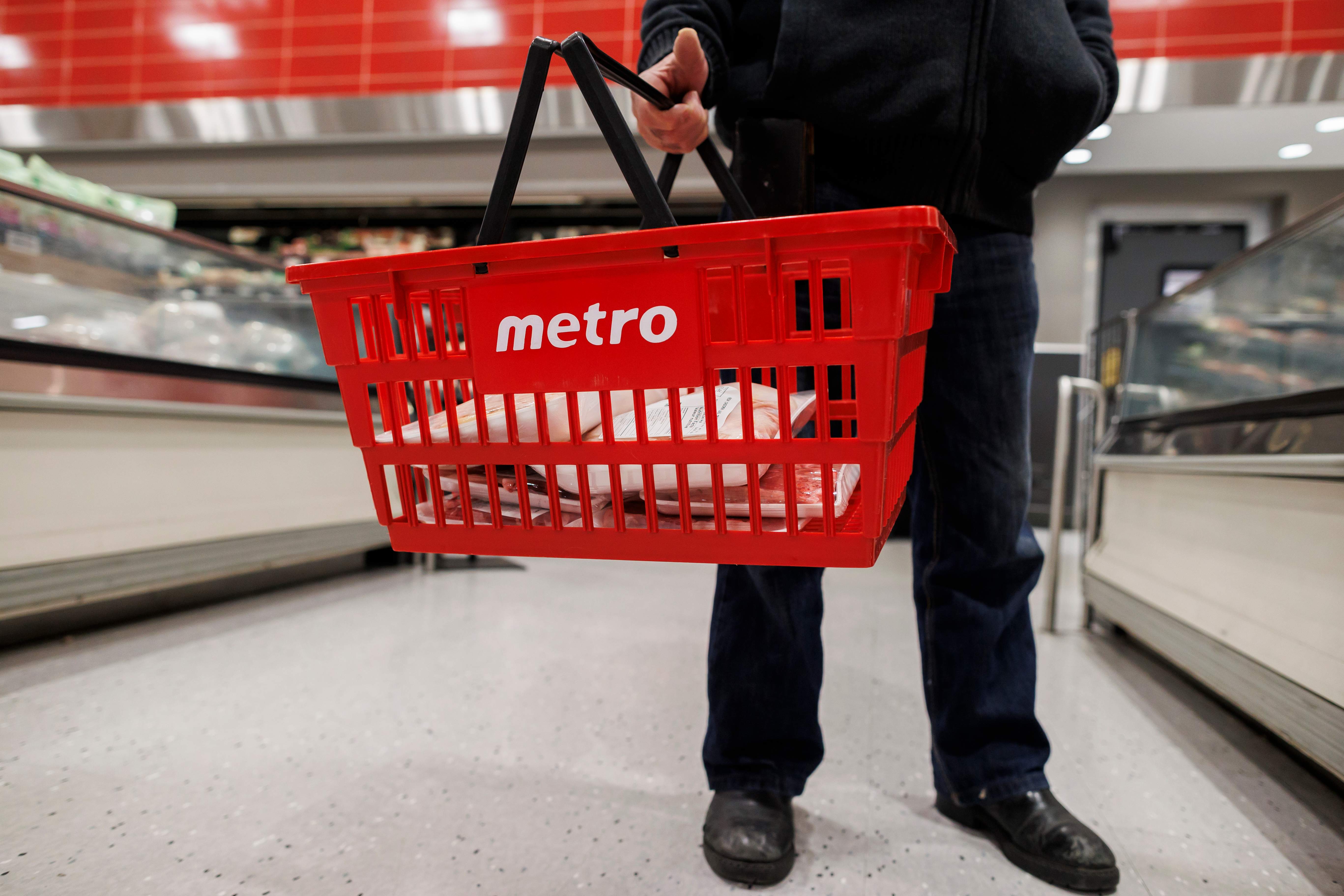
When Metro Inc. quietly confirmed in its financial filings that it had already converted 10 of its conventional Metro supermarkets into no-frills Food Basics discount banners—with nine more storefronts scheduled to undergo the exact same transformation—Wall Street analysts nodded and adjusted their spreadsheets. To them, it was just capital allocation. To the people pushing carts down those fluorescent-lit aisles, it is the physical erasure of the middle class grocery experience.
The Architecture of a Quiet Surrender
Consider a hypothetical shopper—let’s call her Elena—who has walked the same linoleum floors of her neighborhood Metro in suburban Toronto every Sunday for twelve years. She knows the baker by his first name. She knows which register has the sticky conveyor belt and where the good olive oil is tucked behind the artisanal crackers. Her store has soft overhead lighting, a full-service deli counter where someone will slice prosciutto paper-thin on request, and a floral section near the entrance that smells faintly of damp moss and lilies.
Now picture Elena walking through those same automatic doors four months later.
The lilies are gone. In their place stands a towering fortress of cardboard boxes stacked onto wooden pallets, overflowing with ten-pound bags of russet potatoes. The warm lighting has been replaced by high-efficiency, unforgiving white LEDs that bounce off concrete floors. The full-service seafood counter has been walled off, replaced by rows of glass-door freezers humming with uniform efficiency. The red-and-white Metro signage is dead; the bold, utilitarian black-and-red typography of Food Basics has taken its place.
This is not a renovation. It is a strategic retreat.
For decades, North American grocers operated on a predictable tiered ecosystem. At the top sat the boutique organic markets; at the bottom sat the bare-bones warehouse discounters; and right in the middle—capturing the vast, comfortable majority of suburban families—sat the conventional full-service supermarket. Metro was the undisputed king of that middle ground in Eastern Canada.
But the ground beneath that middle tier has liquefied. Persistent food inflation, elevated interest rates, and stagnant real wage growth have forced Canadian consumers into a permanent state of defensive shopping. When households allocate a drastically higher percentage of their take-home pay just to keep the refrigerator full, the luxury of a staffed cheese counter stops looking like an amenity and starts looking like a surcharge.
Metro executives did not wake up one morning and decide they disliked selling fresh-cut flowers. They looked at their own point-of-sale data and saw their customers walking out the door—not toward competitors, necessarily, but down the street to discount banners. The company realized a brutal retail truth: if they did not cannibalize their own conventional stores, Loblaw’s No Frills and Empire’s FreshCo would gladly do it for them.
Why Converting Beats Building From Scratch
To understand why 19 separate communities are watching their neighborhood supermarkets strip down to the studs, you have to understand the economics of modern real estate and grocery margins.
Supermarkets operate on razor-thin net profit margins, often hovering between two and four cents on every dollar that crosses the scanner. In a conventional Metro store, those pennies are constantly under siege by labor costs and shrink—the industry euphemism for spoiled perishable goods. A staffed bakery, a hot-food bar, and a custom butcher counter require skilled unionized labor and carry massive waste risks if three dozen roasted chickens go unsold by 8:00 PM.
Food Basics operates on an entirely different mechanical logic. Think of a conventional supermarket as a full-service restaurant where waiters bring menus, adjust the lighting, and clear your plates. A discount banner like Food Basics is a high-volume cafeteria: you grab your own tray, you bag your own groceries, and the menu is ruthlessly edited down to the items that move fastest.
By converting an existing Metro into a Food Basics rather than scouting new land and pouring fresh concrete, the parent company pulls off a financial sleight of hand:
- Zero real estate friction: The lease is already signed, the zoning permits are already approved, and the loading docks are already built.
- Immediate customer capture: The foot traffic already knows how to drive to that exact intersection; the grocer simply changes the value proposition waiting inside the doors.
- Instant margin protection: While discount stores sell items at lower retail prices, their stripped-down operating model—fewer stock-keeping units, pallet-to-shelf merchandising, and lower labor hours per square foot—allows them to maintain surprisingly healthy profitability.
In retail, this is known as banner optimization. On the ground, it feels like watching a neighborhood tailor pack up his sewing machine to make room for a bulk-bin warehouse.
The Invisible Trade-Offs Inside the Cart
I have spent years tracking consumer behavior across economic cycles, and there is a predictable psychological arc every shopper travels when their local store goes discount. At first, there is shock, followed closely by annoyance. You cannot find the specific brand of imported mustard you like. You have to dig through a cardboard crate to find an unbruised avocado. You have to pay a quarter just to unlock a shopping cart in the parking lot.
Then comes the receipt.
When a family of four watches their weekly grocery bill drop from $260 to $195 without sacrificing actual caloric volume, nostalgia evaporates quickly. Money talks louder than ambiance. Metro’s leadership has publicly noted in recent earnings briefings that discount banners continue to significantly outperform conventional stores in same-store sales growth. Shoppers are voting with their debit cards, and the ballot is overwhelmingly tilted toward survival over comfort.
Yet we rarely pause to measure what quietly disappears from a community when 19 conventional supermarkets vanish into the discount machine.
First, there is the human toll behind the counter. While corporate press releases emphasize that store employees are offered roles within the new format or transferred to nearby locations, the nature of the work changes fundamentally. Specialized craft roles—cake decorators, fishmongers, deli clerks—are absorbed into generalized stocking and cashier duties. The social fabric of a neighborhood market, built on small daily interactions across a service counter, gets flattened into transactional speed.
Second, there is the illusion of choice. A typical full-service supermarket carries upwards of 35,000 to 40,000 individual products. A hard-discount storefront slashes that assortment roughly in half, leaning heavily on private-label house brands like Selection and Irresistibles. When you shop at a converted Food Basics, you are no longer choosing between six different brands of canned tomatoes; you are choosing between the store brand and the one national brand that paid enough slotting fees to survive the cut.
This is how corporate consolidation happens in plain sight—not through dramatic monopolies, but through the quiet narrowing of everyday options.
The Bar-Bell Economy Comes for Your Kitchen
Zoom out from these 19 converted storefronts, and a much larger silhouette emerges. The grocery sector is mirroring the exact structural split tearing through the rest of the modern economy: the death of the middle.
Look at aviation, where passengers either cram into basic economy seats with zero legroom or pay thousands for lie-flat business pods. Look at hospitality, where budget motels and ultra-luxury resorts thrive while mid-tier roadside hotels struggle to justify their rates. Look at apparel, where fast-fashion giants and high-end luxury houses capture the market while traditional department stores file for bankruptcy protection.
We are living inside a bar-bell economy, weighted heavily at the two extremes with an empty steel bar in the middle.
Metro’s aggressive pivot—10 conversions completed, nine more underway, and likely dozens more being evaluated in boardrooms right now—is simply the grocery industry admitting that the middle class consumer is under severe structural strain. Even if headline inflation rates cool down to central bank targets, food prices rarely retreat to their pre-crisis baselines. They merely stop climbing quite so fast. A carton of eggs that jumped from $3.50 to $5.50 does not magically drift back down to $3.50; it settles at $5.29, permanently locking in a higher cost of living.
Faced with that reality, consumers do not bounce back to full-service shopping habits once economic headlines improve. Habits forged under financial stress harden into permanent behavior. Once a shopper realizes that the generic oats inside a plain yellow bag taste identical to the oats inside a glossy cardboard cylinder costing forty percent more, they rarely go back to paying the brand tax.
What Happens When the Next Nine Doors Close
For the neighborhoods slated to receive the next wave of nine conversions, the blueprint is already set. Over the coming months, white paper will go up over the front windows of nine familiar Metro locations. Inside, crews will unbolt the warm wood-veneer displays, haul away the specialty service cases, and wheel in heavy-duty steel racking designed to hold industrial pallets.
When the paper comes down, the doors will open to brisk foot traffic. Local residents will grab their quarter-unlocked carts, weave past mountains of discounted cereal boxes, and feel a strange mixture of relief at the lower prices and a faint, unspoken grief for the quieter, gentler store that used to stand on the exact same foundation.
Stand near the exit of one of those newly minted Food Basics stores on a rainy Sunday afternoon, and watch the faces coming through the checkout lanes. Nobody is complaining about the lack of a floral department. Nobody is mourning the vanished prosciutto slicer. They are staring down at long paper receipts, doing quick mental math, and breathing out a slow, tight sigh because the numbers finally fit inside the paycheck.