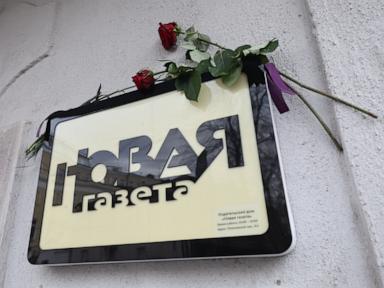
Russia's premier independent newspaper, Novaya Gazeta, did not collapse overnight from a single dramatic raid or an abrupt bankruptcy. It was systematically dismantled through a calculated campaign of administrative warnings, financial strangulation, and draconian wartime censorship laws that made truthful reporting a criminal offense. In March 2022, following the invasion of Ukraine, the publication suspended its operations inside Russia after receiving a second official warning from the state media regulator, Roskomnadzor, over its coverage of the conflict. Under Russian law, two warnings within a single year gave the authorities legal grounds to revoke a media outlet's license entirely—a mechanism the state eventually used to strip the paper of its print and online registrations months later.
To understand how a newsroom that survived the turbulent 1990s, the Chechen wars, and the murder of six of its own journalists finally went dark, you have to look at the mechanics of modern authoritarian control. The Kremlin rarely needs to send armed men into a printing press anymore. Instead, it relies on bureaucracy, tax audits, libel lawsuits, and regulatory traps that bleed an organization dry before the final gavel ever drops.
The Architecture of Administrative Strangulation
For nearly three decades, Novaya Gazeta occupied a paradoxical space in Russian public life. Founded in 1993 with seed money from former Soviet leader Mikhail Gorbachev—who used part of his Nobel Peace Prize money to buy the paper's first computers—it became the gold standard for investigative reporting in the post-Soviet space. Its reporters exposed state corruption, documented human rights abuses in the North Caucasus, and investigated the murky business empires of oligarchs close to the Kremlin.
The state tolerated its existence for years because it served a useful purpose. A fiercely critical newspaper with a relatively modest print circulation allowed the government to project an illusion of media pluralism to Western observers while domestic television networks, where the vast majority of Russians got their news, remained tightly controlled.
That tolerance evaporated entirely when Russia launched its full-scale invasion of Ukraine in February 2022. Within days, the Russian parliament passed sweeping amendments to the criminal code, introducing prison sentences of up to 15 years for spreading what the state deemed "fake news" about the Russian armed forces. Even using the word "war" or "invasion" instead of the Kremlin's mandated euphemism, "special military operation," became grounds for immediate prosecution and website blocking.
Roskomnadzor, the federal executive agency responsible for monitoring and censoring Russian mass media, became the primary executioner. The regulator did not immediately shut down Novaya Gazeta. Rather, it issued formal warnings over alleged violations of the "foreign agent" law—specifically, failing to attach mandatory, cumbersome disclaimers when mentioning organizations designated as foreign agents by the Ministry of Justice.
Under Russian media legislation, accumulating two such warnings within twelve months triggers an automatic court review to revoke a publication's media license. By late March 2022, the second warning arrived. Editor-in-chief Dmitry Muratov, who had been awarded the Nobel Peace Prize just months earlier in October 2021 for his efforts to safeguard freedom of expression, made the agonizing decision to suspend publication until the end of the hostilities in Ukraine.
It was a tactical retreat designed to save the staff from mass imprisonment. Yet the state was not interested in a temporary suspension. By September 2022, a Moscow court officially annulled Novaya Gazeta's print license at Roskomnadzor's request, followed shortly by the revocation of its online registration. Nearly thirty years of institutional history were erased with a few strokes of a bureaucratic pen.
The High Cost of Bearing Witness
Numbers rarely capture the human toll of investigative journalism, yet in the case of Novaya Gazeta, the casualty list is inseparable from the paper's identity. Long before the regulatory shutdown, the newsroom operated under a persistent cloud of physical violence and state indifference.
Six journalists and contributors affiliated with the newspaper were murdered between 2000 and 2009:
- Igor Domnikov, beaten to death in the entryway of his Moscow apartment building in 2000 after writing a series of articles exposing corruption in the Lipetsk region.
- Yuri Shchekochikhin, an investigative reporter and deputy editor who died suddenly in 2003 from a mysterious, rapid-onset allergic reaction while investigating high-level corruption involving the FSB and the Prosecutor General's Office. His medical records were classified, and many colleagues suspected poisoning.
- Anna Politkovskaya, perhaps the paper's most internationally recognized voice, shot dead in the elevator of her Moscow apartment block in October 2006. Her reporting had relentlessly documented war crimes and abuses committed by Russian forces and Chechen militias during the Second Chechen War.
- Stanislav Markelov, a human rights lawyer who frequently represented Novaya Gazeta, and Anastasia Baburova, a freelance journalist for the paper, both gunned down in broad daylight on a central Moscow street in January 2009.
- Natalya Estemirova, a human rights activist and frequent contributor who worked closely with Politkovskaya in Chechnya, abducted in Grozny and found murdered in neighboring Ingushetia in July 2009.
In almost every instance, while low-level triggermen were occasionally prosecuted, the masterminds who ordered and financed the killings were never brought to justice. The message to the newsroom was unmistakable. You can publish the truth, but the state will neither protect you nor punish those who silence you.
Despite this, the paper persisted. It adapted to the digital era, built a fiercely loyal subscriber base, and maintained rigorous editorial standards when most other Russian outlets had either folded or capitulated to state-affiliated buyers. Its survival was a testament to institutional stubbornness.
Why This Closure Differs From Earlier Crackdowns
Media crackdowns in post-Soviet Russia are nothing new. When Vladimir Putin first came to power in 2000, one of his earliest moves was dismantling the independent television networks NTV and TV-6, transferring their assets to state-controlled monopolies like Gazprom-Media. In 2014, following the annexation of Crimea, the Kremlin orchestrated the purge of Lenta.ru, replacing its independent editorial team with loyalists overnight.
The elimination of Novaya Gazeta, alongside the simultaneous shuttering of the radio station Ekho Moskvy and the exile of the independent television channel Dozhd (TV Rain), represents a fundamentally different phase of state control.
Earlier crackdowns targeted mass-reach platforms—television and major news portals—to secure the political loyalty of the broader electorate. Niche print newspapers and low-wattage radio stations were deliberately left standing as pressure valves. They allowed the urban intelligentsia to vent frustration and gave diplomats evidence that dissent was not entirely outlawed.
The 2022 purge dismantled the pressure valve itself. The transition from competitive authoritarianism to full-scale wartime censorship left zero margin for institutional ambiguity. An independent newsroom operating legally inside Russian borders became structurally impossible because the very act of newsgathering—verifying casualty figures, interviewing witnesses on the ground, questioning official defense ministry briefings—had been criminalized.
Furthermore, the financial ecosystem that sustained independent media was systematically severed. Even before the total ban, the Kremlin weaponized the "foreign agent" designation. Once a media outlet was slapped with this label, domestic advertisers fled immediately to avoid regulatory scrutiny and reputational risk. Revenue streams dried up overnight, forcing outlets to rely almost entirely on reader crowdfunding—a model that became perilous once payment processors and banking networks came under intense state surveillance.
The Exile Dilemma and the Battle for Relevance
Following the suspension of the Moscow newsroom, a contingent of Novaya Gazeta journalists fled the country and launched Novaya Gazeta Europe from Riga, Latvia, in April 2022. This split highlights the central strategic dilemma facing every exiled media organization, from Russian outlets in the Baltics to Belarusian journalists in Poland and Venezuelan reporters in Miami.
Operating from abroad guarantees physical safety and editorial freedom. Reporters can investigate war crimes, track sanctions evasion, and publish without looking over their shoulders for plainclothes police. However, exile comes with severe operational compromises:
- Loss of ground access: Investigative journalism thrives on shoe-leather reporting, unguarded conversations in local cafes, and physical access to regional archives and courtrooms. Reporting on a closed society from hundreds of miles away forces journalists to rely heavily on open-source intelligence, leaked databases, and anonymous remote sources—all of which carry higher risks of disinformation and entrapment.
- The censorship barrier: Roskomnadzor swiftly blocked Novaya Gazeta Europe's website inside Russia. While tech-savvy readers bypass these blocks using Virtual Private Networks (VPNs), the friction of circumvention inevitably shrinks the domestic audience, particularly among older demographics who relied on the print edition.
- The echo chamber trap: When an outlet is cut off from its domestic readership, its audience skews heavily toward the diaspora and Western analysts. Over time, editorial priorities can subtly drift away from the daily lived realities of ordinary citizens inside the country, reducing the publication's ability to influence domestic public opinion.
Meanwhile, Dmitry Muratov chose to remain in Russia, auctioning off his Nobel Peace Prize medal in June 2022 for $103.5 million to raise funds for Ukrainian child refugees. By staying behind while his colleagues rebuilt the brand abroad, Muratov embodied the agonizing split between preserving a historical legacy on home soil and keeping the journalistic mission alive in exile.
What Happens When an Institutional Watchdog Vanishes
The disappearance of a major investigative newspaper creates an information vacuum that social media cannot fill. Telegram channels and YouTube commentators have surged in popularity across Russia, offering rapid-fire rumors, leaked documents, and sharp commentary. Yet speed is not a substitute for verification.
A legacy newsroom like Novaya Gazeta provided something that anonymous Telegram administrators rarely offer: institutional accountability. Every investigative piece underwent rigorous legal vetting, multi-source verification, and editorial oversight. When a newspaper puts its masthead on an exposé about state embezzlement or military misconduct, it stakes its legal existence and institutional reputation on the accuracy of every paragraph.
Without established investigative outlets operating inside the country, corruption flourishes unchecked at the regional and municipal levels. Local governors, procurement officials, and state contractors no longer fear that a reporter from Moscow will arrive on a morning train to examine land registries or interview whistleblowers. The deterrent effect of a free press disappears entirely.
History shows that authoritarian regimes rarely collapse simply because they silence their critics, yet they frequently rot from within due to the resulting blindness. When leaders eliminate every independent mechanism capable of delivering bad news—whether about military logistics, economic stagnation, or public discontent—they end up believing their own state-sponsored propaganda. The silence in the newsroom eventually becomes an echo chamber inside the halls of power.
The presses in Moscow have stopped rolling, and the physical archives sit behind locked doors. Yet the thousands of investigations published over three decades remain a permanent ledger of a country's turbulent post-Soviet experiment—a record that no court ruling can retroactively unwrite.