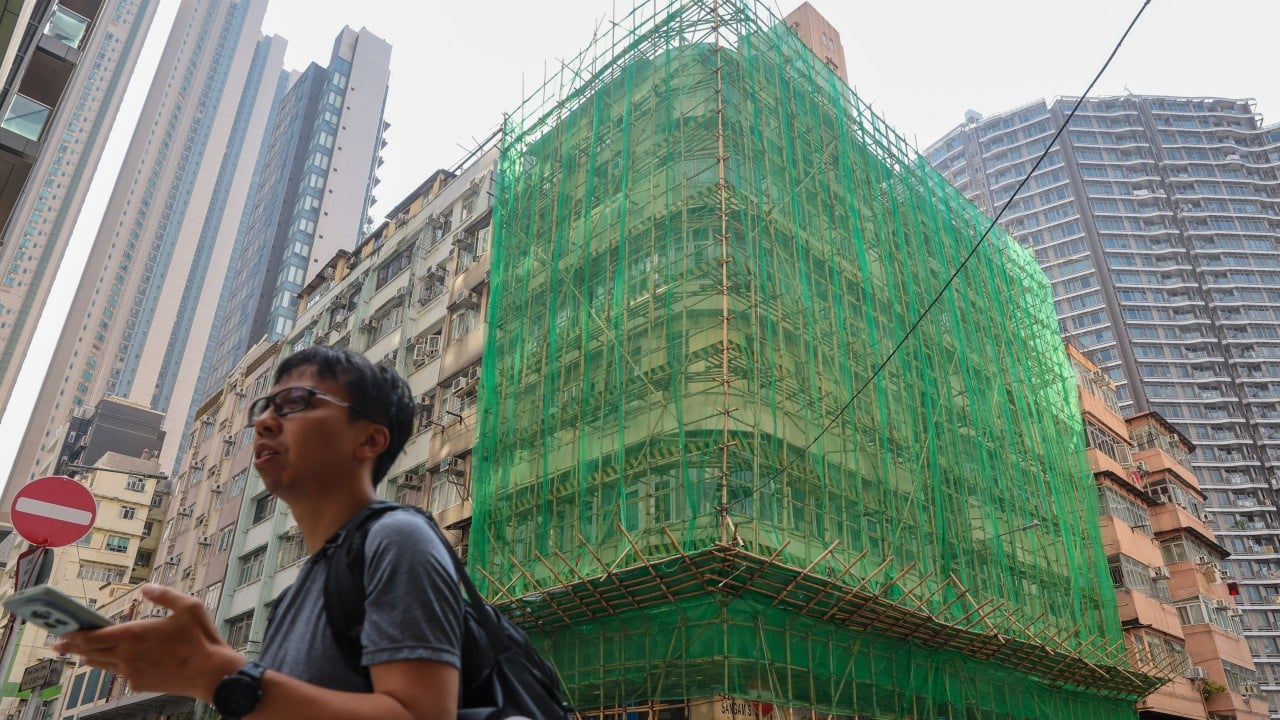
The dust never really settles when a job goes wrong. It lingers in the air vents, coats the inside of your coffee mugs, and gets tracked across the hallway carpet every time you walk past the half-demolished kitchen that was supposed to be finished three months ago.
If you have ever stood in the middle of a gutted living room holding an invoice that makes no sense while a contractor stops answering your calls, you know the specific, cold panic that settles into your stomach. Your life savings are sitting in a pile of drywall and exposed copper wire. Your phone buzzes, not with an update on the tile delivery, but with another excuse about a cousin's truck breaking down.
Now, flip the script.
Walk across town to a cramped garage office smelling of stale coffee and cedar sawdust. Here sits a different kind of casualty. Let’s call him Marcus, a composite of dozens of master carpenters, electricians, and general contractors who have quietly walked away from residential remodeling over the last few years. Marcus carries a twenty-year track record, full liability insurance, workers' compensation coverage, and a crew he pays a living wage.
Yet, for the past eighteen months, Marcus has lost bid after bid to phantom operators working out of unmarked vans. These fly-by-night outfits underbid him by forty percent because they skip permits, ignore building codes, pay cash under the table, and vanish the moment a pipe bursts behind a newly tiled shower wall.
This is the silent crisis that has hollowed out the home renovation sector. When bad actors flood an unregulated market, they do not just burn homeowners; they systematically drive honest professionals out of business. Which brings us to the quiet revolution currently unfolding across the trade industry—the establishment of a new, centralized renovation oversight body designed to verify credentials, enforce baseline standards, and draw legitimate contractors back into the market.
The Economics of a Broken Trust
To understand why a regulatory board or industry accreditation body matters so much right now, you have to look at what economists call "adverse selection." It is a clinical term for a deeply personal nightmare.
In any market where buyers cannot easily tell the difference between a high-quality service and a fraudulent one, price becomes the only metric. A homeowner looking at two quotes for a bathroom remodel—one for $35,000 and another for $19,000—naturally wants to believe the cheaper bid is simply a better deal. They do not see the invisible line items missing from that lower estimate. They do not see the lack of waterproofing membranes behind the cement board, the unpermitted electrical splices hidden in the attic, or the absence of insurance that leaves the homeowner personally liable if a worker falls off a ladder in their driveway.
When the low-ball operator inevitably abandons the project or leaves behind a structural hazard, the homeowner becomes cynical. They assume all contractors are crooks. Meanwhile, the legitimate builder—the one who priced the job honestly to account for code compliance, quality materials, and skilled labor—realizes he cannot compete against fiction.
Exhausted. Undervalued. Outgunned by con artists.
So, the good ones leave. They pivot to commercial construction where strict bonding and vetting keep the amateurs out, or they retire early, taking decades of irreplaceable trade knowledge with them. The residential market is left with a shrinking pool of overwhelmed elite builders booked out for two years, and a sprawling wild west of unvetted opportunists.
I learned this lesson the hard way five years ago during what was supposed to be a straightforward roof and gutter replacement. Because I rushed the vetting process and trusted a glossy flyer left on my porch, I ended up paying twice—once to the crew that nailed shingles straight over rotted decking, and a second time to a licensed master roofer who had to tear the entire mess off down to the rafters during a freezing November rainstorm. Standing in my attic with a flashlight, watching water drip onto my ceiling joists, I realized that as a consumer, I lacked the basic tools to verify who was actually qualified to touch my home.
How a Unified Oversight Body Changes the Rules
For decades, the home improvement industry has suffered from fragmented oversight. Depending on where you live, licensing might be handled at the municipal level, the state level, or not at all for general remodeling. A contractor banned in one county could simply drive twenty minutes down the highway, print new magnetic signs for his pickup truck, and start over.
The introduction of a dedicated renovation regulatory and accreditation body changes the physics of this marketplace. Think of it less like red tape and more like a high-security filter on a water supply. Its primary function is not to punish builders, but to make legitimacy visible, verifiable, and commercially valuable.
When sector leaders speak about this new body drawing legitimate contractors back to the market, they are pointing to three specific mechanisms that restore balance to the bidding process:
- Radical Transparency Through Verified Registries: Instead of forcing homeowners to play detective across clunky government databases, a unified body creates a single, accessible verification standard. Checking a builder’s standing, insurance validity, and dispute history becomes as simple as scanning a badge or looking up a registration number.
- Standardized Contracts and Escrow Protections: Most renovation disasters start with vague paperwork and lopsided payment schedules—like demanding fifty percent upfront before a single hammer is swung. The new framework establishes clear milestones tied to verified progress, protecting the homeowner's capital while guaranteeing the builder gets paid promptly when work is completed.
- An Even Playing Field for Pricing: By raising the barrier to entry and actively penalizing uncertified operators, the new body strips away the unfair cost advantage held by corner-cutters. Suddenly, a legitimate contractor's bid is compared against other legitimate bids, allowing quality, craftsmanship, and reliability to win the job again.
Consider what happens next when these pieces lock into place.
In a hypothetical scenario, imagine our composite builder, Marcus, sitting down at a kitchen table with a young couple planning a second-story addition. Six months ago, Marcus would have spent half the meeting defensively explaining why his quote was higher than the guy they found on a neighborhood social media group. Under the new framework, Marcus simply hands them his accreditation credentials. He shows them how their deposit is protected, how third-party inspections are baked into the timeline, and how his licensing is backed by a formal accountability board.
The conversation shifts immediately from suspicion to collaboration. Marcus gets to be a builder again, not a salesman fighting off ghosts.
Answering the Skeptics at the Kitchen Table
Whenever a new governing body enters a traditional trade sector, two immediate questions echo from opposite sides of the room. Homeowners worry about rising costs, while independent tradespeople worry about suffocating bureaucracy. Both concerns deserve an honest look, because pretending regulation has zero friction would be disingenuous.
First, does stricter oversight drive up the price of renovating a home? In the short term, eliminating ultra-cheap, illegal labor means the absolute lowest bids on the market will disappear. That can feel like a price hike if you were anchoring your budget to an unrealistic number. However, across the lifecycle of a home, compliance is vastly cheaper than remediation. Fixing unpermitted plumbing or structural framing errors routinely costs two to three times what it would have cost to build it properly the first time. You are not paying more; you are simply paying the real cost upfront instead of financing a disaster later.
Second, will small, honest one-person operations get crushed by administrative fees and paperwork? This is the tightrope any trade body must walk. If the barrier to entry requires a full-time compliance officer, the system fails the very artisans it aims to protect. That is why industry insiders have pushed hard for tiered accreditation—scaling the administrative requirements to the size of the company while keeping the core safety, insurance, and ethical standards non-negotiable. A solo finish carpenter should be able to prove his legitimacy in an afternoon, not drown in six months of legal filings.
There is also an undeniable emotional relief built into this shift. Right now, hiring a contractor feels like rolling dice with your largest financial asset. People delay critical repairs—putting off aging electrical panels, leaking foundations, and inefficient windows—simply because they are terrified of the hiring process. They stay stuck in homes that no longer fit their lives because the stress of managing a remodel feels insurmountable.
By establishing a clear benchmark of trust, the industry unlocks latent demand that has been frozen by fear. Homeowners who have been sitting on the sidelines finally feel safe enough to pull the trigger on projects, creating a wave of steady, predictable work for the exact professionals returning to the sector.
The Return of Craftsmanship
Great craftsmanship requires mental bandwidth. You cannot obsess over the tight miter joints on a custom oak staircase or the precise slope of a curbless shower floor if you are constantly stressed about whether your client trusts you or whether an unlicensed competitor is undercutting your payroll.
Throughout history, whenever a trade has transformed from a chaotic scramble into a respected profession—from early architectural guilds to modern civil engineering boards—the catalyst has always been self-policing standards. Professionals want to be proud of the badge they wear. They want the title of "renovator" or "general contractor" to carry weight again, rather than serving as the punchline to a joke about delays and cost overruns.
The arrival of this new oversight body is not a magic wand that will erase every dispute or delay overnight. Supply chains will still hiccup. Hidden rot will still be discovered behind century-old plaster walls. Weather will still ruin schedules. Renovation, by its very nature, is messy, loud, and unpredictable.
What changes is the foundation beneath the chaos. When problems arise behind the walls, homeowners and builders will finally stand on the same side of the table, bound by clear rules, mutual protection, and verified accountability.
Somewhere right now, a seasoned carpenter is wiping the dust off his blueprints, looking at the new standards, and realizing he does not have to abandon the trade he loves just to make an honest living. Tomorrow morning, the trucks with real names painted on the doors start rolling back into the neighborhood.


