Silence.
That is the first thing you notice when you stand along the perimeter fence of Royal Air Force Fairford on a damp Gloucestershire morning, watching the mist curl off the Cotswold pastures and cling to the cold steel of the chain-link barrier. For most of the year, the loudest sounds drifting across the stone walls of nearby villages are the low rumble of a tractor pulling a muddy trailer down a country lane, the sharp clatter of rooks lifting out of bare oak trees, or the distant murmur of Sunday walkers heading toward the River Coln.
Then the heavy bombers arrive, and the air itself changes pressure.
When the United States Air Force deploys its strategic fleet to this quiet corner of southwestern England, the entire geometry of the countryside shifts. Those who have lived beside high-security airfields know the sensation in their ribs before they ever hear it with their ears—a low, vibrating hum that rattles teacups on kitchen dressers and reminds everyone within ten miles that their pastoral postcode doubles as one of the most consequential forward operating bases in the Western alliance. Yet the recent indictment of three men accused of orchestrating a terror plot targeting RAF Fairford reveals a far more unsettling truth about modern security. The real danger rarely announces itself with the roar of jet engines. It arrives in encrypted messages, ordinary rental cars, and quiet reconnaissance along rural hedgerows while the rest of the world is looking at the sky.
To understand why federal and counter-terrorism prosecutors treat an indictment involving RAF Fairford with such gravity, you have to strip away the dry language of legal filings and look at what the base actually represents. Official press releases reduce the story to docket numbers, statutory charges, and the arrest of three suspects accused of conspiring to strike a military installation. Standard news coverage reads like a police blotter—who was charged, which court issued the indictment, and what statutes were cited. That clinical framing misses the human nerve running straight through the story.
The Anatomy of an Invisible Target
Consider a hypothetical scenario that mirrors the exact operational realities counter-terrorism investigators examine in cases like this. Picture a Tuesday evening in late autumn. Rain slicks the narrow B-roads winding past Kempsford and Whelford. Inside a warm terraced cottage a mile from the airfield's southern boundary, a family is clearing dinner plates while a local primary school teacher grades spelling tests at the dining table. Outside, along a dark stretch of road bordered by hawthorn hedges, a nondescript hatchback slows down near a drainage culvert overlooking the perimeter lights.
Nothing explodes. No sirens wail. To a passing motorist, it is just another driver checking a map or taking a phone call.
In the intelligence world, however, that hypothetical pause by the hedgerow is where the real battle begins. Modern terror plots aimed at hardened military installations rarely resemble the cinematic assaults of decades past. Security planners compare the defense of a strategic base to protecting a medieval fortress built inside a modern glass house. The walls inside the perimeter—armed patrols, biometric gates, radar arrays, blast barriers—are extraordinarily difficult to breach directly. So adversaries look at the glass house surrounding the fortress. They study the public roads that skirt the runway approaches, the local supply chains, the off-base housing, and the predictable rhythms of rural life that make a military installation accessible to the surrounding community.
When three men are indicted for orchestrating a plot against a facility like RAF Fairford, prosecutors are not merely alleging a sudden impulse of violence. An indictment of that scale reflects months of methodical tracking—piecing together financial trails, digital footprints, surveillance patterns, and the slow transformation of grievance into operational planning. It means investigators had to determine not only what the suspects intended to do, but how close they came to turning a quiet English parish into the epicenter of an international crisis.
Why Fairford Matters Far Beyond Gloucestershire
People unfamiliar with defense geography often ask why a relatively small airfield tucked between Swindon and Cirencester draws the attention of international militant networks and major intelligence agencies alike. The answer lies in a single phrase of military logistics: strategic reach.
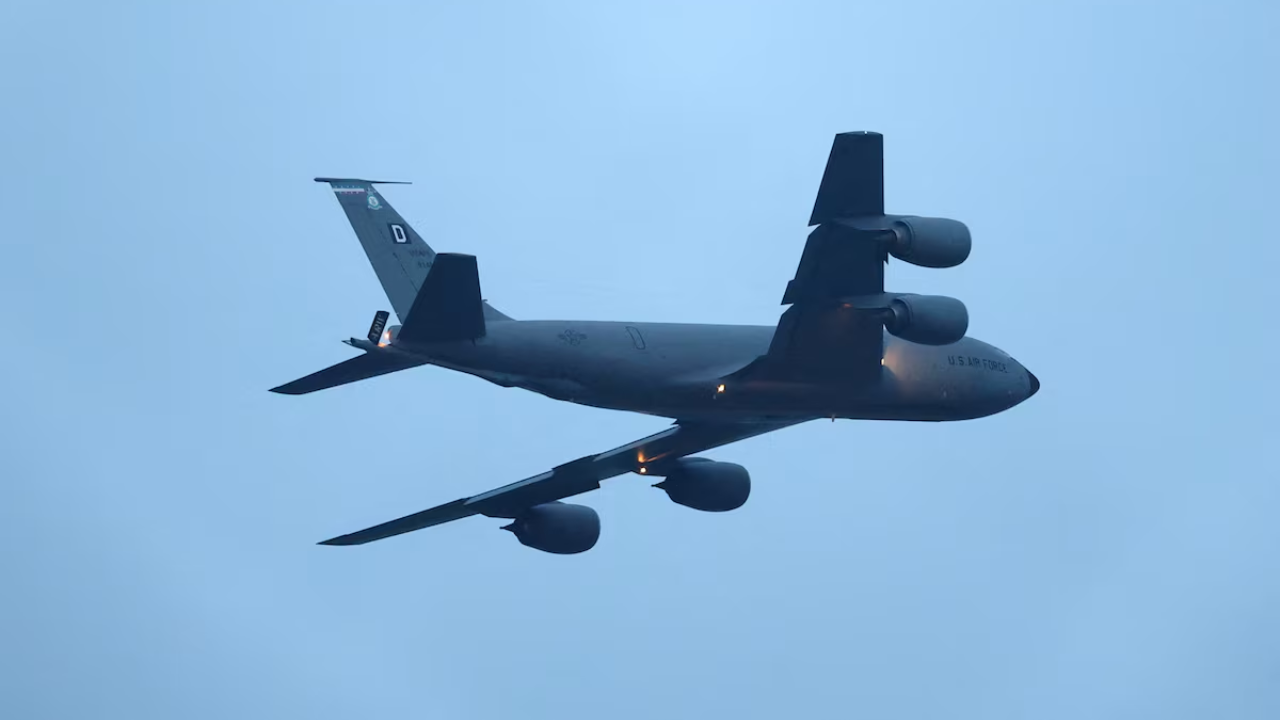
RAF Fairford is not an ordinary regional airstrip. Built during the Second World War to support Allied operations—including the airborne assaults of D-Day—and later expanded during the Cold War, the base possesses a ten-thousand-foot runway specifically engineered to handle the heaviest aircraft in the American arsenal. It is the United States Air Force's only European airfield dedicated exclusively to heavy bombers, regularly hosting B-52 Stratofortresses, B-1B Lancers, and stealth B-2 Spirits during Bomber Task Force rotations.
Think of Fairford as a forward springboard stretched across the Atlantic. When global tensions flare in Eastern Europe, the Middle East, or the High North, aircraft launched from this stretch of Gloucestershire tarmac can reach distant theaters hours faster than planes flying directly from the continental United States. That capability makes the base indispensable to NATO deterrence. It also places a permanent bullseye on the surrounding countryside.
I still remember the uneasy silence that settled over local pubs during past deployments when anti-war protesters camped outside the main gates and armed Ministry of Defence police patrolled the lanes in pairs. Neighbors who had spent years waving casually at American airmen buying groceries in Fairford town center suddenly found themselves checking the undersides of parked vans and noticing unfamiliar faces lingering near the perimeter fence. That low-grade vigilance never truly leaves a garrison community. You learn to read the mood of the base by the traffic on the A417 and the number of floodlights burning past midnight.
Inside the Indictment and What It Reveals
The indictment of three men over an alleged plot targeting RAF Fairford exposes how fragile the boundary between peaceful civilian life and geopolitical conflict has become. While judicial proceedings impose strict boundaries on what prosecutors can disclose prior to trial—protecting both the integrity of evidence and the constitutional rights of the accused—the core architecture of such a case follows a recognizable pattern established across twenty years of counter-terrorism prosecutions.
First comes the convergence of intent and capability. Law enforcement agencies monitor thousands of expressions of hostility every year, most of which never cross the threshold into criminal conspiracy. An indictment only materializes when investigators uncover overt acts: the acquisition of materials, the mapping of security vulnerabilities, the testing of communications security, or the coordination of roles among co-conspirators. The fact that three individuals stand charged together points directly to division of labor—a hallmark of organized plotting rather than isolated recklessness.
Second is the transnational dimension that almost always shadows plots involving American strategic assets on British soil. Because RAF Fairford is operated jointly under British sovereignty and United States Air Force command, any threat against it immediately triggers an intricate web of bilateral intelligence sharing. British counter-terrorism officers, MI5 analysts, and American federal investigators have to synchronize surveillance, evidentiary standards, and arrest timelines across two distinct legal systems. Arresting suspects too early risks collapsing a prosecution for lack of concrete proof; waiting too long risks a catastrophic failure of public safety.
It is terrifying to realize how thin that margin can be. Every successful interdiction looks anticlimactic from the outside precisely because nothing happened. No hangar burned. No runway was cratered. No families in Kempsford woke up to shattered windows. Yet that absence of spectacle often lulls the public into assuming the threat was exaggerated, when in reality it means dozens of invisible decisions went right before the public ever read a headline.
The Human Toll on Both Sides of the Fence
What gets lost in official briefings is the psychological weight borne by the ordinary people caught inside the radius of a disrupted plot.
Inside the perimeter wire are young technicians from Ohio, Texas, and North Carolina—many in their early twenties, living thousands of miles from home for the first time, working twelve-hour shifts in rain-swept maintenance bays to keep aging airframes airworthy. They are not abstract geopolitical symbols. They are kids who video-call their parents from dorm rooms between shifts and complain about the price of a pint in town.
Outside the wire are British families whose lives are woven into the base's daily rhythm—civilian contractors who maintain the grounds, local shopkeepers who rely on deployment surges to carry them through slow winter months, and elderly residents who still remember watching Allied transport planes lift off toward Normandy in June 1944. For them, news of a terror indictment does not land like a distant foreign-policy bulletin. It lands in their own front gardens.
When news breaks that suspects were allegedly planning an attack on their doorstep, the immediate reaction is rarely panic. It is a quiet, lingering recalibration of trust. Parents look twice at unfamiliar cars idling near school bus stops. Parish council meetings turn from discussions about pothole repairs and footpath maintenance to questions about CCTV coverage and police response times. The invisible cost of any terror plot—even a foiled one—is the slow erosion of ease in places that once felt immune to the wider world's violence.
Lessons Written in History and Vigilance
History offers a sobering reminder that strategic airfields have always attracted covert attention long before open conflict erupts. During the height of the Cold War, Soviet reconnaissance officers regularly drove the public roads around British V-bomber bases and American installations like Greenham Common and Fairford, logging tail numbers, shift changes, and radio frequencies from lay-bys disguised as weekend tourists. What has changed in the twenty-first century is not the strategic value of these sites, but the decentralization of the threat.
Today, adversaries do not need a state intelligence apparatus to conduct hostile reconnaissance. Commercial satellite imagery puts high-resolution overhead views of every runway and fuel depot on any smartphone screen. Encrypted messaging platforms allow small cells to coordinate across borders without ever meeting in a physical room. Off-the-shelf drones and dual-use components blur the line between hobbyist equipment and tactical weaponry.
Against that backdrop, security around installations like RAF Fairford has had to evolve from a static perimeter mindset into a dynamic, community-wide shield. Counter-terrorism units rely heavily on layered defense—combining advanced radar and counter-drone technology inside the fence with intelligence-led policing and public awareness outside it. Often, the decisive break in an investigation comes not from a high-tech satellite intercept, but from an alert local resident or business owner reporting behavior that simply did not fit the rhythm of the neighborhood.
We tend to think of national security as something handled entirely behind closed doors in London or Washington—a sterile chess game played with classified files and encrypted phones. The indictment surrounding RAF Fairford strips away that illusion. It reminds us that the front lines of modern defense run straight through ordinary country lanes, village high streets, and quiet hedgerows where the only sound on a Tuesday night is the wind moving through wet grass.
Stand along that Gloucestershire fence at dusk, when the runway lights flicker on in long amber lines stretching into the fog, and you can feel both the immense power housed inside the base and the quiet vulnerability of the world surrounding it. Somewhere beyond the treeline, courtrooms will spend months dissecting transcripts, phone records, and legal arguments to assign guilt and deliver verdicts. Meanwhile, out on the damp tarmac, the floodlights keep burning through the dark, illuminating a stretch of English countryside that never quite gets to go back to sleep.