At 5:45 in the morning, the air on the platform at Gare du Nord smells of wet wool, cold iron, and stale espresso.
For twenty years, I have watched the choreography of the Parisian commute. It is a silent ballet of resignation. Thousands of faces illuminated by the blue glow of smartphones, shoulders hunched against the damp chill of northern France, waiting for the RER B to swallow them whole and spit them out into the glass towers of La Défense or the cramped kitchens of the 11th arrondissement. Usually, there is a rhythm to it. A predictability. You trade forty hours of your week, and forty-two years of your life, for a quiet promise made in the ashes of 1945. Meanwhile, you can read related events here: What Happens When Police Shoot the Victim Instead of the Attacker.
Today, the platform is dead silent. The departure boards—usually flickering with the frantic pulse of a modern metropolis—glow with a single, stubborn word. Supprimé. Canceled.
To understand why French unions have done something they haven't managed in over a decade—forging a rare, ironclad alliance across bitter ideological divides to bring the nation to a grinding halt—you cannot look at a balance sheet in Brussels. You have to look at the hands of a hypothetical nurse we will call Claire, who lives in a third-floor walk-up in Saint-Denis. To explore the bigger picture, check out the detailed report by Reuters.
Claire is fifty-eight. She has spent three decades lifting patients, absorbing the quiet terror of emergency rooms, and watching hospital budgets shrink while administrative paperwork multiplies like mold. Under the government’s latest austerity push and labor tightening—the spiritual and fiscal descendants of Emmanuel Macron’s fiercely contested pension overhaul—the finish line she has been running toward since she was twenty-five just moved again. Not by miles, perhaps, in the eyes of an economist sitting in the Élysée Palace. Just by months. Just by a few percentage points of purchasing power. Just enough to break the back of a body that already aches when it rains.
When the headlines read that French unions unite for nationwide strikes, piling pressure on Macron's government, foreign observers often roll their eyes. They see a caricature. They see spoiled workers clinging to thirty-five-hour weeks and long lunches while the rest of the Western world hustles into the gig economy.
They have the story completely backward.
The Architecture of a Broken Promise
To grasp what is happening in the streets of Lyon, Marseille, and Paris right now, imagine you are playing a game of chess where the rules are rewritten every time you are three moves away from checkmate.
For generations, the French social model operated on a simple, unspoken covenant. Taxes would be high—among the highest in the developed world, hovering around 45 percent of GDP—and salaries would remain modest compared to the booming tech corridors of California or the financial districts of London. In exchange, the state promised a floor beneath which no citizen could fall. Healthcare would never bankrupt you. Higher education would never shackle your children to decades of debt. And when your knees gave out, or your eyes dimmed, you would be granted a dignified sunset. Not a wealthy one. Just a human one.
I remember sitting in a crowded brasserie near Place de la République during the winter of 2019, listening to a retired railway mechanic explain this to an American journalist. The mechanic took a sugar cube, dipped it into his black coffee, and watched the dark liquid climb up the white crystals until the entire cube collapsed into the spoon. "That," he said, pointing at the dissolving sugar, "is the acquis sociaux—our hard-won social rights. They never take the whole cube at once. They just dip it in the coffee, millimeter by millimeter, until there is nothing left to hold."
That slow dissolution is what finally forced the CGT, the CFDT, Force Ouvrière, and five other major labor confederations into the same room. In France, union politics are famously fractious; getting the radical, Marxist-leaning CGT to agree with the reformist, negotiation-focused CFDT is roughly equivalent to getting cats to march in formation. When they lock arms, it is not a routine Tuesday. It is a seismic warning.
The Invisible Ledger of Austerity
Why now? What pushed a fractured labor movement into total alignment against a weakened, minority government?
Consider the math of the French household over the last three years. While official inflation metrics have cooled from their post-pandemic peaks, the cumulative damage remains etched into every grocery receipt. Butter, eggs, electricity, heating oil—the non-negotiables of survival—have climbed relentlessly. Meanwhile, France’s public deficit ballooned past 5.5 percent of GDP, triggering stern warnings from the European Commission and credit rating agencies.
Trapped between Brussels' fiscal rules and a deadlocked National Assembly, Prime Minister and President alike turned to the oldest tool in the technocratic playbook: cutting public spending, freezing civil service wages, tightening unemployment insurance, and squeezing local municipal budgets.
To a macroeconomist, these are "structural reforms." They are necessary medicine to keep France competitive in a brutal global market, to attract foreign investment, and to prevent the national debt—now exceeding €3 trillion—from suffocating future generations. I understand that logic. Looking at the demographic pyramid of Europe, where fewer young workers must support a rapidly aging population, the numbers look terrifying. Anyone who pretends that money grows on trees in the Jardin du Luxembourg is lying to you.
Yet, spreadsheets do not bleed.
Let us return to a hypothetical scenario—a composite of dozens of families I have spoken with across the industrial belt of northern France. Picture Marc, a forty-four-year-old logistics coordinator in Lille. He doesn't work in the public sector. He isn't protected by civil service tenure. When the government tightens unemployment benefits—reducing the duration of payouts and making eligibility harder to reach—Marc feels the cold draft immediately. Why? Because in a sluggish economy, knowing there is a safety net allows workers to demand fair wages without fearing immediate destitution. When you shred that net, every boss in the private sector suddenly holds a sharper knife at the bargaining table.
Strikes in France are rarely just about the people holding the flares on the evening news. The train drivers, the air traffic controllers, the refinery workers, the teachers—they are the only ones left with enough structural leverage to pull the emergency brake. When they walk off the job, they are acting as the proxy army for millions of retail clerks, delivery drivers, and elder-care aides who cannot afford to lose a single day's pay.
The Ghost of Article 49.3
There is a deeper wound festering beneath the economic anxiety, and it has nothing to do with euros or centimes. It is a crisis of democratic legitimacy.
If you want to watch a Frenchman’s jaw tighten, simply say two numbers and a point: quarante-neuf trois. Article 49.3 of the French Constitution allows the executive branch to force legislation through parliament without a vote, unless the opposition can muster enough cohesion to pass a vote of no confidence.
Originally designed in 1958 by Charles de Gaulle to prevent the legislative paralysis that doomed the Fourth Republic, the mechanism was meant to be a nuclear option—a break-glass-in-case-of-emergency tool. Under Macron’s administrations, it became routine plumbing. Over twenty times, major bills—most notoriously the raising of the retirement age from 62 to 64—were rammed past elected representatives without a final parliamentary tally.
Democracy requires consent. Even when you lose a vote, you accept the outcome because the process felt fair. When the process itself feels rigged—when millions march peacefully in the streets, when 70 percent of the public opposes a measure in every credible poll, and the government simply bypasses parliament to enact it anyway—something breaks inside the civic psyche.
People stop believing in petitions. They stop believing in ballots. They begin to believe that only disruption speaks a language the palace understands.
The Anatomy of a Shutdown
Walk through the streets of Nantes or Bordeaux on a day of grève générale—a general strike—and the experience is radically different from the apocalyptic footage broadcast on twenty-four-hour cable news.
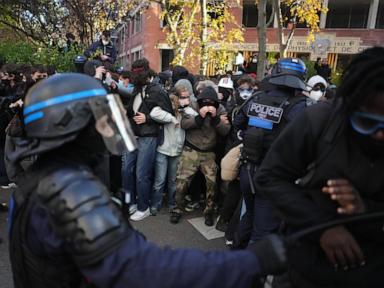
Yes, there are black blocs on the fringes. There are burning trash bins, the acrid sting of tear gas burning the back of your throat, and the rhythmic thud of riot police shields along the avenues. Those images travel fast because fire photographs well.
But step fifty yards back from the front line, and you find something else entirely. You find grandmothers wearing bright yellow union stickers next to twenty-year-old university students carrying hand-painted cardboard signs. You find brass bands playing old resistance songs while street vendors grill merguez sausages in clouds of cumin-scented smoke. There is laughter. There is fierce debate. There is a strange, electric tenderness among strangers who, for one afternoon, are no longer isolated consumers scrolling through feeds, but citizens standing shoulder to shoulder.
This is the part foreign analysts consistently miss. In Anglo-Saxon political culture, a strike is viewed as a market failure—an unfortunate breakdown in negotiations between management and labor. In France, a strike is a constitutional ritual. It is the living memory of 1789, 1871, 1936, and May 1968. It is the collective reminder that power does not originate in gilded ministries; it originates in the hands of the people who sweep the floors, teach the children, and drive the trains.
The Gamble at the Élysée
So where does this collision lead? Honestly, anyone claiming to know with certainty is guessing. We are in uncharted political waters.
Macron’s government is walking a razor’s edge, stripped of an absolute majority in parliament, squeezed between a surging populist right and a fragmented but defiant left. Every concession to the unions risks triggering a bond-market sell-off and a rebuke from Brussels. Every refusal risks turning a series of rolling twenty-four-hour strikes into a prolonged blockade of refineries, ports, and power grids—the kind of economic asphyxiation that brought the country to its knees in 1995 and forced Prime Minister Alain Juppé to retreat in humiliation.
Think about what happens next if neither side blinks.
First, the invisible arteries of the economy begin to clog. Garbage piles up along the Seine, turning the City of Light into a breeding ground for rats and fury. Jet fuel reserves at Charles de Gaulle Airport drop toward critical thresholds. Small business owners—bakers, florists, café proprietors who already survived lockdowns and energy spikes—watch their daily receipts evaporate as tourists cancel bookings and locals stay home.
The government is betting on fatigue. They are betting that inflation has hollowed out household savings so thoroughly that workers cannot afford to lose three, four, or five days of wages on the picket lines. They are betting that the public’s initial sympathy will curdle into anger once the school closures force parents to miss work and the commuter trains remain locked in their depots.
It is a cold, calculated gamble. And it might work—for a season. You can starve a strike out. You can wait until the union strike funds run dry and the winter rain drives the crowds back indoors.
But you cannot legislate away resentment.
What Survives the Smoke
Late in the afternoon, as the sun drops behind the Haussmannian rooftops, turning the zinc roofs the color of bruised plums, the crowds begin to thin. The chanting fades into the low hum of helicopters circling overhead. Street sweepers in neon green vests emerge from side alleys, spraying pressurized water across the cobblestones to wash away the ash, the flyers, and the residue of tear gas.
By tomorrow morning, some of the trains will run again. The stock exchange will open. Ministers will appear on morning radio shows to praise the "resilience of the Republic" and insist that the path of fiscal responsibility remains unchanged.
Yet down at Gare du Nord, beneath the fluorescent lights, Claire will still be standing on the platform at 5:45 AM. Her knees will still ache. Marc in Lille will still be calculating whether he can afford new winter coats for his kids. And millions of people across France will carry with them the quiet, hardening conviction that the promise made to their parents has been voided without their signature.
A government can win every parliamentary maneuver, satisfy every credit agency in Frankfurt, and clear every barricade before dawn—only to discover, too late, that it is presiding over a country that no longer believes a single word it says.