The smell hits you first. It is a specific, unmistakable blend of cheap glossy paper, damp wool coats, and the faint, sugary tang of peppermint sweets stacked near a humming conveyor belt.
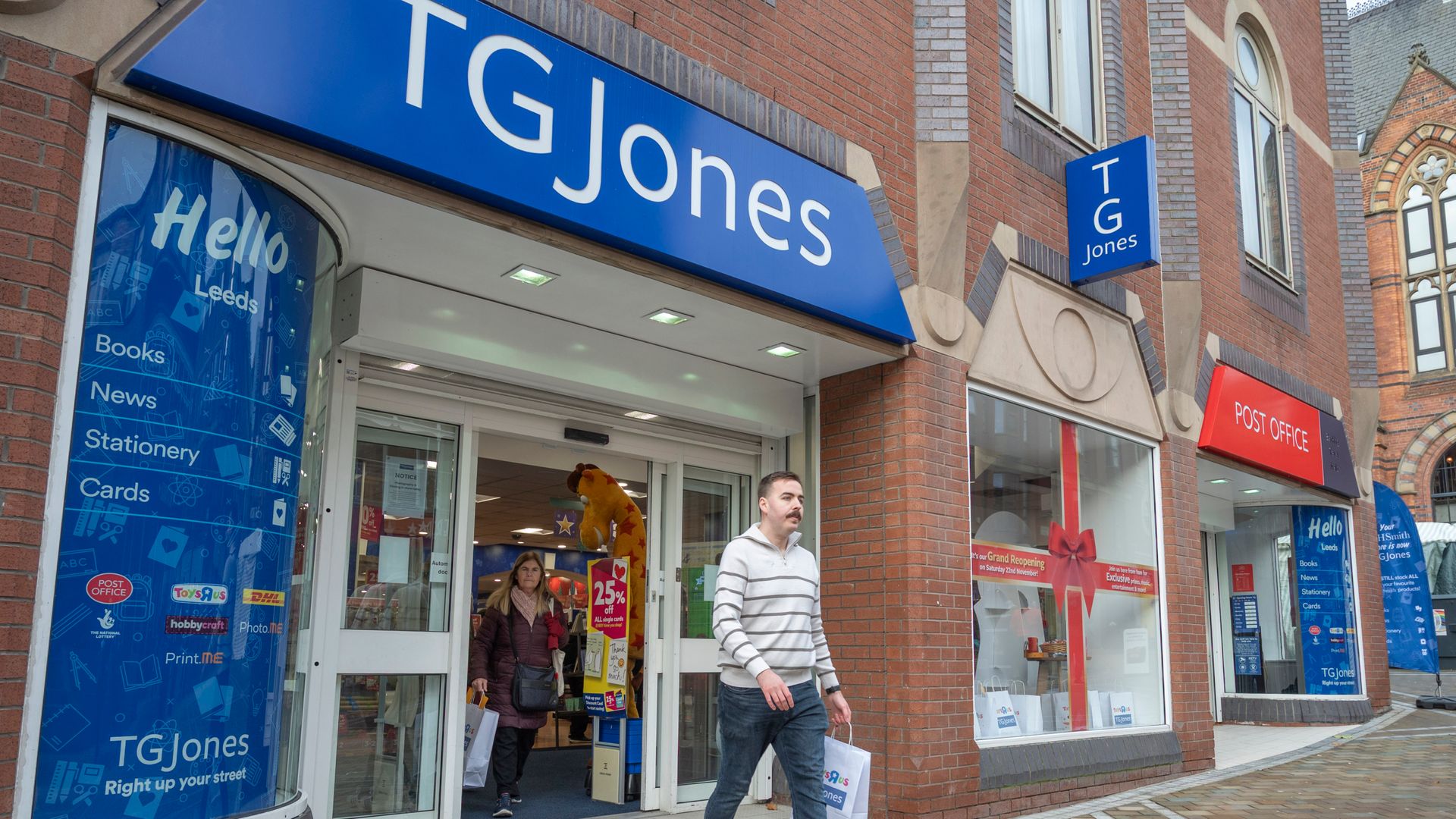
For decades, that scent belonged to WHSmith. Then, in a boardroom shuffle that cost millions in rebranding and left commuters blinking at unfamiliar blue signage, those doors reopened under a new banner. TGJones. A name engineered by consultants to sound approachable, reliable, and quietly British. A name meant to signal a fresh start for hundreds of high street shops after Modella Capital carved the legacy retail arm away from its booming travel-hub sibling.
Now, barely before the glue on the new window decals has properly cured, TGJones is back on the auction block.
Gone. Just like that, the grand experiment of reinventing the neighborhood stationer has hit a wall of cold spreadsheets and unforgiving commercial rents. If you look at the standard financial coverage of this sale, you will see a predictable parade of corporate jargon—restructuring, portfolio optimization, EBITDA margins, headwinds. Those words are anesthetic. They numb you to what is actually happening on a rainy Tuesday morning in towns from Swindon to Stockport.
To understand why the sale of TGJones matters, you have to step away from the ticker tape and stand next to someone like Arthur.
Arthur is a composite character, a hypothetical regular you could find in almost any mid-sized British town, yet his routine is painfully real. Every morning at 7:45 AM, Arthur walks past three shuttered storefronts, a betting shop, and two vape stores to reach his local TGJones. He does not come for a smartphone upgrade or a designer jacket. He buys a daily broadsheet, a pack of extra-strong mints, and, every third Tuesday, a birthday card for one of his seven grandchildren. He knows the manager’s name. The manager knows Arthur’s knees ache when the barometric pressure drops.
When a private equity firm puts a chain like TGJones up for sale, Arthur is not a line item. He is collateral damage in a game played with borrowed money and impossible timelines.
The Illusion of the Rebrand
Let us be completely honest about how we got here. Splitting a two-hundred-year-old retail institution into two halves—keeping the lucrative airport and railway station kiosks under the historic WHSmith name while offloading nearly five hundred high street stores to a restructuring specialist—was never a love letter to local communities. It was an amputation designed to save the healthy limb.
Travel retail prints money because a captive audience waiting for a delayed train at Paddington will happily pay four pounds for a bottle of water and a paperback thriller. High street retail, by contrast, is trench warfare.
When Modella Capital took the reins and unveiled the TGJones identity, the pitch was seductive. Strip away the corporate bloat of the old parent company. Give the shops an agile, independent focus. Refresh the aisles with toys, books, greeting cards, and stationery tailored to local shoppers rather than hurrying tourists. For a brief, hopeful moment, it looked like a genuine rescue mission. Fresh paint went up. New uniforms arrived. Staff who had spent years feeling like the neglected stepchildren of a travel conglomerate suddenly had a brand of their own to defend.
Yet paint cannot lower business rates. A cheerful new typeface cannot offset rising minimum wage obligations, soaring energy bills, or the relentless gravitational pull of next-day online delivery.
Think of a historic high street shop like an old Victorian terraced house sitting on shifting clay. You can repaper the parlor, polish the brass knockers, and hang crisp new curtains in the bay window, which makes the neighbors smile for a month or two. Underneath, however, the foundations are still sinking at three inches a year, and no amount of interior decorating stops the plaster from cracking.
By putting TGJones up for sale so soon after its birth, its owners are admitting an uncomfortable truth that retail analysts whisper behind closed doors. Financial engineering cannot outrun structural gravity.
What Happens When the Corner Anchor Vanishes
You might wonder why anyone should lose sleep over a shop that sells ring binders, puzzle books, and overpriced fountain pens. Surely Amazon can drop a pack of highlighters on your doorstep by sunset? Surely supermarkets already stock birthday cards next to the bananas?
That question misses the invisible architecture of town centers.
In retail economics, there is a concept known as footfall gravity. Large, familiar stores act as anchors. They pull human beings out of their houses and onto the pavement. Once a shopper walks into town to buy a printer cartridge or post a parcel at a TGJones counter—many of which house vital Post Office branches—they inevitably drift next door. They buy a sausage roll from the independent bakery. They grab a flat white from the corner café. They browse the charity shop across the road.
Remove the anchor, and the tide goes out for everyone.
I still remember watching this exact slow-motion collapse unfold in my own hometown a decade ago when our central department store finally locked its heavy brass doors. At first, people shrugged. Nobody had bought a sofa there in years anyway. Within eighteen months, the florist three doors down had closed because nobody was walking past her window anymore. Then the cobbler vanished. Then the bank branch pulled out, citing falling counter transactions. The street did not die from a single catastrophic blow; it bled out from a thousand missing errands.
That is the real stake hidden inside the TGJones sale. Across Britain, dozens of these stores are not merely stationers—they are de facto civic hubs housing essential postal services, parcel drop-offs, and the last reliable human faces on increasingly automated streets. When a prospective buyer looks at the TGJones balance sheet today, they are not evaluating community value. They are running a brutal triage algorithm. Which stores generate enough cash to justify their lease? Which ones get handed back to landlords? Which towns wake up to another expanse of brown corrugated paper taped across plate-glass windows?
The Private Equity Clock
To read the room properly, you have to understand how turnaround investors think. Unlike a family-owned business that measures success across generations, restructuring firms operate on a compressed, relentless clock. Every month an underperforming store stays open burns capital. Every lease renewal is a game of chicken with commercial landlords who would often rather accept a fraction of the rent than eat the crushing cost of empty property rates.
When TGJones hit the market, rumors immediately swirled around the usual suspects—rival discount chains, distressed-asset buyers, opportunistic retail consolidators looking to cherry-pick the best locations while letting the rest wither. Consider what happens next when a chain changes hands under distressed or accelerated circumstances:
- The cherry-pick: A buyer steps forward, not for all five hundred shops, but for the top hundred located in prosperous market towns and busy shopping centers.
- The orphan stores: The remaining sites—often in post-industrial towns that need a functioning high street most—are left stranded in a corporate shell with shrinking inventory and skeleton staffing.
- The supplier squeeze: Publishers, card makers, and stationery wholesalers tighten credit terms the second sale rumors leak, meaning shelves look sparser right when customers need a reason to walk inside.
It is a vicious, self-fulfilling spiral. Customers notice gaps on the shelves and assume the shop is closing. Because they assume it is closing, they stop browsing. Because they stop browsing, sales dip further, validating the exact spreadsheets that marked the store for closure in the first place.
I have walked through dying retail chains during that twilight phase, and the atmosphere is unforgettable. Fluorescent tubes flicker overhead without being replaced. Carpet tiles peel up at the corners, held down by strips of black duct tape. Behind the counter, staff members who have given twenty years of loyalty to a brand spend their lunch breaks scrolling job boards on cracked phone screens, trying to stay polite to shoppers asking why their favorite magazine has not arrived this week.
There is nothing abstract about a retail sale when you are the person locking the shutters at half past five, wondering if your key will still work in November.
Why Nostalgia Will Not Save the High Street
Here is where I have to admit something uncomfortable, even if it ruins the romantic mood.
We are terrible hypocrites about our high streets.
Every time a household name teeters on the brink, social media erupts with collective grief. People post sepia-tinted memories of buying their first school pencil case there in 1994 or hunting down revision guides before GCSE exams. Comment sections fill up with declarations that the town center is finished, that greedy landlords and clueless executives have ruined everything.
Yet if you checked the bank statements of half the people mourning online, you would find three Amazon parcels delivered that very week and zero receipts from their local stationer over the past six months.
You cannot run a bricks-and-mortar business on nostalgia. Fond memories do not pay electricity bills. If a shop relies on people popping in once a year for a wall calendar and a roll of Sellotape while ordering everything else from their sofa at midnight, no owner—whether a two-hundred-year-old heritage giant, a nimble private equity outfit, or a brand-new buyer—can make the math work indefinitely.
The uncomfortable truth behind the TGJones saga is that the modern high street has been caught in an identity crisis for twenty years, and we still have not agreed on what we want it to be. Should it be a convenience hub? An entertainment district? A showroom for online brands? Right now, TGJones sits awkwardly in the middle—too big to operate on the razor-thin overhead of an independent newsagent, yet too traditional to compete with the algorithmic speed of e-commerce giants or the ruthless discounting of out-of-town retail parks.
The Battle for the Soul of Everyday Errands
So what happens if a buyer actually steps up with a vision rather than a cleaver?
It is possible. Retail history is full of chains written off as dinosaurs that survived by radically shrinking their ego and sharpening their purpose. Think of how independent bookshops roared back from the brink of extinction a decade ago—not by trying to out-Amazon Amazon, but by turning their spaces into curated, deeply human sanctuaries where staff recommendations and community events mattered more than warehouse scale.
For TGJones to survive its next chapter intact, its next custodian cannot treat it as a museum of mid-century stationery. The stores that thrive in modern town centers are the ones that solve immediate, tactile friction. People still need passports photographed on the spot. They still need vital documents printed when their home ink cartridge dries up ten minutes before a court hearing or a flight. They still want to stand in front of a wall of greeting cards, running a thumb over textured cardstock to find the exact joke that sounds like their brother.
Above all, people still crave accidental human contact.
We rarely talk about that in economic reports, because you cannot put loneliness on a balance sheet. Yet for millions of older residents, remote workers, and young parents pushing prams through damp mornings, a ten-minute errand to a familiar shop is the only unscripted conversation they will have all day. When those counters disappear, replaced by self-checkout kiosks and locker banks bolted to petrol station walls, something quiet and irreplaceable drains out of civic life.
The sale of TGJones is not just another dull entry in the business pages. It is a stress test for whether Britain still has room for unglamorous, everyday utility on its main streets—places where you do not have to spend fifty pounds to feel welcome, and where someone behind the counter still recognizes your face.
Tomorrow morning at 7:45 AM, Arthur will push open those glass doors again, stepping over the threshold into the familiar scent of newsprint and peppermint, hoping the lights stay on until spring.