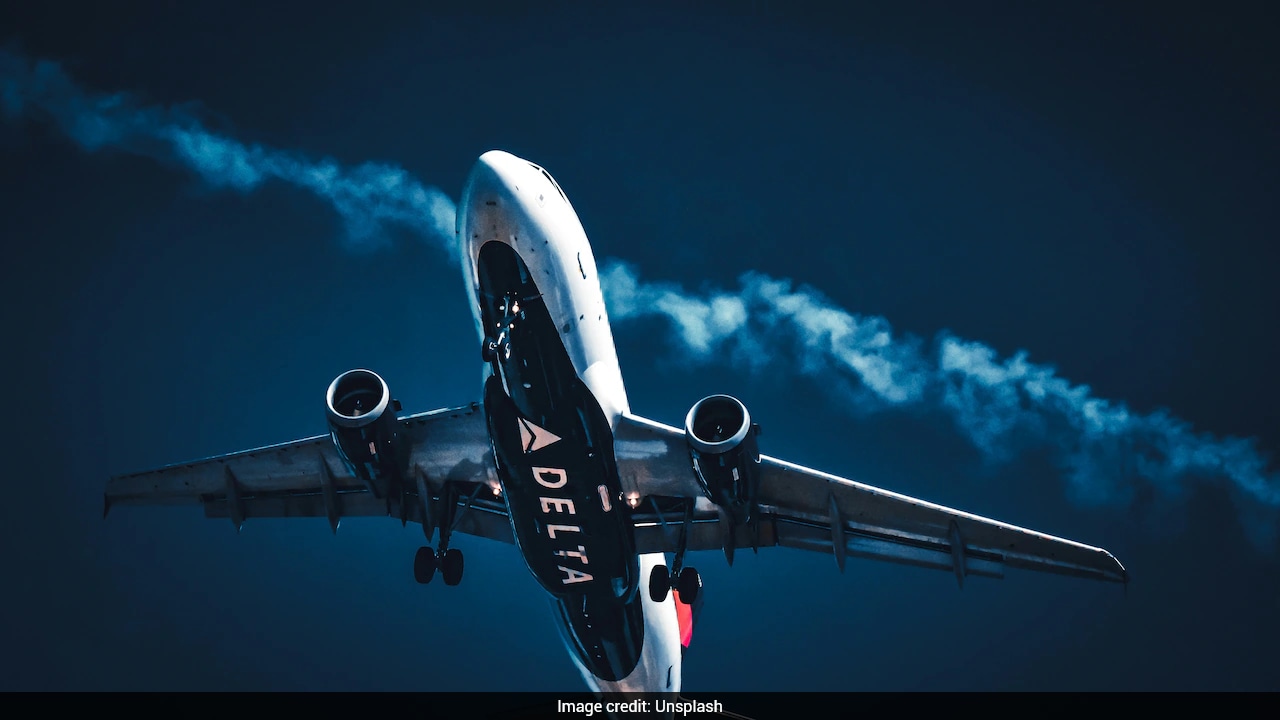
The descent into LaGuardia Airport is notoriously tight.
Pilots call it the river visual or the expressway visual, depending on the runway, but whatever the technical term, the reality remains the same. You are flying a multi-ton metal tube filled with human beings over one of the most densely populated urban stretches on earth. Below the left wing, the brick apartment blocks of Queens press tightly against broad avenues. Below the right, the East River churns gray and cold. Everything happens quickly. The checklists are crisp. The altitude clicks down in predictable, rhythmic increments. For a deeper dive into similar topics, we suggest: this related article.
1,500 feet.
1,200 feet. To get more background on this issue, comprehensive coverage is available on TIME.
1,000 feet.
Then, a sudden, surreal crackle over the radio headset breaks the rhythm.
It is not a standard vector change. It is not a notice about a wind shear advisory or traffic on the taxiway. Instead, Air Traffic Control delivers a phrase that belongs in a military briefing room thousands of miles away, not in the peaceful dusk of a commercial domestic flight preparing to land in New York City.
A potential rocket launcher threat has been reported near the airport approach path.
In an instant, the ambient noise of the flight deck alters. The quiet hum of the climate control, the soft clicking of the flight management system, the steady breath of two crew members—everything suddenly feels louder, sharper, and painfully precise.
The Weight of a Single Sentence
Every pilot spends hundreds of hours in flight simulators preparing for the impossible. They rehearse engine flameouts at low altitude. They practice flying with blown hydraulic systems, violent crosswinds, and dense fog that hides the tarmac until the very last second.
They do not rehearse hearing that someone on the ground might be pointing a shoulder-fired weapon at their aircraft.
That gap between expectation and reality creates a distinct psychological shock. The human brain craves order, particularly in high-stakes environments governed by strict checklists. When an air traffic controller relays an unverified report of a rocket launcher near an urban runway, it introduces a category of danger that sits entirely outside standard operational manuals.
What do you do with that information when you are less than two minutes from touchdown?
You do not panic. Panic is an unaffordable luxury at eight hundred feet above the ground. Instead, the mind narrows to a razor-thin focus.
The eyes dart between the primary flight display and the dark expanse outside the windshield. Every silhouette on a rooftop below suddenly draws intense suspicion. Every flash of headlights along the Grand Central Parkway demands a second look.
Was that a glare from a windshield? A camera flash? Or something far more sinister?
The sheer absurdity of the threat wrestles directly with the absolute necessity of taking it seriously. In civil aviation, trust in communication is the master key to survival. If the tower tells you there is a bird flock at five hundred feet, you look for birds. If the tower tells you there is an unverified report of a heavy military weapon on the ground, you prepare for the unthinkable while keeping your hands steady on the yoke.
How the Warning Reaches the Cockpit
To understand how a message this frightening ends up in the ears of a Delta crew, one must understand the invisible web of modern aviation security.
Airports are surrounded by layers of surveillance that the public rarely notices. Local police departments, federal intelligence agencies, airport security personnel, and maritime patrols continuously monitor the perimeter and the surrounding neighborhoods.
When a tip comes in—whether it is a frantic phone call from a bystander who mistook a plumber's PVC pipe for a shoulder-fired missile, a malicious hoax designed to cause chaos, or a legitimate intelligence alert—it triggers an immediate protocol.
The information flows up through security channels in seconds. From law enforcement dispatchers, it jumps straight to the Federal Aviation Administration's command center, and then directly to the controllers sitting in the radar rooms and airport towers.
Controllers operate under a strict doctrine: transparency. They are not permitted to filter out unsettling reports simply because they sound unlikely. If an intelligence or law enforcement source flags a potential threat along a flight path, the controller must inform the aircraft in that airspace.
They deliver the message in a calm, flat, professional monotone.
"Delta, be advised, law enforcement reports a possible threat in the vicinity of the approach..."
The controller’s voice carries no drama. It is stripped of emotion by design. Yet behind that flat tone lies a heavy obligation. The controller gives the pilot the facts as known, passing the burden of decision-making directly into the flight deck.
The pilots are left with a split-second choice. Do you abort the landing, push the throttles forward, climb back into the sky, and figure out a backup plan? Or do you trust that the report is a false alarm, keep the nose pointed at the pavement, and put the aircraft on the ground as quickly as possible?
To climb is to expose the belly of the plane to the surrounding land for a longer duration. To land is to bring the aircraft down right into the area where the threat was allegedly sighted.
There is no textbook answer. There is only the judgment of two people sitting in the front seats.
The Phantom Threat and the Architecture of Fear
We live in an age where the sheer possibility of violence can disrupt the complex machinery of global commerce. A single unverified sentence broadcast over a radio frequency can ripple through air traffic networks across the entire eastern seaboard.
If a flight aborts its landing at LaGuardia, it is not an isolated event.
Behind that flight sits a line of a dozen other aircraft, spaced by precisely calibrated miles. Behind them are planes waiting on taxiways in Atlanta, Chicago, and Miami, all linked to the same delicate schedule. A single disruption causes a cascading wave of delays that impacts tens of thousands of travelers who have no idea why their plane is suddenly holding over New Jersey.
Yet no controller or pilot will ever apologize for prioritizing safety over a timetable.
The historical context of aviation security justifies this caution. Modern commercial jets are remarkably tough against mechanical failures, weather, and system glitches. They are engineered with massive redundancy. If one engine fails, another carries the load. If one computer crashes, two back it up.
Human malice, however, is asymmetrical. A single man-portable air defense system, often designed decades ago for battlefield infantry, represents a threat that no commercial airliner is built to withstand.
Civilian aircraft do not carry military-grade countermeasures. They do not have flare dispensers to distract heat-seeking missiles. They do not possess radar warning receivers that chime when a targeting laser locks onto their tail. They rely entirely on one primary defense line: keeping dangerous weapons far away from the airport perimeter.
When that defense line appears, even for a moment, to have a tiny breach, the entire system holds its breath.
Inside the Cabin: The Unseen Divide
While the crew in the cockpit works through this sudden spike of adrenaline, a completely different reality exists just behind the flight deck door.
In the cabin, the lights are dimmed for arrival.
Passengers are snapping their seatbelts tight. A mother is quietly whispering to a tired toddler. A business traveler is closing a laptop and storing it beneath the seat in front of him. Someone else is staring out the window, watching the familiar grid of Queens streetlights glitter in the dusk, thinking about dinner, a warm bed, or an upcoming meeting.
They know nothing about the radio transmission that just took place.
This absolute divide between the flight deck and the passenger cabin is one of the most profound aspects of commercial flight. Passengers surrender complete control the moment they step onto the jetway. They place their lives into the hands of strangers who sit behind a reinforced door, trusting that those strangers possess the skill, calm, and clarity to handle whatever happens.
Imagine if the captain turned on the passenger address system and announced the truth: Ladies and gentlemen, we have been advised of a potential rocket threat below us, but we are going to land anyway.
Mass panic would erupt instantly. People would scream, brace for impact, or try to look out the windows for incoming projectiles.
Instead, the cockpit remains silent to the back of the plane. The pilots process the fear alone. They evaluate the parameters. They check the airspeed, the glide slope, the wind vector, and the altitude. They make their call without passing the emotional terror onto the three hundred people sitting behind them.
This quiet burden is part of the job description that never appears on a recruitment brochure. Pilots are paid not just for their manual dexterity or their ability to read navigation charts, but for their ability to carry immense weight without letting their hands shake.
The Search on the Ground
While the plane continues its descent, another high-stakes operation unfolds on the streets below.
Dozens of police cruisers, federal agents, and airport security vehicles sweep through the neighborhoods surrounding the airport. They scout parks, alleyways, rooftops, and waterfront piers. Searchlights cut through the dark. Officers look for anything out of place: an open trunk, an abandoned tube, a suspicious figure standing near a fence line with a heavy bag.
In almost every case, these sweeps yield nothing alarming.
A flashlight beam catches a sewer inspector holding a piece of heavy equipment. A citizen turns out to me camera enthusiast carrying a massive telephoto lens on a tripod. Or, frequently, the source of the report vanishes entirely into thin air, leaving behind only the ghost of a threat and a trail of nervous adrenaline.
Yet law enforcement cannot afford to assume it is a mistake until every block is searched. They work against the clock, knowing that another plane descends every ninety seconds into the same narrow corridor of sky.
The false alarm is the price of vigilance. In a world where a real threat only needs to succeed once, the security apparatus must treat every false alarm as if it were the real thing, right up until the moment it is proven harmless.
Touching Down
The runway lights at LaGuardia appear clearly through the front glass. Bright white and green beacons cut through the twilight, guiding the plane down toward the black asphalt.
The radio reports no further updates. The terrain below looks peaceful, ordinary, and thoroughly unthreatening.
The wheels hit the pavement with a firm, familiar thump. The thrust reversers deploy with a deep roar, slowing the aircraft down as it rolls toward the turnoff taxiway.
Inside the cabin, people unbuckle their seatbelts, reach for their phones, and start sending text messages to loved ones. Just landed. On the ground. See you soon.
They gather their bags from the overhead bins, complain lightly about the flight duration or the lack of legroom, and shuffle slowly out through the forward door into the terminal. They pass the open cockpit door, perhaps offering a brief nod or a quiet "thank you" to the two people sitting inside.
The crew nods back, polite and professional.
Outside the window, another airliner dips lower through the evening air, pointing its nose toward the same strip of pavement, riding the same radio waves, carrying hundreds more lives into the great, complex, and fragile embrace of the city below.

/https://i.s3.glbimg.com/v1/AUTH_e84042ef78cb4708aeebdf1c68c6cbd6/internal_photos/bs/2026/g/B/3vpkvHQKizRKAfzDxjXA/vini-jr-antes-e-depois.jpg)