Silence.
That is the first thing you notice when you step off the tarmac at Dover Air Force Base, or when you sit in the sterile, fluorescent-lit waiting room of a rehabilitation hospital in Bethesda, Maryland, listening to the rhythmic hiss of a ventilator and the squeak of rubber-soled nursing shoes against linoleum. In the movies, war is loud—a symphony of concussions, shouting, and helicopter blades chopping through humid air.
The aftermath is entirely different. The aftermath is quiet, heavy, and suffocatingly slow.
In January 2006, ABC News anchor Bob Woodruff learned this distinction in the most violent way possible. Embedded with the U.S. Army’s 4th Infantry Division near Taji, Iraq, Woodruff was standing in the hatch of an Iraqi mechanized vehicle when an improvised explosive device detonated nearby. Shrapnel tore through the left side of his face and skull. For thirty-six days, he lay in a medically induced coma. When he finally woke up, the man who had made his living with his voice could not speak. He could not remember the names of his children. He had to relearn how to read, how to walk, and how to exist inside a brain that had been violently scrambled by a shockwave.
Most of us know that part of the story. It made headlines around the world. What rarely makes the evening news is what happened in the years after the cameras left the hospital lobby, and why Woodruff and his wife, Lee, decided to turn their private nightmare into the Bob Woodruff Foundation—an organization that every year gathers in New York City for its annual Stand Up for Heroes gala and honors the wounded soldiers and families who are fighting a war nobody else can see.
The Invisible Wreckage of Survival
To understand why a charity gala matters—and why it is so much more than celebrities telling jokes and strumming guitars for applause—you first have to understand a grim statistical paradox of modern warfare.
In World War II, if you were severely wounded on the battlefield, you usually died. The ratio of wounded to killed was roughly two to one. In Vietnam, advancements in helicopter evacuations pushed that ratio to about three to one. By the time the wars in Iraq and Afghanistan reached their peak, body armor, tourniquets, and forward surgical teams had pushed survival rates to an unprecedented nine to one.
Survival is a miracle. It is also an unspoken crisis.
Because medicine got so good at keeping hearts beating, hundreds of thousands of young men and women came home with injuries that previous generations simply would not have lived to endure. Missing limbs, severe burns, and—most insidiously of all—traumatic brain injuries and post-traumatic stress. You can see a prosthetic leg. You can rally around a wheelchair. You cannot see a bruised prefrontal cortex or a nervous system stuck permanently in fight-or-flight mode at three o'clock in the morning in a quiet suburb in Ohio.
Consider a hypothetical composite—let’s call him Marcus—built from the real-world clinical profiles of thousands of post-9/11 veterans. Marcus comes home from his third deployment with all ten fingers and all ten toes. On paper, he is fine. In reality, the blast waves from a dozen close-range mortars have sheared microscopic axons in his brain. He forgets where he parked his truck at the grocery store. Loud noises make his chest tighten until he tastes copper. When his four-year-old daughter drops a ceramic plate on the kitchen floor, Marcus dives under the dining room table before his conscious mind even registers what happened.
Then comes the shame. And the isolation.
Now, step into the shoes of Marcus’s wife, Elena. Nobody gave Elena a medal. Nobody threw a parade for her when she quit her job as a dental hygienist to become a full-time case manager, physical therapist, financial planner, and emotional shock absorber. Across the United States, roughly 5.5 million military caregivers—spouses, parents, siblings, and children—spend billions of hours providing uncompensated care. They are the invisible scaffolding holding up our national defense. When that scaffolding cracks, entire families collapse into bankruptcy, addiction, or suicide.
When Bob Woodruff was lying in his hospital bed at Bethesda, surrounded by young Marines and soldiers with identical head wounds, Lee Woodruff noticed something chilling. The Woodruffs had ABC News behind them. They had world-class insurance, endless resources, and a national network of support. Yet they were still drowning in red tape, medical confusion, and sheer terror.
"What happens," Lee asked herself while sitting beside Bob's bed, "to the nineteen-year-old corporal from a small town in Arkansas whose family can't afford a hotel room near the hospital?"
That question became the foundation’s obsession.
Why Traditional Charity Gets Veterans Wrong
If you have ever watched a standard charity broadcast, you know the formula. Sad piano music plays over black-and-white footage. A narrator asks for pennies a day to save helpless victims. It is designed to trigger pity.
Veterans hate pity. Pity strips away dignity, and dignity is the primary currency of military culture.
Early on, the Bob Woodruff Foundation recognized that throwing money at vague, feel-good initiatives does nothing to solve structural abandonment. In the years following 9/11, tens of thousands of veteran-focused nonprofits sprang up across America. Many were well-meaning; some were predatory; almost all were fragmented. A veteran struggling with housing insecurity, chronic pain, and unemployment didn't need a free t-shirt or a one-off steak dinner. They needed an ecosystem that understood how all those problems fed into one another.
Think of a veteran’s transition back to civilian life like a bridge built over a deep canyon. The military spends millions of dollars training a civilian to become a lethal, hyper-vigilant warrior. It takes months of intense conditioning to rewire a human brain for combat. Yet when that service member leaves the military, the transition back to civilian life often consists of a five-day PowerPoint presentation and a handshake. We build half the bridge and expect them to jump the rest of the way.
When the Bob Woodruff Foundation honors wounded soldiers and their families—whether on the broadcast stages of ABC News or in the crowded ballroom of Lincoln Center—it isn't doing it to make the audience feel virtuous. It is doing it to fund the engineers building the rest of that bridge.
Instead of running its own isolated clinics, the foundation operates like a venture philanthropy firm for the military community. It vets, funds, and connects best-in-class organizations on the ground—programs that tackle everything from adaptive sports and service dog training to legal aid, fertility treatments for soldiers injured by pelvic blasts, and caregiver respite retreats.
Let’s pause on that last one for a moment, because it reveals the depth of what is actually at stake.
Imagine you are a mother whose twenty-two-year-old son suffered a catastrophic brain injury in Kandahar. You have fed him, bathed him, advocated with insurance companies, and monitored his seizures every single day for eight years. You have not slept through the night since the Bush administration. You have not had a conversation with another adult about anything other than medication dosages in half a decade. You love your son fiercely, and you are quietly dying of exhaustion.
A weekend retreat funded by a grant doesn't cure your son's injury. What it does is put you in a room with twenty other mothers who don't need you to explain why you cry in your car in the supermarket parking lot. For forty-eight hours, someone else watches the monitors. Someone else cooks the meals. You remember that you are a human being, not just a medical appliance. That single breath of air is often the difference between keeping a family intact and watching it disintegrate.
Inside the Room Where Laughter Meets Grief
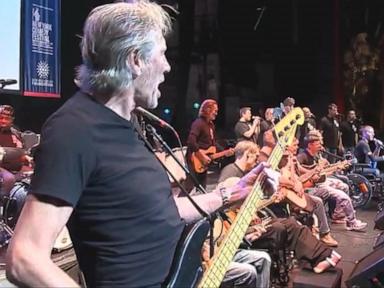
Every November, right around Veterans Day, the Bob Woodruff Foundation hosts Stand Up for Heroes in New York City. On the surface, it looks like a classic Manhattan entertainment event. Bruce Springsteen shows up with an acoustic guitar. Jon Stewart, Shane Gillis, or Jerry Seinfeld takes the microphone. Celebrities walk the red carpet, and ABC airs segments highlighting the night’s honorees.
If you only watch the three-minute news clip, it is easy to dismiss it as standard celebrity philanthropy. You have to look closer at the room to understand the alchemy happening there.
Military humor is notoriously dark. When you spend your life surrounded by mortality, gallows humor isn't disrespectful; it is oxygen. In the ballroom, sitting between corporate executives and Hollywood actors, are men and women missing limbs, veterans with traumatic brain injuries wearing tinted glasses to block out the painful glare of the stage lights, and Gold Star families carrying photographs of sons and daughters who never came home.
When a comedian makes a joke about prosthetics or the absurdity of military bureaucracy, the loudest, most cathartic laughter in the room comes from the tables of wounded warriors. For one night, the awkwardness vanishes. Civilians stop walking on eggshells around the disabled veterans, and the veterans stop feeling like museum exhibits of tragedy.
Then, the lights dim, and the spotlight shifts to the families.
This is the emotional core of the broadcast and the foundation’s mission. When ABC airs the stories of the honorees, it isn't just profiling a soldier who took a bullet; it is profiling the ecosystem of sacrifice around that soldier. It shows the husband who learned how to braid his daughter’s hair with one hand because his other arm was lost in an ambush. It shows the parents who mortgaged their house to modify a bathroom for a wheelchair. It shows Bob Woodruff himself—still occasionally searching for a word, a subtle reminder of the shrapnel that nearly killed him twenty years ago—standing beside them not as a distant news anchor, but as a fellow survivor.
That shared vulnerability changes the room. You cannot fake that kind of solidarity.
The Dangerous Comfort of Forgetting
Here is the uncomfortable truth that few people in media or politics like to say out loud: America has a short attention span, and war fatigue is real.
Less than one percent of the United States population has served in the post-9/11 military. Because there was no draft, and because the wars in Iraq, Afghanistan, Syria, and elsewhere were fought largely out of sight by an all-volunteer force, the civilian-military divide has grown wider than at any point in modern history. For ninety-nine percent of Americans, the war ended the moment the last plane left Kabul in August 2021. Life moved on. Gas prices, inflation, elections, and social media distractions took center stage.
For the families honored by the Bob Woodruff Foundation, the war did not end in 2021. It will not end in 2026. It will not end in 2046.
Traumatic brain injuries are degenerative. A soldier who suffered mild-to-moderate blast trauma at age twenty-three often develops early-onset dementia, severe mood disorders, and chronic migraines at age forty-five. Toxic exposure from open-air burn pits—the same chemical smoke that triggered aggressive cancers and respiratory failure in tens of thousands of troops—operates on a delayed fuse, detonating inside bodies decades after deployment.
When public attention fades, funding dries up. Small nonprofits close their doors. Policy makers move on to newer crises. And the veteran sitting at a kitchen table in rural Pennsylvania or suburban Texas feels the cold weight of being forgotten by the country that sent them overseas.
We love to say, "Thank you for your service," in airport terminals and grocery store checkout lines. It takes two seconds to say, costs nothing, and makes the speaker feel polite. Yet for many wounded veterans and their spouses, those five words have begun to feel like a period at the end of a sentence—a polite way of closing the conversation so nobody has to ask, "How are you actually doing?" or "What do you need?"
Honoring wounded soldiers and their families requires moving past gratitude into accountability. Since its inception, the Bob Woodruff Foundation has invested more than $165 million into programs reaching over 20 million veterans, service members, and family members. Those numbers matter, not because big figures look impressive in an annual report, but because every dollar represents a specific intervention at a specific breaking point: a mortgage payment covered before foreclosure, a suicidal Marine connected to a peer mentor at two in the morning, a spouse trained for a remote career so she can earn an income while caring for her husband.
What Courage Actually Looks Like
We tend to define heroism as a single, cinematic flash of bravery—jumping on a grenade, running through gunfire to drag a buddy to safety, holding a ridge against impossible odds. That kind of courage is real, and it deserves every medal pinned to a dress uniform.
There is another kind of courage that has no explosions and no soundtrack.
It is the courage of a veteran with severe aphasia standing in front of a crowd, fighting through the fog in his brain to speak his truth without flinching. It is the courage of a teenage daughter helping her father put on his prosthetic leg before school every morning so he can walk her to the bus stop. It is the courage of Bob and Lee Woodruff, who could have taken their miraculous recovery, retreated into private comfort, and never looked back at the trauma of 2006—yet chose instead to spend the rest of their lives standing in the breach for strangers.
Watch the footage from the tribute, and look past the stage lights, the celebrity appearances, and the network banners. Look at the hands gripping each other at the tables in the audience. Look at the quiet nods of recognition between spouses who have walked through the same fire.
A nation’s character isn't measured by the speeches it gives when troops march off to war; it is measured by who is still standing beside them twenty years later, in the quiet, when the cameras are turned off and the long work of healing begins.



