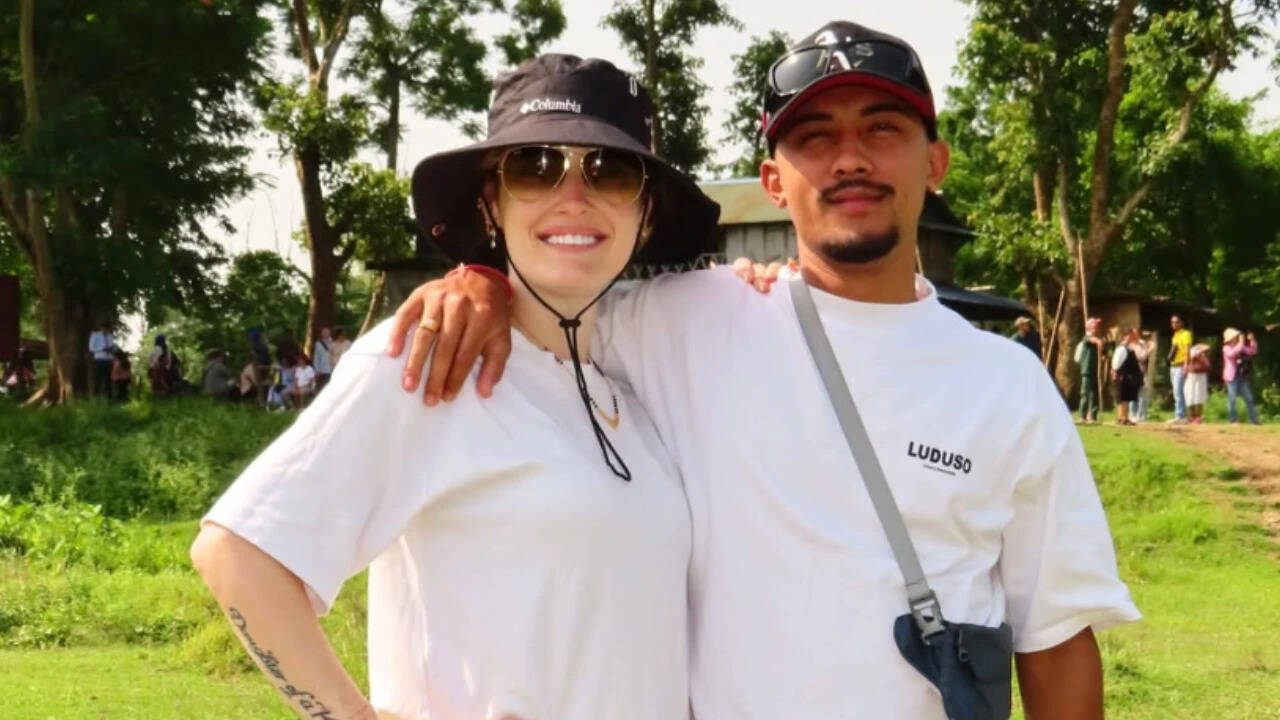
Every few months, the internet falls head over heels for the exact same story. A high-achieving Westerner—usually a burnt-out lawyer, a disillusioned tech worker, or an exhausted corporate consultant—packs a single bag, abandons their lucrative career path, and moves to a remote village in the Himalayas, Southeast Asia, or rural Europe. The headlines paint them as modern-day saints who cracked the code to human happiness.
They didn't crack anything. They just used a passport and a currency exchange rate to buy an exit ramp that the locals will never have. Read more on a similar issue: this related article.
The viral narrative surrounding the woman who abandoned a promising career in law to build a life in a Nepalese village follows a predictable, sentimental script. It frames her choice as a courageous rejection of Western materialism in favor of "simple living" and authentic human connection. It is a comforting fairy tale for anyone staring at a spreadsheet at 4:00 PM on a Tuesday.
It is also fundamentally dishonest about economics, privilege, and what actually makes a human life meaningful. Further analysis by Cosmopolitan explores comparable perspectives on the subject.
The Illusion of the "Simple Life"
When a Western professional moves to rural Nepal, they are not experiencing subsistence living. They are experiencing geo-arbitrage dressed up in linen clothes.
True subsistence living is defined by extreme vulnerability. When a monsoon washes out a terraced farm in the Annapurna region, the local family does not have a Chase Sapphire Reserve card, a wire transfer from parents back home, or an embassy to airlift them out if a routine infection turns septic. For a villager, simplicity is not an aesthetic choice; it is a lack of options.
I have spent over a decade working alongside international development economists and rural infrastructure planners across South Asia. I have watched countless well-meaning expatriates romanticize rural poverty as "spiritual wealth" while completely ignoring the quiet desperation of the people around them. The villagers aren't living simply because they rejected corporate greed. They are living simply because they lack access to capital, reliable healthcare, and secondary education.
When an outsider drops into that environment with a Western safety net—whether that’s residual savings, a remote consulting gig, or simply the permanent option to fly home if things get hard—they are playing a completely different game. Calling that "bravery" insults the people who actually have to survive there without a parachute.
Why High-Achievers Actually Run Away
The lazy consensus tells us that walking away from law school or a corporate firm is a triumph of the soul over the ego. In reality, it is often the ultimate act of ego preservation.
Consider the psychology of high-stakes professions like law. The path to becoming a practicing attorney is brutal, hierarchical, and merciless. You spend years at the bottom of the totem pole, enduring grueling hours, intense scrutiny, and the very real risk of failure. For someone accustomed to being the smartest person in the room, hitting the wall of corporate mediocrity is terrifying.
Leaving the arena entirely solves the problem instantly.
If you quit law to live in a Nepalese village, you never have to find out if you would have made partner. You never have to deal with the crushing mundanity of discovery documents or difficult clients. Instead, you trade a hyper-competitive environment where you are an average fish in an ocean for a rural environment where your basic literacy, foreign currency, and exotic status immediately make you the most fascinating person in the valley.
Psychologists call this status shifting. Rather than grinding through the painful middle stages of mastery in a difficult field, you change the scoreboard entirely. You move to a place where your mere presence confers prestige. It feels like enlightenment, but it is actually just a massive drop in competitive pressure.
The Moral Hazard of Voluntourism 2.0
The modern "drop-out" narrative almost always includes a charitable angle. The protagonist doesn't just move to the village; they start a small guesthouse, teach English, launch an eco-farm, or "empower" local women through a micro-enterprise.
This is where the fairy tale crosses from naive into actively counterproductive.
Development economist William Easterly spent decades documenting how well-intentioned outsiders routinely disrupt local economies because they prioritize their own emotional fulfillment over actual market mechanics. When an expat opens a cafe or a boutique lodge in a remote village using foreign capital, they aren't lifting the community up; they are often crowding out local entrepreneurs who cannot compete with subsidized, zero-interest lifestyle businesses.
Imagine a scenario where a former corporate lawyer uses $40,000 of personal savings to build an eco-friendly guesthouse in a mountain village. They charge Western prices, market it on Instagram to foreign trekkers, and pay local staff slightly above the regional average. On paper, it looks like a win. In practice, that expat just captured the highest-margin segment of the local tourism economy, inflated local land prices, and introduced a dependency on foreign aesthetics that locals cannot replicate without outside capital.
The Questions You Should Actually Be Asking
When stories like this go viral, search engines flood with predictable questions from burnt-out readers looking for an escape hatch. Every single one of those questions is built on a flawed premise.
Is moving to a developing country a good way to cure burnout?
No. Burnout is not a geographical problem; it is a boundary and agency problem. Moving to a place with unreliable electricity, complex visa bureaucracies, language barriers, and zero institutional support does not cure stress. It just replaces spreadsheet anxiety with logistical survival anxiety. Once the novelty wears off—usually around month eight—your nervous system simply finds new things to panic about.
How much money do you need to retire early in a rural village?
Asking this question assumes that a low cost of living equals low risk. It doesn't. Living cheaply in a rural area works wonderfully until you suffer a traumatic injury, a severe tropical illness, or a geopolitical crisis. If your budget doesn't account for a $50,000 medical evacuation flight and comprehensive international health insurance, you aren't financially independent—you are gambling with your life.
Do locals appreciate expats who adopt their traditional lifestyle?
Mostly, they find it bizarre. While rural communities in places like Nepal are famously hospitable, the idea that someone would voluntarily surrender access to modern medicine, legal protections, and global mobility to haul water and chop firewood makes zero sense to people working tirelessly to send their own children to universities in Kathmandu, London, or New York.
The Case for Staying in the Trenches
The great lie of the "quit your job and move to the mountains" movement is that meaningful work and modern urban life are mutually exclusive. They aren't. You do not need to flee to the Himalayas to live a principled, grounded, human-centric life. You just need the spine to build boundaries right where you are.
Furthermore, walking away from hard-won institutional power is a terrible trade if you actually care about making the world better.
A trained lawyer operating inside the legal system—doing pro bono work, fighting environmental degradation, defending tenants, or reforming corrupt corporate structures—possesses real, structural leverage. A former lawyer baking sourdough bread in a mountain village has a nice Instagram feed. One changes laws; the other changes their scenery.
If you hate your corporate trajectory, the answer isn't geographic escapism. The answer is radical occupational redesign.
- Audit your golden handcuffs. Most people claim they are trapped by their careers when they are actually trapped by their lifestyle inflation. If you live like a graduate student while earning a mid-career salary for three years, you buy yourself the exact same freedom to walk away—without having to leave your community, your family, or your healthcare system behind.
- Trade prestige for autonomy. You don't have to choose between a 70-hour-a-week Big Law nightmare and subsistence farming. The middle ground is vast. In-house counsel roles, boutique firms, government advisory positions, and independent consulting offer massive reductions in stress while keeping your hard-earned skills in play.
- Fix your local community first. Before booking a one-way flight to save a village halfway across the globe, look at the neglected neighborhoods ten miles from your apartment. Civic engagement, local politics, and community organizing require actual grit because you have to live with the long-term consequences of your decisions.
The Downside of the Contrarian Path
Choosing to stay, adapt, and build a sustainable life inside the modern economy is undeniably harder than running away. It lacks the cinematic romance of a fresh start. You don't get to reinvent yourself overnight, and nobody is going to write a viral profile about how you negotiated a four-day workweek and started volunteering at a local legal aid clinic.
You will still have to pay high taxes, sit in traffic, and deal with the messy compromises of modern society. It is slower, quieter, and far less glamorous than posting sunset photos from the foothills of the Himalayas.
Stop Romanticizing the Exit
There is nothing wrong with wanting a slower pace of life, and there is nothing wrong with falling in love with another part of the world. People move across borders for love, adventure, and curiosity every single day.
Just stop calling it a spiritual awakening when it's really a luxury sabbatical.
True courage isn't using a first-world bank account to opt out of modern stress. True courage is staying in the arena, mastering your craft, and building a life you don't need to run away from.