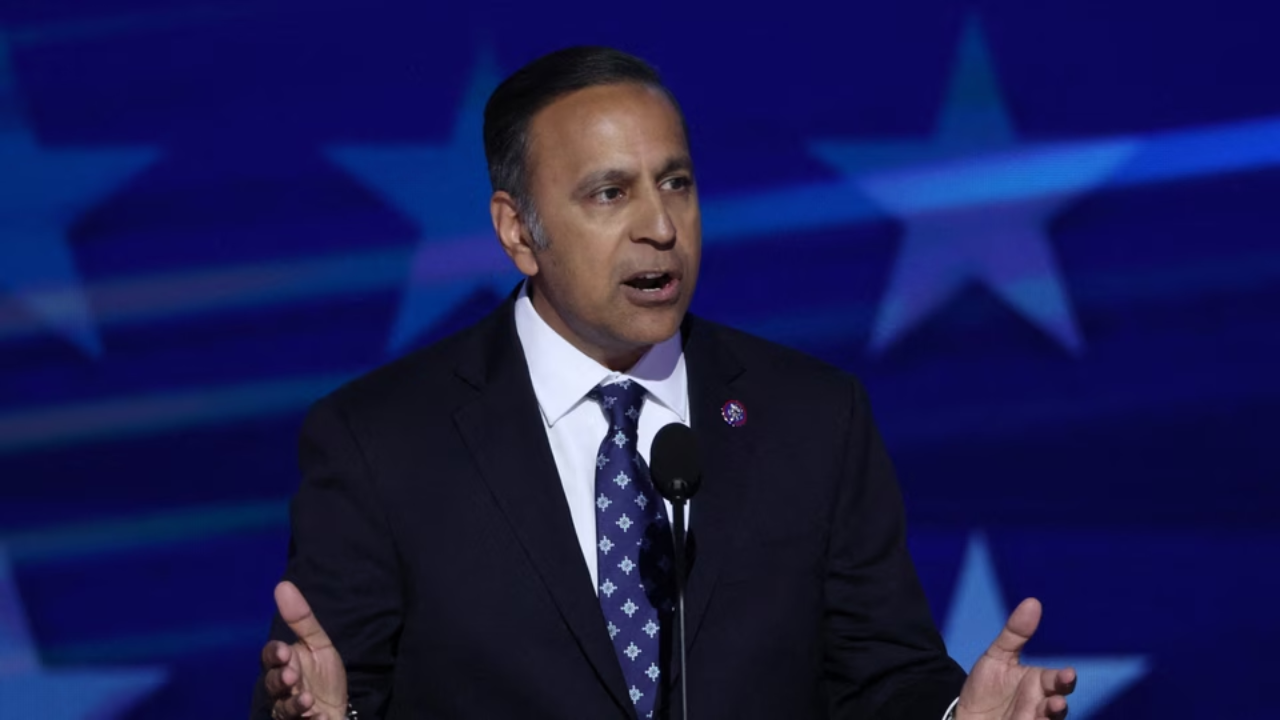
Two words. "Bye bye, Bo." That's all it took for Illinois Congressman Raja Krishnamoorthi to turn a standard congressional race post-mortem into a viral political dunk.
If you missed the dust-up, here's the short version. Bo Hines, a former college football player turned Trump-endorsed political newcomer, took a beating in a high-profile Texas Republican primary runoff. Within hours of the race being called, Krishnamoorthi—a Democrat representing Illinois's 8th congressional district—jumped onto social media to wave goodbye. It wasn't subtle. It wasn't particularly diplomatic either. Honestly, it was pure, unfiltered political theater, and it hit a nerve across Washington because of the bad blood these two had already built up over tech policy, crypto regulation, and partisan messaging.
Most political coverage treats these moments like isolated schoolyard taunts. They aren't. When a senior House Democrat from the Chicago suburbs takes a victory lap over a GOP candidate losing a primary two states away, there's always a deeper political calculation underneath the snark.
What Actually Happened Between Raja Krishnamoorthi and Bo Hines
To understand why Krishnamoorthi bothered tweeting about a Texas Republican primary at all, you have to look at how aggressive House Democrats have become about nationalizing local GOP fractures.
Bo Hines first burst onto the national scene back in 2022 when he ran for Congress in North Carolina's 13th District. Backed by Donald Trump and the House Freedom Caucus crowd, Hines narrowly lost that general election to Democrat Wiley Nickel. Instead of fading into the background or building a local base in North Carolina, Hines eventually pivoted to Texas, jumping into a crowded, bare-knuckle Republican primary where candidates tried to out-MAGA one another for months.
It didn't work. Texas primary voters rejected the carpetbagger label, and Hines went down in flames.
Enter Raja Krishnamoorthi. Normally, Krishnamoorthi spends his time focused on the House Select Committee on the Strategic Competition Between the United States and the Chinese Communist Party, or working on oversight committees. He isn't usually the guy throwing elbows on X (formerly Twitter) over out-of-state GOP primaries. Yet there he was, posting "Bye bye, Bo" right after the results solidified.
Why? Because Hines had spent months positioning himself as an anti-establishment firebrand who regularly attacked House Democrats—including members of the Oversight and Intelligence committees—as out-of-touch career politicians. For Krishnamoorthi, watching a loud critic get bounced by his own party's voters was simply too good to pass up.
The Carpetbagger Problem in Modern GOP Primaries
Hines's defeat in Texas highlights a massive headache for national Republican strategists. You can't just drop a Trump endorsement into any red district and expect local voters to salute.
Texas voters are notoriously protective of their own. Running in North Carolina in 2022 and then resurfacing in a Texas congressional race shortly after gave his opponents all the ammunition they needed. Attack ads practically wrote themselves. Local Republicans hammered him on his ties to the state, his shifting residency, and the sense that he was shopping around for any safe red seat that would have him.
Krishnamoorthi's taunt poked directly at that vulnerability. By keeping it short—"Bye bye, Bo"—he didn't even have to explain the joke. Political insiders and engaged voters immediately knew what it meant: another high-profile, MAGA-aligned candidate tried to parachute into a safe seat and got rejected at the ballot box.
Why Democrats Are Weaponizing GOP Primary Losses
If you've watched congressional messaging over the last few election cycles, you've probably noticed a shift. Democrats used to stay quiet during Republican primaries, operating under the old political rule that you never interrupt your opponent while they're making a mistake.
That rule is dead.
Today, figures like Krishnamoorthi actively amplify Republican primary chaos to drive a specific narrative for swing-district voters. When extreme or transplant candidates lose—or when they tear each other apart before November—Democrats step in to frame the GOP as dysfunctional and unfocused on actual governance.
Look at the mechanics of how this works in practice:
- Earned media on the cheap. A two-word post costs zero campaign dollars. Yet it gets picked up by political reporters, aggregated into news roundups, and shared across partisan networks, keeping the Republican loss in the news cycle for an extra 48 hours.
- Demoralizing the opposition's donor base. Bo Hines raised significant money from national PACs and high-dollar conservative donors who wanted another reliable vote in the Freedom Caucus orbit. Publicly mocking the return on that investment makes big donors think twice before writing checks to the next political nomad.
- Signaling strength to the base. Democratic voters constantly complain that their leaders bring a butter knife to a gunfight. When a relatively mainstream, policy-heavy lawmaker like Krishnamoorthi throws a sharp jab, grassroots supporters love it. It shows fight.
The Bigger Picture Behind Krishnamoorthi's Political Playbook
Don't mistake a snarky social media post for a lack of seriousness. If you look closely at Raja Krishnamoorthi's career in Congress since he first won his seat in 2016, he's been one of the sharpest strategic operators in the House Democratic caucus.
He represents a diverse, economically vital district northwest of Chicago. He raises massive amounts of campaign cash—consistently sitting on one of the largest war chests in the House—and he uses that financial muscle to help vulnerable Democrats across the country. When Krishnamoorthi weighs in on a race in Texas, he's usually thinking three moves ahead about fundraising, committee leverage, or national messaging.
From Policy Wonk to Viral Messenger
Most people know Krishnamoorthi from C-SPAN hearings, where he's known for methodical, prosecutor-style questioning. Whether he's grilling pharmaceutical executives, vaping company CEOs, or tech leaders over data privacy and TikTok's ties to Beijing, his brand is usually built on preparation rather than soundbites.
That's actually why the "Bye bye, Bo" comment landed so well. Coming from someone like Eric Swalwell or Alexandria Ocasio-Cortez, a viral dunk is just Tuesday. Coming from Raja Krishnamoorthi, it felt deliberate and pointed. It signaled that even the institutionalist wing of the Democratic Party is comfortable playing the modern attention game.
What Bo Hines's Defeat Means for Political Outsiders
The fallout from Hines's Texas loss goes well beyond one awkward week on social media. It serves as a reality check for a specific type of candidate that has flooded American politics over the last decade.
Having a compelling personal bio—former college wide receiver at NC State and Yale, young, telegenic, backed by high-profile political figures—gets you on cable news. It gets you invited to Mar-a-Lago fundraisers. What it doesn't do is knock on doors in July in Texas or convince skeptical county party chairs that you're going to stick around if things get tough.
Voters are getting smarter about spotting opportunistic runs. In both North Carolina and Texas, Hines faced intense scrutiny over his residence history and campaign finance disclosures. When your entire pitch relies on national talking points rather than local roots, any stumble in the primary becomes fatal. You don't have a reservoir of local goodwill to fall back on.
How to Read Political Taunts Without Falling for the Spin
When you see headlines like "'Bye bye, Bo': Raja Krishnamoorthi takes a dig at Republican after Texas election defeat," it's easy to dismiss it as clickbait noise. Most political social media chatter is.
Still, if you want to separate real political signals from empty noise, pay attention to three things whenever a lawmaker mocks an out-of-state opponent:
- Check the committee overlap. Did the candidate who lost campaign on issues directly tied to the mocking lawmaker's committee work? If yes, the taunt is usually settling a specific policy or personal score.
- Follow the fundraising trail. Look at OpenSecrets or FEC filings to see if the losing candidate's PACs previously spent money against the lawmaker's allies. Politics is a long memory business.
- Watch who amplifies it. If official party accounts—like the DCCC or NRCC—repost the jab within an hour, it isn't an off-the-cuff remark. It's a coordinated messaging test to see if a specific attack line resonates with voters.
Krishnamoorthi's quick jab at Hines checked all those boxes. It capitalized on an embarrassing primary defeat, reinforced the narrative that MAGA-aligned recruits are stumbling in key states, and gave Democrats a clean soundbite without spending a dime. For Bo Hines, the loss leaves his political future in limbo after back-to-back congressional defeats in two different states. For Krishnamoorthi, it was an effortless reminder that in Washington, nobody forgets who took shots at them—and everybody waits for their chance to wave goodbye.