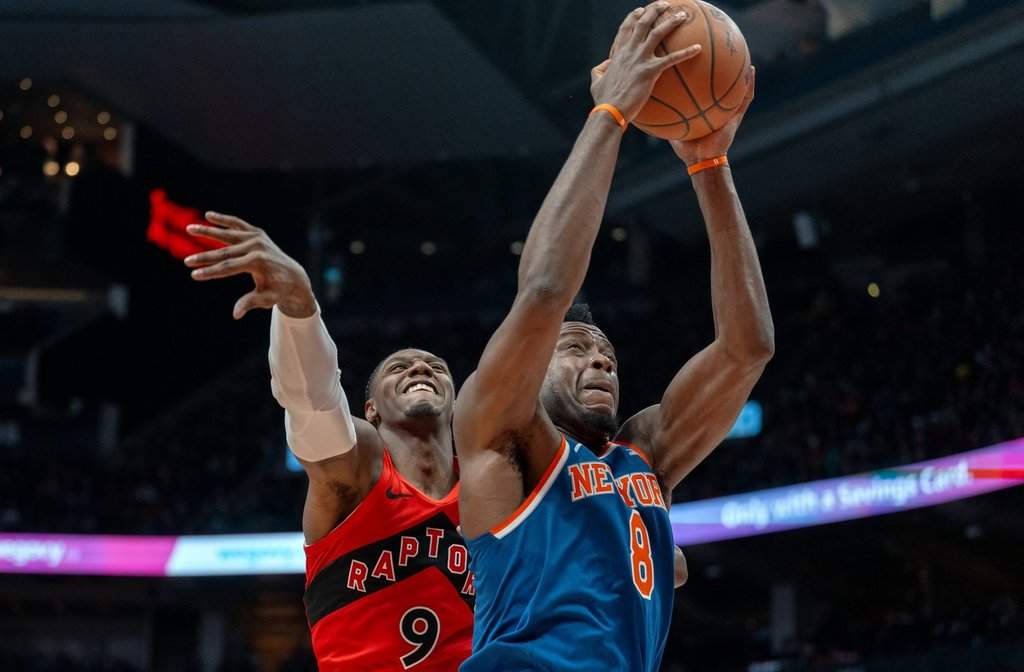
When an NBA locker room starts repeating the word "accountability" to reporters after a loss to the New York Knicks, the real problem has already metastasized. You hear it in the postgame scrum. Players stare at their shoelaces, coaches talk about "looking in the mirror," and everyone agrees the effort was unacceptable. Yet on the hardwood, the Toronto Raptors continue to surrender wide-open corner threes, fail to box out on weak-side rebounds, and collapse under physical half-court pressure. Calling for accountability after a defeat to a disciplined, physically imposing Knicks squad is not a solution. It is a symptom of a roster caught between developmental growing pains and structural flaws that sheer willpower cannot fix.
I have covered NBA locker rooms for over two decades, and the vocabulary of losing never changes. When a team lacks the personnel to execute a scheme or the veteran hierarchy to enforce standards in real time, players default to buzzwords. Accountability in professional basketball is not a postgame press conference posture. It is a specific, measurable chain of actions that happens in the second quarter when a wing misses a rotation, and a teammate immediately barks the correction before the inbound pass. Meanwhile, you can explore related developments here: Two Point Seven Million Dollars for Friday Nights.
The Anatomy of a Breakdown Against New York
Playing the New York Knicks exposes every structural shortcut a basketball team tries to take. New York operates with a deliberate, bruising identity built on offensive rebounding, physical point-of-attack defense, and relentless exploitation of mismatches. When Toronto steps onto the floor against that brand of basketball, their defensive habits are put under a microscope.
The breakdown rarely starts with a lack of hustle. Most NBA players run hard. The failure happens in the micro-rotations—the split-second decisions required when a primary defender gets screened out of a play. Against New York, Toronto’s help defenders routinely over-help from the strong side, leaving shooters unguarded in the corners, or they fail to tag the rolling big man when the ball handler turns the corner. To explore the complete picture, we recommend the detailed article by Yahoo Sports.
Watch the film from any of these matchups and a clear pattern emerges. A Raptors guard gets caught on a solid screen at the top of the key. The big man drops too deep to protect the rim, conceding a rhythm pull-up jumper. If the big steps up to contest, the weak-side forward fails to sink into the paint to wall off the lob or the dump-off pass. By the time the ball swings twice, Toronto is scrambling in recovery mode, fouling jump shooters or giving up uncontested put-backs because nobody is in position to box out.
Players call this a lack of accountability because it feels like an effort issue when you are watching the opponent celebrate another second-chance bucket. In reality, it is a communication and trust deficit. If a player does not trust that his teammate will rotate behind him, he hesitates. In the modern NBA, a half-second hesitation is the difference between a contested miss and a layup.
Why Locker Room Clichés Fail in the Modern NBA
There is a massive gap between public contrition and private enforcement. When young rosters lose to established playoff contenders like the Knicks, the postgame quotes follow a predictable script. Everyone takes responsibility. Nobody points fingers. That sounds noble in print, and fans initially appreciate the maturity, but it frequently masks an absence of genuine leadership.
True accountability requires friction. It requires a veteran voice in the film room willing to pause the tape and ask a high-usage scorer why he walked back on defense after a missed shot. It requires a coaching staff willing to pull a starter thirty seconds into a half if he blows a coverage that was emphasized during the morning shootaround.
Consider a hypothetical scenario common across rebuilding or retooling franchises. Suppose a young forward misses his defensive assignment twice in three possessions, leading to six easy points for the opponent. If the coach calls a timeout and simply tells the group to "play harder" or "hold each other accountable," nothing changes. The player does not know if the system failed him or if he failed the system. Conversely, if the veteran point guard confronts him on the bench and the coach immediately subs him out for a defensive specialist, the standard becomes concrete.
Toronto has spent recent seasons transitioning away from the championship-winning core that defined its culture for a decade. Those older rosters had established hierarchies. Kyle Lowry and Fred VanVleet did not need to tell reporters they were holding teammates accountable; you could hear them yelling at teammates across the arena during live play. Current iterations of the Raptors are still trying to figure out who holds the social capital to demand that level of compliance from their peers.
The Trap of Equal-Opportunity Offense
Accountability on the defensive end is inextricably linked to how shots are distributed on the offensive end. One of the oldest truths in basketball is that players guard harder when they feel involved in the offense. When a team relies on a egalitarian, read-and-react offensive system without a dominant half-court closer, possessions can easily devolve into isolation ball when the game tightens up in the fourth quarter.
Against a defense as physical as New York’s, passing lanes shrink. Off-ball movement slows down when defenders grab and hold cutters. Suddenly, the Raptors' ball movement stalls, and players resort to taking tough, contested mid-range shots early in the shot clock. Those bad shots are essentially turnovers. They fuel the opponent's transition game and leave Toronto's defense disorganized before they even cross half-court.
When players talk about accountability after a loss like that, they are often dance-stepping around shot selection. Nobody wants to stand in front of microphones and say a teammate took three terrible pull-up jumpers with eighteen seconds left on the clock. So they generalize. They talk about "playing the right way" and "sticking together." The language is safe, media-trained, and completely ineffective at changing behavior on the court.
Coaching Leverage and the Roster Reality
We have to look at the structural constraints facing the coaching staff. Darko Rajakovic was brought in to cultivate a modern, high-tempo, player-development environment. That approach works wonders for unlocking offensive confidence and building camaraderie during the dog days of the regular season. However, a developmental mindset often clashes with the ruthless pragmatism required to win gritty, playoff-style games against teams like the Knicks.
A coach’s primary tool for enforcing accountability is playing time. Yet, when a front office is evaluating young talent and trying to build trade value or long-term chemistry, the coach cannot simply bench core rotation players for extended stretches without creating organizational friction. If a young player knows he is guaranteed thirty minutes a night regardless of his defensive box-outs, the threat of accountability loses its teeth.
Furthermore, no amount of accountability can manufacture rim protection or lateral quickness that does not exist on the roster. If Toronto plays lineups lacking a true defensive anchor, or deploys multiple below-average perimeter defenders simultaneously, the scheme will break down against elite physical teams. You cannot yell your way into becoming two inches taller or sliding your feet faster against a jittery ball handler.
| Factor | Public Narrative | On-Court Reality |
|---|---|---|
| Defensive Collapses | Lack of effort and focus | Slow weak-side rotations and poor screen navigation |
| Rebounding Deficits | Need to want it more | Undersized lineups and failure to locate bodies before the shot |
| Fourth-Quarter Stagnation | Need to trust the pass | Inability to generate paint touches against physical defenders |
| Postgame Messaging | "We must hold each other accountable" | Absence of a vocal veteran enforcer on the floor |
The Illusion of the Film Session
Every team promises to "watch the film" after a disappointing loss. To outsiders, the film room sounds like a crucible of truth where mistakes are laid bare and corrected. In practice, film sessions can easily become exercises in confirmation bias.
Coaches have to balance honesty with confidence. If you spend forty-five minutes tearing apart a young roster after a bruising loss to New York, you risk cratering their morale before the next road trip. So coaches show three or four glaring defensive lapses, highlight two positive possessions to show what the system looks like when it works, and move on to scouting the next opponent.
The players nod, agree that they need to be sharper, and go through a light walkthrough. Unless those specific defensive coverages are drilled repeatedly at game speed—which is nearly impossible given the compressed nature of an 82-game NBA schedule—muscle memory takes over the next time an opponent sets a high ball screen. Players revert to their bad habits under fatigue.
What Real Accountability Actually Looks Like
If the Raptors want to bridge the gap between postgame rhetoric and actual progress against physical teams like the Knicks, the indicators will not show up in interviews. They will show up in small, unglamorous statistical and visual shifts over a ten-game sample size.
First, look at foul distribution. Teams that play with genuine defensive accountability use their fouls intelligently. They do not commit lazy reach-in fouls ninety feet from the basket when they get beat off the dribble. Instead, they use physicality early in the possession to disrupt cutters and force the offense to start its sets further from the three-point line.
Second, watch the defensive rebounding percentage on contested shots. Box-outs are purely a matter of discipline. You do not need to jump forty inches to put a forearm into an opposing forward's chest and hold your ground while a teammate secures the ball. When a player leaks out early for a fast break instead of hitting his man, that is a direct violation of team standards. Real accountability means that player immediately hears about it from the bench.
Third, pay attention to body language during dead balls. Watch who initiates the huddles at the free-throw line. When a team is truly holding itself accountable, the players do not wait for the coaching staff to draw up adjustments. The point guard and the center are already talking through how they are going to switch or hedge the next pick-and-roll before the referee hands the ball to the shooter.
The Dangerous Comfort of Saying the Right Things
There is a subtle trap in being a media-savvy basketball team. When players give thoughtful, self-critical answers after a loss, it buys them a temporary reprieve from harsh scrutiny. Analysts praise their self-awareness. Fans appreciate that they care. For forty-eight hours, the narrative focuses on their maturity rather than their execution.
That comfort is poison for a developing team. Self-awareness without behavioral change is just a well-spoken excuse. The Knicks do not win games because they talk eloquently about grit in the locker room; they win because their roster is constructed to punish soft spots, and their coaching staff demands uncompromising physical compliance on every single possession.
Until the Raptors' internal standard is enforced through playing time, vocal on-court confrontation, and ruthless attention to defensive fundamentals, the postgame press conferences will remain identical. The players will continue to say all the right things into the microphones, right after getting pushed around on the floor.


