Raúl Castro isn't hiding. If you thought a fresh United States federal murder indictment would keep the 95-year-old former Cuban president behind closed doors, you guessed wrong. Two weeks after the US Justice Department unsealed charges against him, the aging guerrilla general walked right into a packed Havana theater in his trademark olive-green military uniform.
The message from the Cuban government was blunt. They aren't backing down.
For the current administration in Washington, the May 20 indictment was supposed to isolate the Cuban regime and score points with exile voters in Miami. Instead, it gave Havana exactly what it needed. It handed them a rallying cry to stoke nationalist pride at a time when the island is completely broke, starved for fuel, and suffering daily blackouts.
The Indictment That Changed Nothing in Havana
The US Justice Department claims Raúl Castro ordered the 1996 shootdown of two civilian planes operated by Brothers to the Rescue, a Miami-based exile group. Four people died when Cuban MiG fighters blew those planes out of the sky. It's a tragedy that has fueled fury in south Florida for three decades.
Unsealing those charges now feels like a calculated geopolitical punch. The Trump administration has squeezed the island hard. In January, Washington choked off Cuba's oil supply lines. The results have been brutal. Cuban President Miguel Díaz-Canel recently admitted that Cuba received just one fuel tanker during the first five months of the year. They needed forty.
Then came the May 20 criminal charges. Acting US Attorney General Todd Blanche stood in Miami and promised the US would do everything possible to bring Castro to justice.
But how do you arrest a retired dictator living in a highly secured, gated enclave like La Rinconada? You don't. Everyone knows Cuba doesn't extradite its leaders. The indictment is purely symbolic.
Havana knows this. They chose to turn a legal threat into a theatrical display of defiance.
Inside the Karl Marx Theater Celebration
Castro turned 95 on June 3. For a couple of days, his whereabouts were unknown. Speculation swirled. Was he sick? Was he lying low?
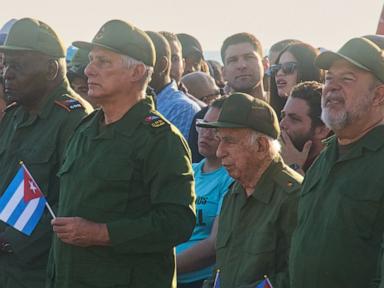
The answers came late Friday night. State television broadcast footage of Castro walking into a theater at the Ministry of Interior. He looked noticeably thin. He walked with a bit of a slouch. But he was lucid, and his uniform was immaculate.
Beside him walked his grandson and chief bodyguard, Raúl Guillermo Rodríguez. Right next to them was President Miguel Díaz-Canel. The crowd of top military brass and party elites erupted into a standing ovation.
Díaz-Canel didn't mince words. He spent his speech praising the "heroism and dignity" of Raúl and his late brother Fidel. He slammed what he called American imperialism. He even dropped a warning. If the US acts on recent threats to invade, Díaz-Canel promised a "decisive and resolute battle."
The Cuban state has launched a massive propaganda blitz around the slogan "Raúl is Raúl." It's on billboards all over Havana. It's flooding social media. Díaz-Canel took it a step further on stage. "Raúl is Cuba, and Cuba is untouchable," he shouted.
The Beijing Connection
Washington isn't just dealing with a defiant Havana. Cuba is leveraging its global alliances.
While Castro was preparing for his public appearance in Cuba, the Cuban Embassy in Beijing hosted its own massive celebration for his 95th birthday. Representatives from the Chinese Communist Party, diplomats, and academics packed the room. They listened to national anthems and launched the Mandarin edition of Castro's biography.
Ma Hui, a high-ranking official from the Chinese Communist Party's central committee, used the event to condemn the US blockade and legal actions. It was a clear signal to Washington. Squeeze Cuba, and its powerful friends will step up.
Why This Matters for the Average Citizen
If you're trying to understand the real-world impact of this standoff, look at the streets of Havana, not the theater seats.
The political theater helps the regime control the narrative, but it doesn't fix the power grid. Food shortages are rampant. Medicine is scarce. Inflation has made the local currency almost worthless. The government wants citizens to blame their empty stomachs entirely on the American blockade and the new legal threats. By turning Raúl Castro into a living martyr of US aggression, they're attempting to convert public misery into patriotic endurance.
The US strategy relies on economic pressure and legal isolation to force a collapse. Cuba's strategy is survival through defiance and deep-pocketed allies.
Keep an eye on the fuel shipments. If China or Russia decides to bypass the US sanctions and send oil tankers to Havana, the regime survives another day. If the embargo holds tight, the internal pressure on the Cuban government will reach unprecedented levels, regardless of how many standing ovations Raúl Castro gets in Havana.